







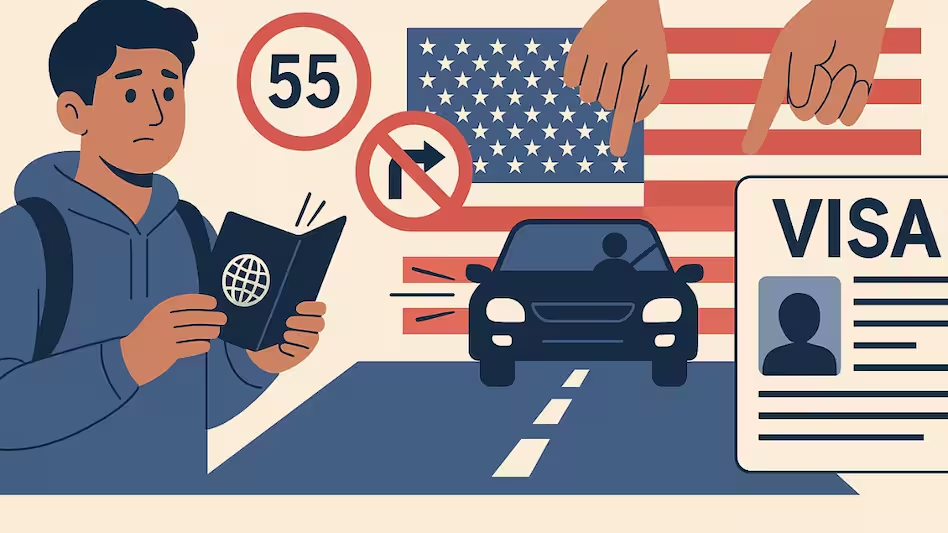
International students in the United States are facing heightened scrutiny as federal authorities ramp up enforcement measures, resulting in an increasing number of visa cancellations for minor infractions. The recent surge in visa revocations, including those based on minor offenses such as traffic violations, has raised significant concerns regarding fairness, transparency, and the potential chilling effect on free speech within the international student community. These actions have been widely reported by institutions like Harvard, Stanford, UCLA, the University of Michigan, and Ohio State, which have expressed alarm over the sudden and often unexplained cancellations.
Among the most affected are Indian students, some of whom have seen their visas revoked not for direct involvement in protests or criminal activities, but due to online content engagement, such as sharing or liking posts related to pro-Gaza sentiments. Federal authorities have reportedly been using AI-driven programs, like one named “Catch and Revoke,” to monitor online content and flag signs of support for terrorist organizations, such as Hamas, in connection with the recent escalation of Middle Eastern conflicts.
The policy shift has intensified following a directive issued by U.S. Secretary of State Marco Rubio, mandating social media background checks for international students and applicants. Rubio has affirmed the government’s commitment to revoking visas of those found engaging in pro-Hamas rhetoric, whether online or in person. This directive has raised alarms among university administrators, who are often left in the dark about visa cancellations, learning of them only through immigration databases. The lack of transparency and sudden enforcement of such measures marks a sharp deviation from standard immigration protocols.
One high-profile case involved Ranjani Srinivasan, a 37-year-old PhD student at Columbia University, who was forced to self-deport after her visa was revoked without sufficient explanation. Similarly, Badar Khan Suri, a Georgetown University student, was detained after his visa was canceled, based on accusations of antisemitic speech and alleged ties to Hamas, despite his denial of these claims. Suri contends that he is being targeted due to his wife’s Palestinian background.
While the U.S. legal framework allows for visa revocations under various circumstances, including national security concerns, critics argue that the lack of clear communication and the broad scope of the crackdown may stifle political expression and academic freedom. Universities worry that these actions will have a deterrent effect on international students, who may feel compelled to self-censor to avoid attracting the attention of federal authorities.
Recent Random Post: