








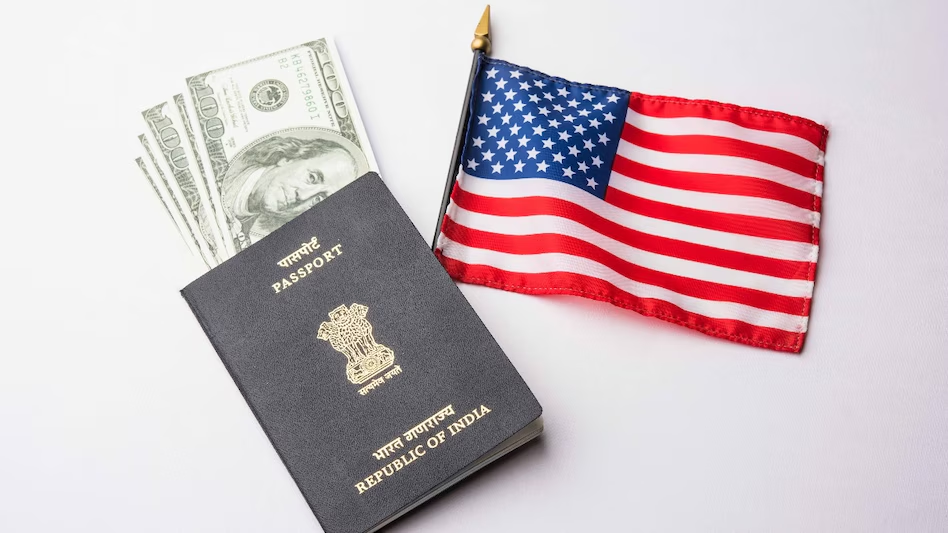
The U.S. State Department has announced a significant expansion of its visa screening process, set to take effect from March 30. Under the new rules, applicants’ social media activity and broader online presence will now undergo mandatory review across a wider range of visa categories.
This updated framework applies to individuals attending visa interviews at U.S. consulates abroad. It covers several categories, including A-3, C-3 (domestic workers), G-5, H-3, H-4 dependents of H-3, K visas, Q, R, S, T, and U visas. The move extends an existing system already implemented for student and exchange visas (F, M, J) since June 2025, and for H-1B visa holders and their dependents since December 2025.
As part of the revised process, applicants will be required to set their social media profiles to “public” or “open.” Officials will review online content, activity, and digital footprints as part of enhanced background checks.
In its official statement, the department emphasized that this step is aimed at strengthening vetting procedures by using all available information to assess applicants. Authorities noted that visa decisions are closely tied to national security, and thorough screening is essential to identify individuals who may pose risks to public safety or U.S. interests.
Reinforcing this stance, the department stated that every visa adjudication is treated as a national security decision. Applicants must clearly demonstrate that they meet eligibility requirements and intend to comply with the terms of their visa.
With this expansion, the U.S. government is aiming to tighten oversight of visa applicants by incorporating digital behavior into the evaluation process, marking a major shift in how background checks are conducted.
Recent Random Post: