









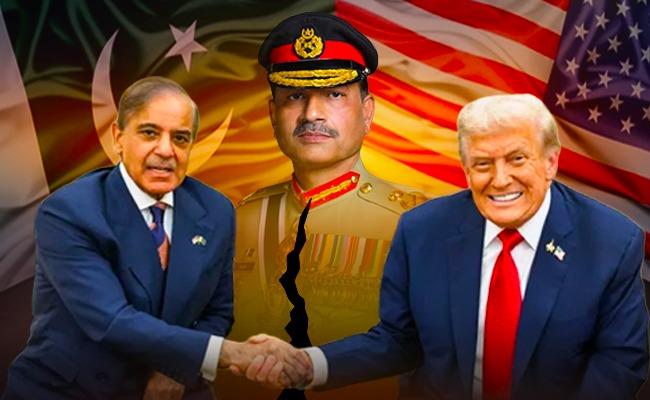
The sudden warmth in US–Pakistan relations has emerged as one of the most talked-about shifts in global diplomacy. From unprecedented White House outreach to Pakistan’s Army Chief, Field Marshal Asim Munir, to renewed strategic engagement after years of mutual distrust, the optics suggest a diplomatic reset. However, analysts caution that this rapprochement may be fragile—and Gaza could become the breaking point.
Trump’s Gaza Peace Push Raises Stakes for Islamabad
US President Donald Trump’s renewed push to end the Israel–Hamas war is driven by a mix of geopolitical ambition and personal legacy-building. His proposed 20-point Gaza peace framework, reportedly cleared by the United Nations, calls for Israel’s military withdrawal, the disarmament of Hamas, and the deployment of an International Stabilisation Force to oversee the transition.
Crucially, Washington does not want this force to include US or NATO troops. Instead, Trump is seeking participation from Islamic countries, a strategy shaped by costly lessons from Afghanistan and Syria. In this context, Pakistan—an influential Muslim-majority country with a powerful military and UN peacekeeping experience—has emerged as a key stakeholder. This calculation helps explain the recent diplomatic spotlight on Asim Munir in Washington.
Asim Munir’s Strategic Dilemma
For Pakistan’s Army Chief, the proposal presents a high-risk strategic trap. Supporting Trump’s Gaza plan could trigger severe domestic backlash. Pakistan has long maintained a strong pro-Palestine stance, reinforced by influential religious parties, civil society groups, and politically active youth movements. Any cooperation that appears to legitimise Israel’s military campaign or push Hamas towards disarmament could be framed domestically as a betrayal of Palestinian resistance.
Conversely, outright rejection of Washington’s request risks damaging ties with the United States at a time when Pakistan’s economy remains under stress and its global standing fragile. Islamabad’s dependence on international financial institutions and Western goodwill leaves little room for diplomatic defiance.
Foreign Minister Ishaq Dar’s recent remarks distancing Pakistan from Hamas’s disarmament signal an attempt to hedge—projecting sympathy for Gaza while avoiding direct confrontation with Washington. However, such ambiguity may prove insufficient for either domestic audiences or US policymakers.
Regional Pushback and Internal Pressures
Resistance to Trump’s Gaza plan is already visible across the region. Egypt and Qatar—both key mediators in the Israel–Hamas conflict—have reportedly expressed reservations, reflecting broader discomfort in the Islamic world about legitimising a post-war order seen as shaped by Israeli and US interests.
Within Pakistan, analysts warn that participation in a Gaza stabilisation force could ignite mass protests. Some fear a mobilisation led by Gen-Z activists and Islamist groups, echoing recent political unrest seen in countries such as Bangladesh and Nepal. The Pakistan Army, already navigating internal political tensions, may find itself facing unrest on an emotionally charged foreign policy issue.
South Asia experts, including Michael Kugelman, argue that Munir is caught in a no-win situation: compliance risks domestic instability, while defiance invites US displeasure and diplomatic isolation.
A Partnership Under Strain
The irony is striking. The very Gaza initiative that has brought Washington and Islamabad closer may also drive them apart. As Asim Munir prepares for further high-profile engagements in the US, the core question is no longer about diplomatic warmth, but political survivability—both for Pakistan’s Army Chief and for the revived US–Pakistan relationship.
In international diplomacy, alignment often comes at a cost. For Asim Munir, Gaza may prove to be that cost.
Recent Random Post: