









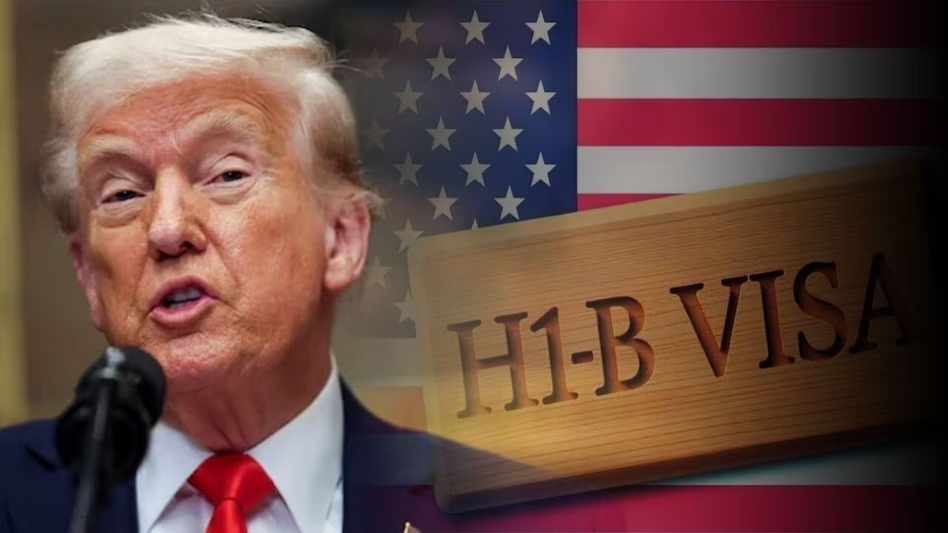
California and nineteen other US states have filed a federal lawsuit in Boston seeking to block the Trump administration’s rule imposing a $100,000 fee on new H-1B visas for highly skilled foreign workers. This marks the third legal challenge to the controversial fee since it was announced in September.
The states argue that the steep hike—from the current $2,000 to $5,000 range—violates federal law and threatens to disrupt key sectors of the US economy, including technology, healthcare, and higher education.
Led by California, the coalition includes New York, Massachusetts, Illinois, New Jersey, and Washington, among others. The lawsuit claims the fee exceeds legal limits that restrict visa charges to covering only the administrative costs of running the programme. The states warn that such a high fee would place severe financial strain on employers and institutions that rely heavily on H-1B workers.
California Attorney General Rob Bonta said the Trump administration lacks the legal authority to impose the fee, calling it an unlawful overreach. His office warned that the policy could worsen labour shortages and force service reductions in essential areas such as hospitals, universities, and research institutions.
Under the order, new H-1B visa recipients are barred from entering the US unless their employers pay the $100,000 fee. The administration clarified that the rule does not apply to existing H-1B holders or applications submitted before September 21. The White House maintains that the policy is a lawful use of presidential authority aimed at preventing abuse of the visa programme.
Critics of the H-1B system argue it enables companies to replace American workers with lower-paid foreign labour. However, business groups counter that the programme is vital for addressing persistent skill shortages. A separate coalition—including the US Chamber of Commerce, unions, and employer groups—has also filed lawsuits challenging the fee.
Court hearings related to the challenges are expected to take place in Washington, DC, next week. The outcome could have far-reaching implications for US employers dependent on global talent and for the future of the H-1B visa system itself.
Recent Random Post: