







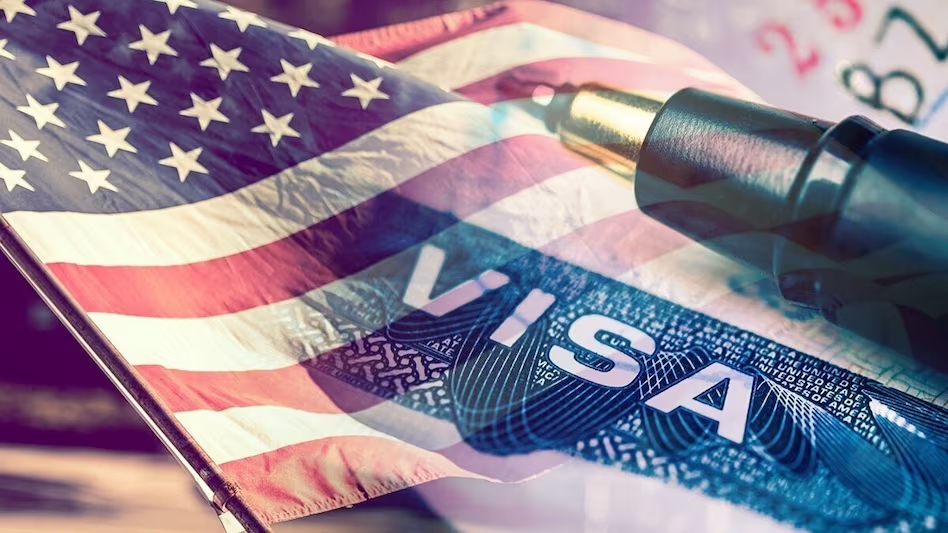
The United States has tightened its vetting process for foreign workers by expanding mandatory social media scrutiny to H-1B visa applicants and their H-4 dependents. Under a new directive issued last week, all applicants must ensure their social media profiles are publicly accessible from December 15.
This level of online screening, previously applied only to students and exchange visitors, will now include all H-1B/H-4 visa seekers. The State Department said the change is intended to strengthen national security assessments, reiterating that a U.S. visa is a privilege, not a guarantee. Officials will review publicly available digital footprints to determine eligibility and identify potential security risks.
The administration has simultaneously intensified its crackdown on H-1B programme abuse, a system widely used by U.S. tech companies to hire skilled foreign workers. Indian professionals—particularly in technology and healthcare—remain among the largest beneficiaries of the programme.
In September, President Donald Trump issued a proclamation imposing a one-time USD 100,000 fee on new H-1B petitions, a move expected to significantly affect Indian applicants seeking temporary employment in the U.S.
In a parallel development, the U.S. has also halted Green Card, citizenship, and other immigration processes for applicants from 19 “countries of concern” following the recent shooting incident involving an Afghan national. A USCIS memorandum has directed an immediate pause on all asylum applications as part of a broader review.
The freeze applies to nationals of Afghanistan, Burma, Burundi, Chad, Congo, Cuba, Equatorial Guinea, Eritrea, Haiti, Iran, Laos, Libya, Sierra Leone, Somalia, Sudan, Togo, Turkmenistan, Venezuela, and Yemen.
Recent Random Post: