









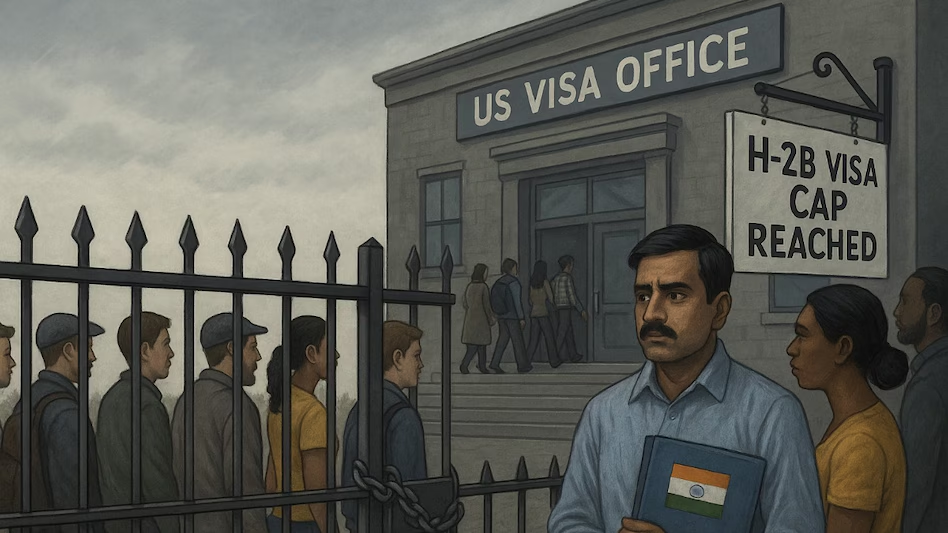
The United States Citizenship and Immigration Services (USCIS) has announced the closure of the filing window for petitions under the supplemental allocation of 19,000 H-2B visas for returning workers in the early part of the second half of Fiscal Year (FY) 2025. The cap was reached by April 18, 2025, and any petitions received after this date will be rejected, according to a USCIS notice issued on April 24.
These additional visas were authorized under the FY 2025 H-2B supplemental cap temporary final rule, which allowed U.S. employers to hire returning workers for temporary non-agricultural roles with start dates from April 1 to May 14. Common industries utilizing these visas include hospitality, construction, landscaping, and maintenance—sectors that often experience seasonal or peak load demands.
Although the supplemental quota for returning workers has been exhausted, a separate allocation of 20,000 H-2B visas remains available for nationals of El Salvador, Guatemala, Honduras, Haiti, Colombia, Ecuador, and Costa Rica. Applicants under this provision do not require previous H-2B visa history.
The H-2B program allows U.S. employers to temporarily employ foreign nationals in non-agricultural roles and is subject to an annual statutory cap of 66,000 visas, divided evenly between the first and second halves of the fiscal year. Eligible workers can remain in the United States for up to three years on an H-2B visa, after which they must depart the country for at least three months before becoming eligible for reapplication.
In a notable policy update introduced in December 2024, USCIS implemented a 60-day grace period for H-2B workers who lose their jobs. This measure provides affected workers time to secure new employment or prepare to depart the U.S. while maintaining lawful status.
It is important to note that Indian nationals remain ineligible for the H-2B visa program. India is not included on the Department of Homeland Security’s list of eligible countries due to concerns such as high visa overstay and refusal rates, potential fraud or misuse of the program, non-compliance with visa regulations, and risks related to human trafficking.
Recent Random Post: