








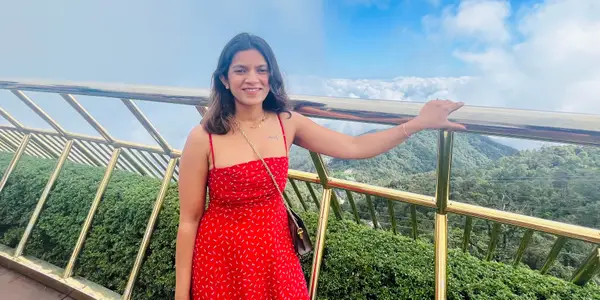
For many Indians returning after years abroad, coming home can be far more disorienting than expected. Former journalist Vaishali Gauba experienced this firsthand after moving back to India following five years in the United States — a phenomenon often referred to as “reverse culture shock.”
Gauba moved to the US at 17 to study journalism and business management and later worked at CBS News. Her time there ended in 2017 when she was unable to secure an H-1B visa and had to leave after her work authorization expired.
Speaking to Business Insider, Gauba recalled spending her final evening in New York on the terrace of her Washington Heights apartment, taking in the skyline and reflecting on the life she had built.
“It was my last night in New York City before I moved back to India,” she said.
The move back was particularly painful because it wasn’t fully on her own terms. After graduating, she had a one-year work permit and hoped to remain in the US through employer sponsorship for an H-1B visa. Despite efforts with CBS News and other organizations, the sponsorship never materialized, forcing her to return once her permit ended.
Gauba said it took months to come to terms with the setback. Eventually, she accepted that immigration decisions are often beyond personal control. Fortunately, she had lined up a role with an international news channel in India through a professional contact at CBS News, which eased the transition somewhat.
Still, settling back in proved challenging. The fast-paced mornings she had grown accustomed to in New York gave way to quieter days at home while she waited to start her new job.
“As everyone in my home left for work, I was left questioning my purpose,” she recalled.
Even small details of daily life hit differently: from relentless honking on the roads to the way some people treated service staff. Moving back into her parents’ home in Gurugram after years of independence also created friction, as expectations around constantly sharing whereabouts felt restrictive.
About three months later, Gauba shifted to New Delhi, closer to work. With her parents’ support, the move helped her regain a sense of independence and gradually find her footing.
Like many returnees, she also had to adjust to urban realities in India. In New York, walking was easy and common; in Gurugram and New Delhi, daily movement involved traffic, pollution, and poor pedestrian infrastructure. Safety also shaped her routines differently; she was comfortable being out late in New York but exercised greater caution in Indian cities.
Over time, Gauba realized that dwelling on frustrations made the transition harder. She began focusing on the positives: more time with family, home-cooked meals, and reconnecting with old friends.
Gauba lived in India for five years before moving to Canada in 2022 to continue her studies and join her partner. Looking back, she considers that period one of the most meaningful in her life.
“The experience of overcoming reverse culture shock taught me how to stay resilient during adversity and rejection — something I carry with me through life’s brightest and darkest days, no matter where I live,” she said.
Recent Random Post: