









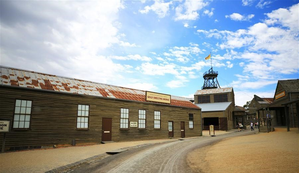
The Australian government has officially nominated the goldfields of southeastern Victoria for World Heritage recognition, marking a significant step towards securing a spot on the United Nations Educational, Scientific and Cultural Organization (UNESCO) World Heritage List. The announcement, made by Tanya Plibersek, Minister for the Environment and Water, on January 31, reflects the region’s cultural and historical significance.
This nomination places the goldfields, also known as the Golden Triangle, on Australia’s World Heritage Tentative List, which is the first formal stage in the process of gaining UNESCO designation. The goldfields are renowned for their association with the 1850s and 1860s gold rush, which spurred one of the most transformative periods in Australian history, driving a massive influx of migration, economic growth, and social change.
The goldfields region, which stretches across a central area of Victoria, holds profound significance for both Indigenous communities and the early migrants who arrived during the gold rush. Over 30,000 Chinese migrants are known to have settled in Australia during this period, contributing to the region’s multicultural development. By 1861, 3.3% of Australia’s population had been born in China, a milestone that was not surpassed until the 1980s.
Minister Plibersek highlighted the importance of this nomination for the protection and preservation of the goldfields, emphasizing that international recognition would ensure the site’s legacy is safeguarded for future generations while also attracting global tourism. “It is the most extensive, coherent, and best-surviving gold rush landscape in the world. It deserves to be celebrated and protected,” she said.
Victorian Premier Jacinta Allan echoed this sentiment, calling the goldfields a “living testament” to the individuals who journeyed to the region in search of a better life and how their efforts transformed the state. The population of Victoria grew dramatically during this period, from around 77,000 in 1851 to over 530,000 by 1861, reflecting the profound impact of the gold rush on the region’s development.
Tourism to the goldfields is a major economic contributor, generating approximately 1.8 billion Australian dollars annually. With UNESCO World Heritage status, the region is poised to attract even greater international attention, further solidifying its place as a key cultural and historical destination.
Recent Random Post: