









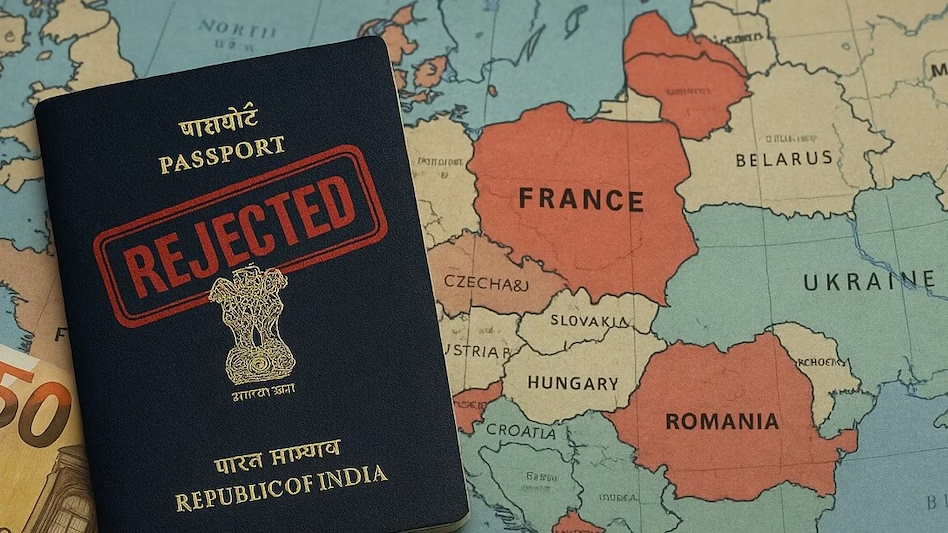
In a rare and candid disclosure, a Schengen visa officer recently took to Reddit to offer a behind-the-scenes look at the visa assessment process, shedding light on why many applicants—especially from countries like India—often face rejection. The insights, shared during an AMA (Ask Me Anything) session and later reposted on the subreddit r/visarejection, have sparked widespread discussion and debate.
Lack of Home Ties: The Primary Red Flag
According to the officer, a career diplomat handling up to 200 applications daily, the most common reason for rejection is the absence of strong ties to the applicant’s home country. “Not owning property, no stable or well-paid job, no family obligations, no running business—these are key factors that help prove you’ll return home,” he wrote.
Applicants often underestimate the importance of demonstrating compelling reasons to return. Visa officers, the diplomat noted, are trained to assess risk, and the strength of an applicant’s roots in their home country plays a central role in that determination.
Fake Bookings and Inconsistent Itineraries Raise Suspicion
The officer also flagged dummy bookings and unrealistic travel plans as frequent pitfalls. “Bookings that don’t align with your finances” are easy to spot, he warned. For instance, luxury hotel reservations made on modest incomes—or conversely, ultra-budget trips by seemingly wealthy applicants—often appear suspicious. “Even very cheap bookings while being wealthy can look suspicious,” he added, emphasizing the importance of consistency between an applicant’s financial profile and their travel plans.
Cover Letters Skimmed, Sponsorship Letters Valued
Another surprising admission was the limited attention paid to cover letters. “Often ignored or only briefly skimmed,” he said. However, sponsorship letters—particularly for student visa applications—carry significant weight. “Student visa D applications are rarely rejected if the university has already accepted the student,” he noted.
For long-term or multi-entry visas, the officer stated that he adheres to the “cascade regime”—granting longer validity only after an applicant has established a credible travel history.
The Role of Nationality: An Unspoken Barrier?
While the officer emphasized that nationality should not be a determining factor, Reddit users were quick to point out what they viewed as an uncomfortable truth: the applicant’s country of origin often plays a decisive, if unofficial, role.
“He missed the number one factor, though… the ‘home country’ itself is the major factor that affects your ‘score’,” one commenter argued, highlighting perceived biases in the system. Another user recalled a conversation with a French diplomat who admitted, “If you are rich enough by French standards, we just issue the tourist visa assuming you have no other red flags.”
Employer Support Can Help—But Isn’t Always Enough
For applicants lacking business or property ownership, employer support can serve as a compensatory strength. “Show a strong job and have your employer vouch for you with an official letter,” the officer advised, though he acknowledged that this alone may not suffice in all cases.
Religion Not a Factor, But Nationality Might Be
The officer clarified that religion plays no role in visa decisions. However, nationality—though not officially acknowledged—may implicitly influence assessments.
Though the officer did not specify which embassies he has served in, his disclosures offer a rare and sobering look at the inner workings of Schengen visa processing. For many applicants, even a meticulously prepared application may not overcome the challenges posed by a “weak” passport.
Recent Random Post: