









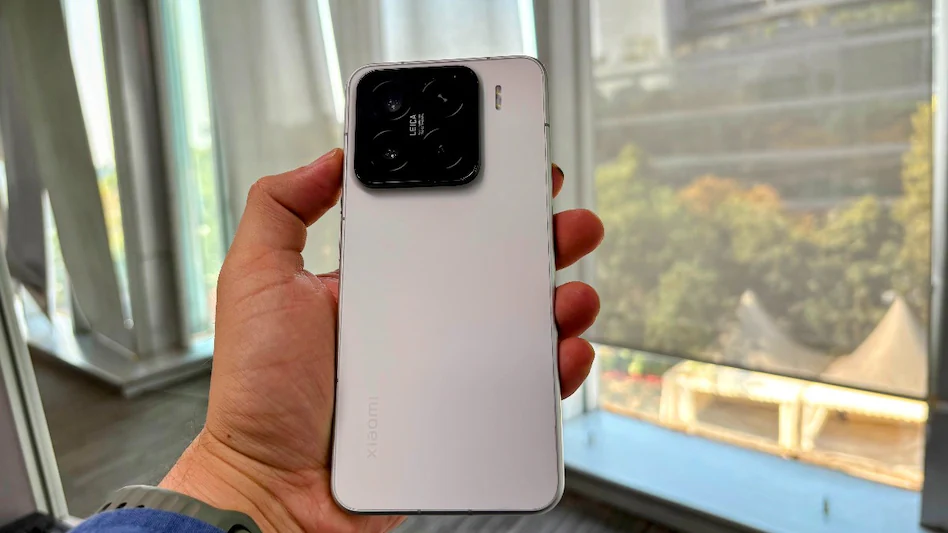
 The Xiaomi 15 features a vivid 6.36-inch AMOLED display, now enhanced with 200 nits more brightness than its predecessor. With a peak brightness exceeding 2000 nits, outdoor visibility is exceptional. The adaptive 1-120Hz refresh rate ensures smooth scrolling and fluid animations, while its crisp 300Hz touch response makes for an ultra-responsive experience, ideal for gaming and intensive browsing.
Though it competes well against the Google Pixel 9’s OLED panel, the Xiaomi 15’s display falls slightly short of the Samsung Galaxy S25’s remarkable 2600-nit screen. While impressive, the enhancements in brightness and fluidity remain incremental rather than revolutionary.
Performance: Snapdragon 8 Elite Delivers, but Competitors Push Ahead
Powered by Qualcomm’s Snapdragon 8 Elite processor, coupled with 12GB LPDDR5X RAM and 512GB UFS 4.0 storage, the Xiaomi 15 delivers seamless multitasking and high-performance gaming. It maintains stability under load, with minimal heating, reinforcing its efficiency.
However, Samsung’s Galaxy S25 edges ahead by utilizing an overclocked version of the same chipset, providing marginally snappier performance. While the real-world difference is negligible, benchmark enthusiasts may notice slight variations.
Running on HyperOS 2.0 (Android 15-based), Xiaomi promises four years of OS updates and six years of security patches, aligning with industry standards. While HyperOS offers extensive customization, the presence of unremovable pre-installed Google apps remains a minor drawback. AI-powered features such as AI Writing and AI Interpreter add functional value but lack the seamless, local AI processing capabilities found in Samsung’s ecosystem.
Camera: Leica’s Influence Shines
Equipped with a triple 50MP Leica-backed camera system—primary, ultrawide, and telephoto—the Xiaomi 15 delivers exceptional photography versatility. The standout is its 2.6x optical zoom telephoto lens, excelling in portrait capture with impressive depth of field and natural color reproduction. Leica’s tuning ensures vibrant yet realistic color accuracy, strong dynamic range, and well-balanced contrast.
However, the ultrawide lens occasionally struggles with consistency, sometimes sacrificing detail at wider angles. In low-light conditions, Night Mode performs admirably, though images can lean slightly soft compared to Google’s Pixel 9, which leads in computational photography.
The 32MP front-facing camera captures detailed selfies in daylight but introduces minor graininess in lower-light settings, an area where Samsung continues to dominate.
Battery and Charging: A Notable Upgrade
A significant battery boost to 5,240mAh—up from Xiaomi 14’s 4,610mAh—ensures prolonged endurance, easily lasting a day and a half under moderate to heavy use. Xiaomi retains its industry-leading 90W fast charging, achieving a full charge in approximately 55 minutes. This remains a distinct advantage over competitors like the Pixel 9 and Galaxy S25, both of which lack bundled chargers.
Verdict: A Premium Compact Contender with Measured Improvements
Priced at ₹64,999, the Xiaomi 15 stands out as a premium compact smartphone catering to photography enthusiasts and users seeking a powerful yet manageable form factor. While it refines aspects of display, performance, and battery life, its upgrades remain incremental rather than groundbreaking.
For existing Xiaomi 14 users, the improvements may not warrant an upgrade unless battery longevity and ergonomic refinements are priorities. However, for those seeking a compact device with exceptional camera capabilities, the Xiaomi 15 is a compelling choice. Otherwise, the Samsung Galaxy S25 offers a brighter display, while the Google Pixel 9 excels in computational photography and software intelligence, making them strong alternatives in the premium segment.
Recent Random Post: