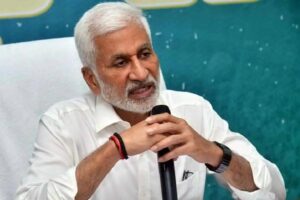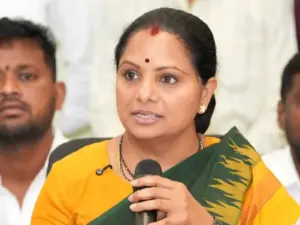








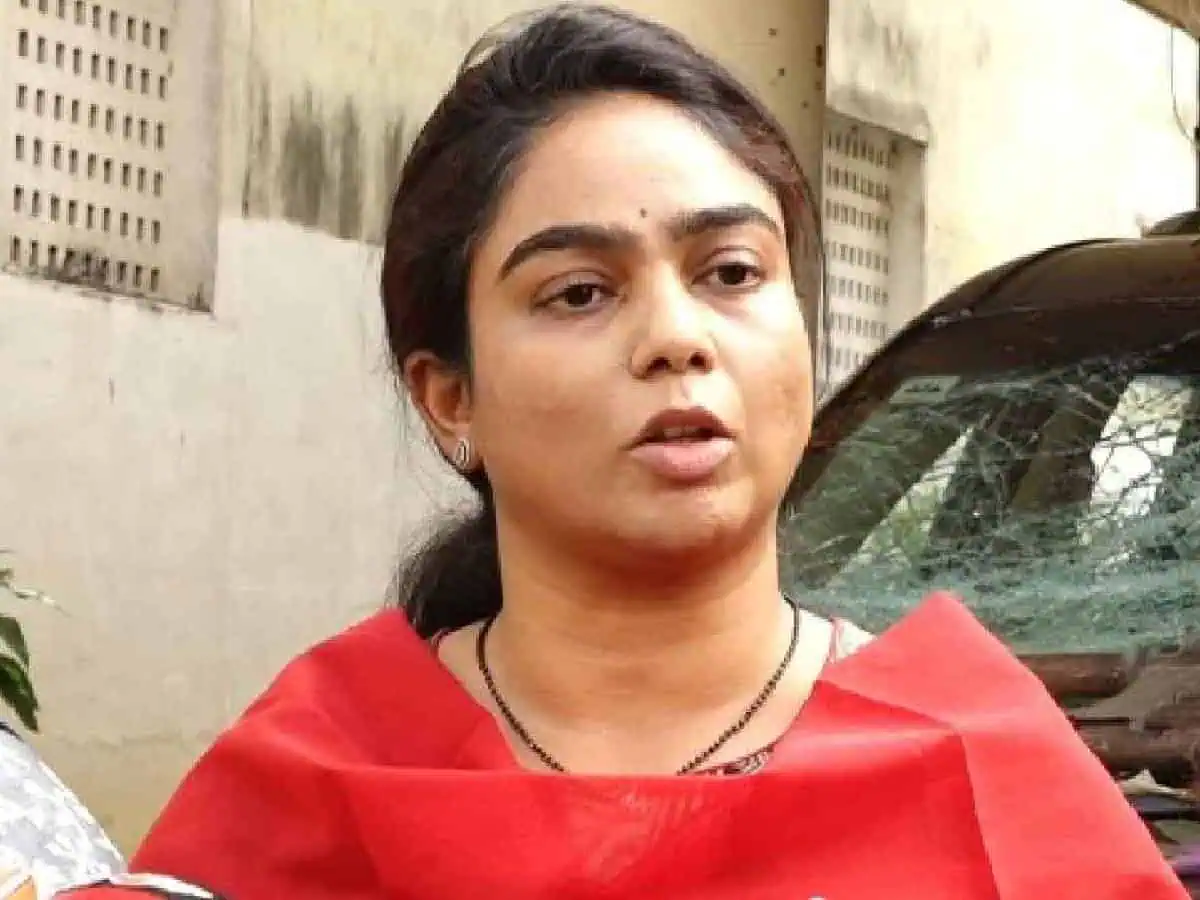
It is rare to see women from political families articulate their views with such clarity, conviction, and impact—matching the confidence of seasoned politicians. In the aftermath of the attack on YSRCP leader Ambati Rambabu’s residence in Andhra Pradesh, one such voice has drawn significant attention.
Ambati Rambabu’s house was reportedly ransacked and set on fire, an incident that drew comparisons to the recent attacks on political leaders’ homes in Bangladesh. Following the incident, Rambabu was arrested and placed in incarceration, leaving him unable to address the media or present his version of events. In this vacuum, his family members stepped forward to explain what transpired.
For the first time, his daughter Mounika faced the media and clearly laid out the sequence of events, presenting her arguments and defence for public scrutiny. Rather than limiting her statement to a personal or family grievance, she expanded the narrative by introducing broader political dimensions, including references to Pawan Kalyan, thereby placing the incident within a larger political framework.
By addressing both political and caste-related angles surrounding the attack, Mounika framed the issue in a way that resonated with wider sections of society. Her ability to connect personal suffering with larger social and political themes struck a chord, particularly within the YSRCP circles.
Many observers noted that her composure, articulation, and strategic framing reflected the instincts of a strong political communicator. There is growing sentiment that, with the right encouragement, Mounika could evolve into a capable political leader. It is understood that recommendations highlighting her potential have also reached YS Jagan Mohan Reddy, sparking discussion about her possible future role in active politics.
Recent Random Post:
Bad Boy Karthik Trailer | Naga Shaurya | Vidhi Yadav | Samuthirakani | Harris Jayraj | Ramesh
Bad Boy Karthik Trailer | Naga Shaurya | Vidhi Yadav | Samuthirakani | Harris Jayraj | Ramesh