









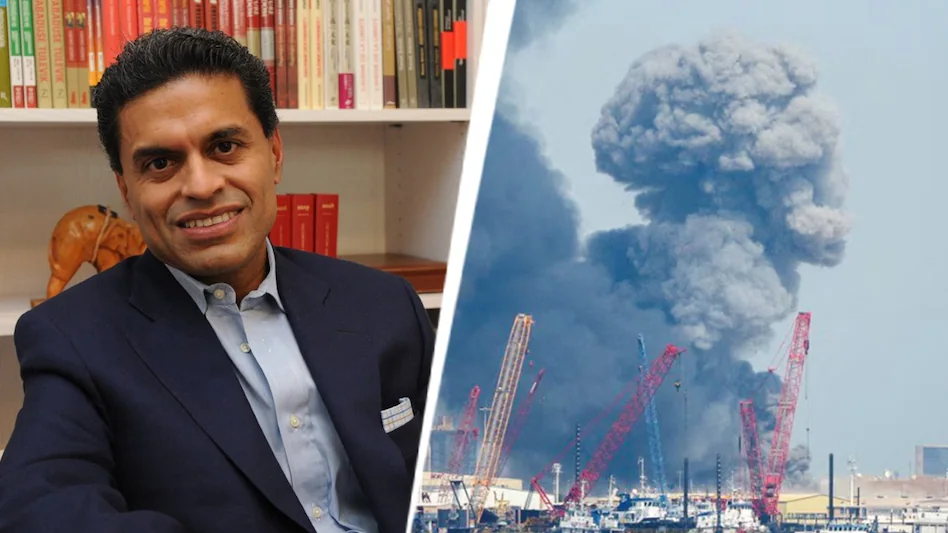
Veteran journalist and geostrategist Fareed Zakaria has questioned the effectiveness and consequences of American military action, asking whether any US intervention has ever resulted in “so many costs for so few gains,” particularly in the context of the Iran conflict.
Speaking on CNN’s GPS, Zakaria argued that Iran was already in a weakened state before the war, pointing to its struggling economy, heavy sanctions, and internal governance issues. He suggested that Iran did not pose a significant military threat to its neighbors or to the United States, which is located nearly 6,000 miles away, implying that the attack may not have been necessary.
Zakaria referred to claims by the US and Israel that Iranian nuclear facilities were severely damaged during a 12-day bombing campaign in June 2025, along with heavy strikes on Hezbollah positions. He also noted that Washington’s European and Asian allies were not consulted, with several expressing opposition to the conflict.
Citing reports, he said Israeli Prime Minister Benjamin Netanyahu allegedly presented the war to former US President Donald Trump as an opportunity for regime change rather than an immediate security necessity. However, Zakaria argued that the expected outcomes have not materialized. He pointed out that the Iranian regime remains intact, with leadership changes reportedly making it more hardline.
He also discussed the strategic Strait of Hormuz, stating that despite past tensions, it had remained largely open for decades. According to Zakaria, recent developments have altered the situation, with Iran’s new leadership reportedly restricting passage conditions while still allowing oil exports, particularly to China. He claimed this shift has increased Iran’s oil revenues significantly.
Zakaria further argued that Iran’s ability to generate income from oil exports and shipping fees could strengthen its military capabilities over time. He also warned that US allies in the Gulf region, including Saudi Arabia, face increased instability, despite previous efforts to reduce tensions with Iran.
He added that global dynamics are shifting as a result of the conflict, suggesting that Russia, China, and other powers may benefit strategically, while Europe loses influence and the US becomes further entangled in another prolonged geopolitical crisis.
Concluding his analysis, Zakaria questioned whether American military interventions have historically delivered meaningful strategic gains compared to their economic and geopolitical costs.
Recent Random Post: