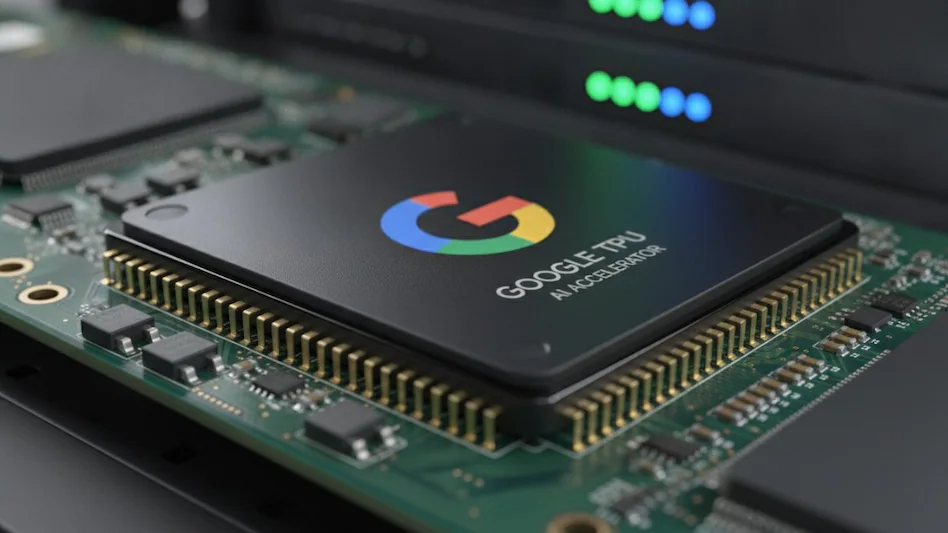
Alphabet, the parent company of Google, is reportedly working on a next-generation in-house artificial intelligence (AI) chip that could significantly enhance the performance and efficiency of its Gemini AI models. The custom chip is expected to improve processing speeds, reduce power consumption, and lower the overall cost of running advanced AI systems.
According to a report by The Information, the upcoming server-grade AI chip has been internally codenamed Frozen V2 and is expected to enter manufacturing in 2028. Designed as a dedicated AI accelerator, the chip is said to be considerably more powerful and efficient than Google’s current AI hardware.
One of the biggest improvements reportedly offered by Frozen V2 is its energy efficiency. The chip is expected to generate between six and ten times more AI tokens while consuming the same amount of electricity as existing solutions. This could enable Gemini AI models to process more complex workloads at faster speeds while keeping energy usage under control. Reports suggest the new chip will complement Google’s existing Tensor Processing Units (TPUs), further strengthening the company’s AI infrastructure.
Responding to the reports, a Google spokesperson told TechCrunch that the company continuously explores new technologies to maximize performance and efficiency for both users and enterprise customers. The spokesperson added that not every experimental project reaches production, but ongoing research remains central to Google’s long-term AI strategy. Google also emphasized that designing both hardware and software together allows its AI systems to be highly optimized for real-world applications.
The development of Frozen V2 reflects the growing competition among major technology companies to build custom AI hardware. By reducing its dependence on third-party chips and creating specialized processors, Google aims to gain an edge over rivals such as OpenAI, Microsoft, Meta, and Amazon in the rapidly evolving AI race.
Competition in the custom AI chip market is also intensifying. OpenAI recently introduced its first custom inference processor, Jalapeño, while Anthropic is reportedly exploring a semiconductor partnership with Samsung to develop AI-focused chips. These developments highlight how leading AI companies are increasingly investing in proprietary hardware to support the next generation of artificial intelligence.
The report also comes at a time when Google is reportedly facing delays in launching its highly anticipated Gemini 3.5 Pro model. According to reports, the company is still refining the model and addressing performance-related challenges before making it publicly available. Despite the delay, Google’s continued investment in AI hardware signals its commitment to delivering more powerful, efficient, and scalable AI technologies in the years ahead.