









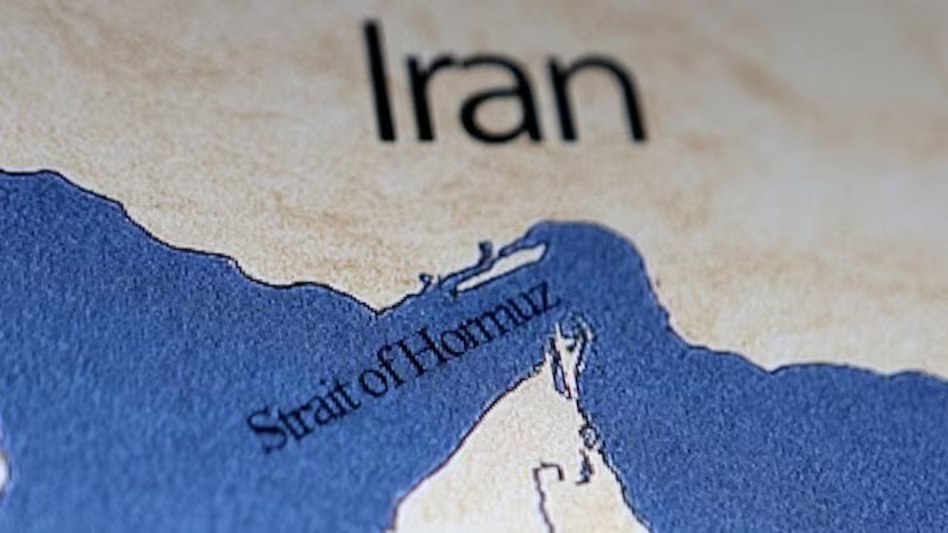
Amid rising tensions in the region, Iran has clarified that it does not plan to shut down the strategically important Strait of Hormuz, though vessels passing through the waterway will need to coordinate with the Iranian navy to ensure maritime security.
Iran’s UN Ambassador Amir Saeid Iravani addressed the issue on Thursday, stating that Tehran has no intention of closing the vital shipping route. However, he emphasized that Iran reserves the right to safeguard peace and security in the region.
“We are not going to close the Strait of Hormuz. But it is our inherent right to preserve peace and security in this waterway,” Iravani said. He added that Iran respects and remains committed to the principle of freedom of navigation under international maritime law. At the same time, he argued that the current tensions were not the result of Iran exercising its right to self-defense but were instead triggered by what he described as destabilizing actions by the United States that have undermined regional stability.
Meanwhile, Iran’s Foreign Ministry spokesperson Esmaeil Baghaei told Mehr News Agency that Tehran does not want the strait to become insecure, stressing its strategic importance to the country. According to Baghaei, Iran’s own security is closely linked to the stability of the region, particularly given the country’s long coastline along the Persian Gulf and the Sea of Oman.
He noted that Iran has historically borne significant costs to help protect the waterway and maintain maritime safety. However, he warned that instability created in the region by the United States and Israel could affect shipping movements. Baghaei added that while Iran does not intend to disrupt navigation, ships passing through the strait will be required to coordinate with the Iranian navy to ensure safe passage.
The situation around the Strait of Hormuz, a crucial global energy transit route, has already sparked concerns in international markets. Fears of potential disruption have pushed global energy prices higher and raised worries about possible supply constraints.
Recent Random Post: