









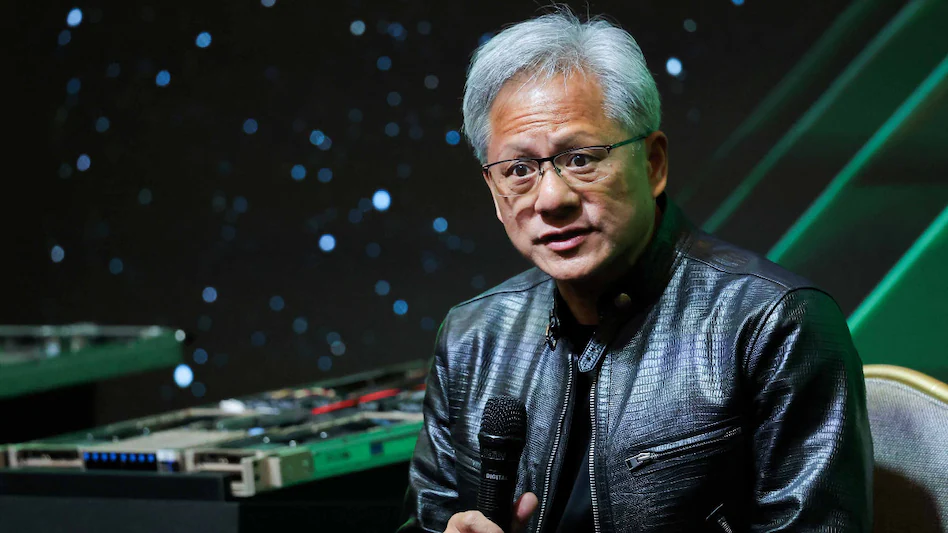
San Jose, California – Nvidia CEO Jensen Huang made a groundbreaking prediction during the company’s annual developer conference, held at a packed hockey stadium in San Jose. Addressing an audience of developers and journalists, Huang forecasted that humanoid robots could become a fundamental component of manufacturing facilities within the next five years.
During his keynote speech, Huang introduced a suite of innovative software tools designed to improve the ability of humanoid robots to navigate real-world environments with enhanced precision and efficiency. The event, hosted by Nvidia, a tech giant valued at nearly $3 trillion, highlighted the company’s aggressive advancements in AI-powered robotics.
Following his presentation, Huang engaged in a discussion with reporters, underscoring how artificial intelligence is rapidly moving toward real-world integration. “When, literally, humanoid robots are wandering around, which is not five years away. This is not a five-years-away problem; this is a few-years-away problem,” he stated, reinforcing the notion that humanoid robots are on the brink of widespread adoption across multiple industries.
Huang emphasized that the manufacturing industry is best suited to pioneer the use of humanoid robots due to its controlled environments and structured workflows. “I think it ought to go to factories first. And the reason for that is because the domain is much more guard-railed, and the use case is much more specific,” he explained. “The value of it is very, very easy to determine. The going rate for renting a human robot is probably $100,000, and I think it’s pretty good economics.”
Nvidia continues to establish itself as a frontrunner in AI-driven robotics, particularly through the development of cutting-edge tools that enhance navigation, safety, and efficiency within manufacturing facilities. The company’s latest software solutions address critical challenges associated with humanoid robots, such as spatial awareness and decision-making, positioning Nvidia at the forefront of the rapidly evolving AI robotics landscape.
Recent Random Post: