









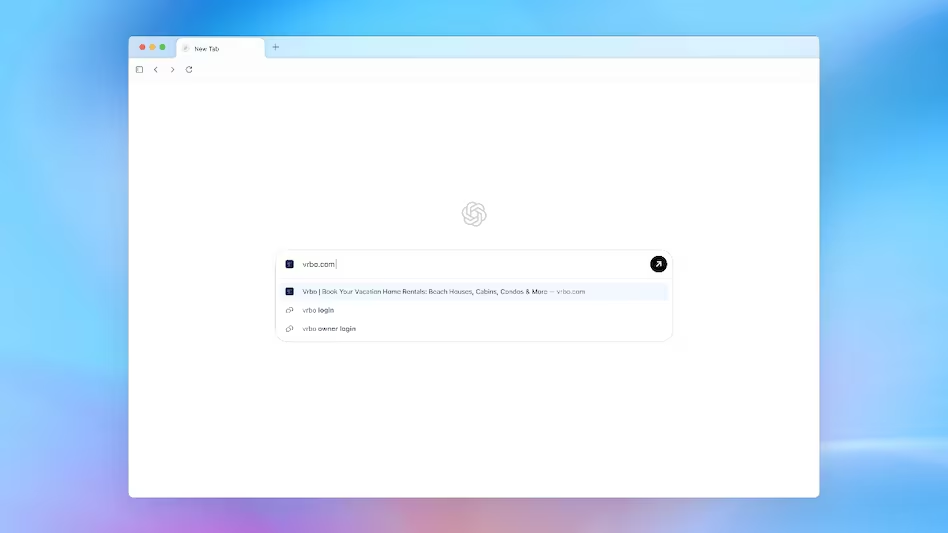
OpenAI has introduced ChatGPT Atlas, a next-generation web browser that integrates its flagship AI assistant directly into the browsing experience. The new browser transforms web navigation into an interactive, conversational process — allowing users to search, research, and perform tasks through natural dialogue with ChatGPT.
Building on the success of ChatGPT’s web search integration, Atlas positions the AI as a digital companion capable of understanding user context and performing actions within the browser. Users can open a tab, ask a question, or type a URL to receive dynamic results — including links, images, videos, and news.
“Now ChatGPT instantly understands what I’m looking at, helping me improve my knowledge checks as I go,” said Yogya Kalra, a college student and early tester of ChatGPT Atlas.
A key innovation in Atlas is browser memory, enabling ChatGPT to recall previously visited sites and use that context for more relevant assistance. Users can, for example, ask the AI to summarize job listings viewed earlier or generate research notes from past browsing sessions.
These memories are private, optional, and fully user-controlled, with options to manage or delete data anytime. An Incognito Mode also allows browsing and chatting without saving history.
Another major feature is Agent Mode, which empowers ChatGPT to take actions on behalf of the user directly within the browser — such as researching topics, filling out forms, planning events, or ordering groceries. For instance, the AI can extract ingredients from a recipe and place an order through integrated shopping services.
OpenAI emphasized that safety remains central to Atlas’s design: Agent Mode cannot execute code, download files, or access sensitive sites, and can be run in logged-out mode for additional privacy.
ChatGPT Atlas is now available worldwide on macOS for Free, Plus, Pro, and Go users, and in beta for Business accounts. Versions for Windows, iOS, and Android are expected soon. Future updates will include multi-profile support, developer tools, and features for app discoverability.
OpenAI describes Atlas as “a step toward a future where most web use happens through agentic systems” — automating routine digital tasks so users can focus more on creativity and decision-making.
Recent Random Post: