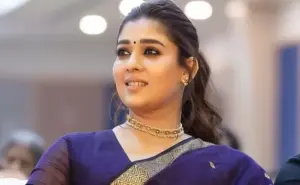
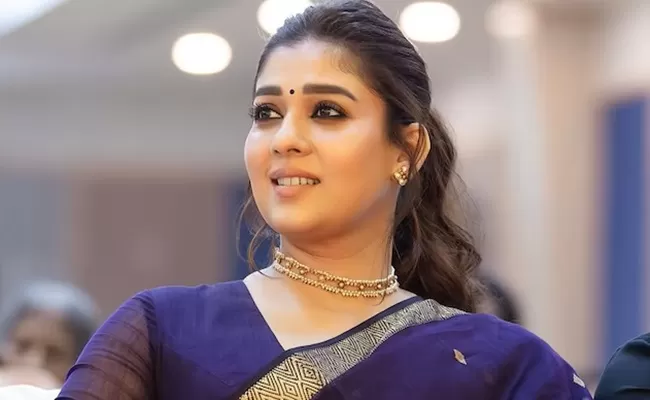
She reportedly charges ₹5 crore for a 50-second advertisement, earns nearly ₹10 crore per film, and owns assets estimated to be worth over ₹200 crore. In Indian cinema, big paychecks often make headlines — but in Nayanthara’s case, the numbers reflect careful planning, smart positioning, and long-term value creation.
Her journey has never been about overnight success. It has been steady and strategic. From the roles she selects to the visibility she allows herself in public life, she has consciously built a brand that translates directly into financial strength.
Nayanthara made her debut with the Malayalam hit Manassinakkare in 2003 before expanding into Tamil and Telugu cinema. What followed was not a rushed climb but a gradual accumulation of credibility. With more than 70 films across industries, she proved early that she could balance commercial entertainers with performance-driven roles.
Films like Ayya, Chandramukhi, Ghajini, Bodyguard, and Super established her as a dependable box-office force. Trade analysts began noticing a rare trend — films headlined by her could open strongly even without a major male superstar. That marked a shift in traditional box-office equations.
While she dominated the southern markets for years, Hindi cinema took longer to embrace her. That changed with Jawan, where she starred opposite Shah Rukh Khan, further expanding her pan-India appeal.
Her off-screen earnings mirror her on-screen pull. Industry buzz suggests she was paid around ₹5 crore for a satellite-dish commercial that lasted barely 50 seconds. At that level, brands are investing not just in screen time, but in recall value and credibility.
With nearly two decades in cinema, she reportedly commands close to ₹10 crore per film. Her estimated net worth of around ₹200 crore is built not only on movies but also endorsements, public appearances, and strategic investments.
One of her most talked-about assets is a private jet, reportedly valued at approximately ₹50 crore. Within the industry, it is seen less as luxury and more as efficiency — allowing her to travel swiftly between shoots across cities and industries.
After a relatively quiet 2024 with no theatrical releases, she is gearing up for a busy phase with projects like Mannaangatti Since 1960, Toxic, Kiss, and Raakayie. The lineup reflects her signature balance — experimental scripts alongside commercial entertainers.
Her title of “Lady Superstar” was not accidental. It represents trust — from producers who rely on her draw, directors who value her discipline, and brands that bank on her influence.
In an era where female-led films are securing big openings, premium OTT deals, and pan-regional reach, Nayanthara has not merely benefited from the shift — she has helped shape it.
On paper, her journey looks like a series of impressive numbers. In reality, it represents something far rarer in cinema than a blockbuster: longevity.


















Sobhita Dhulipala: I Don’t Believe in PR Games
At a time when aggressive PR strategies and constant media visibility dominate the film industry, Sobhita Dhulipala has chosen a different path. Riding high on the success of her Amazon Prime original film Cheekatlo, the Telugu actress has openly spoken about her decision to stay away from the publicity game.
During a recent interaction with Bollywood media, Sobhita was asked about the kind of PR strategy she follows. Her response was clear and candid. She said she does not want to be in the public eye 24/7 just for the sake of visibility. According to her, maintaining that kind of constant presence requires every move to be tracked and publicised — something she is not comfortable with.
Sobhita also pointed out that she is not from Mumbai but comes from a small town and has built her career independently. She expressed her desire to continue growing on her own merit rather than depending heavily on PR machinery. At the same time, she acknowledged that some actors prefer that route and are happy with it.
Speaking about Cheekatlo, she shared her happiness about working on the project, especially because it allowed her to dub in Telugu — her mother tongue. She mentioned that dubbing felt natural and effortless, adding to her overall satisfaction with the film.
In an industry where visibility often equals value, Sobhita’s approach stands out — choosing substance over noise and letting her work speak louder than publicity.