






Ameerpet | పేలిన వాషింగ్ మెషీన్.. పెద్ద శబ్దంతో పేలి.. పీస్ పీస్ అయ్యింది.
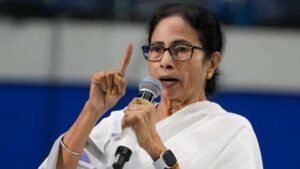
Mamata Banerjee vs BJP: Bengal Battle Heats Up
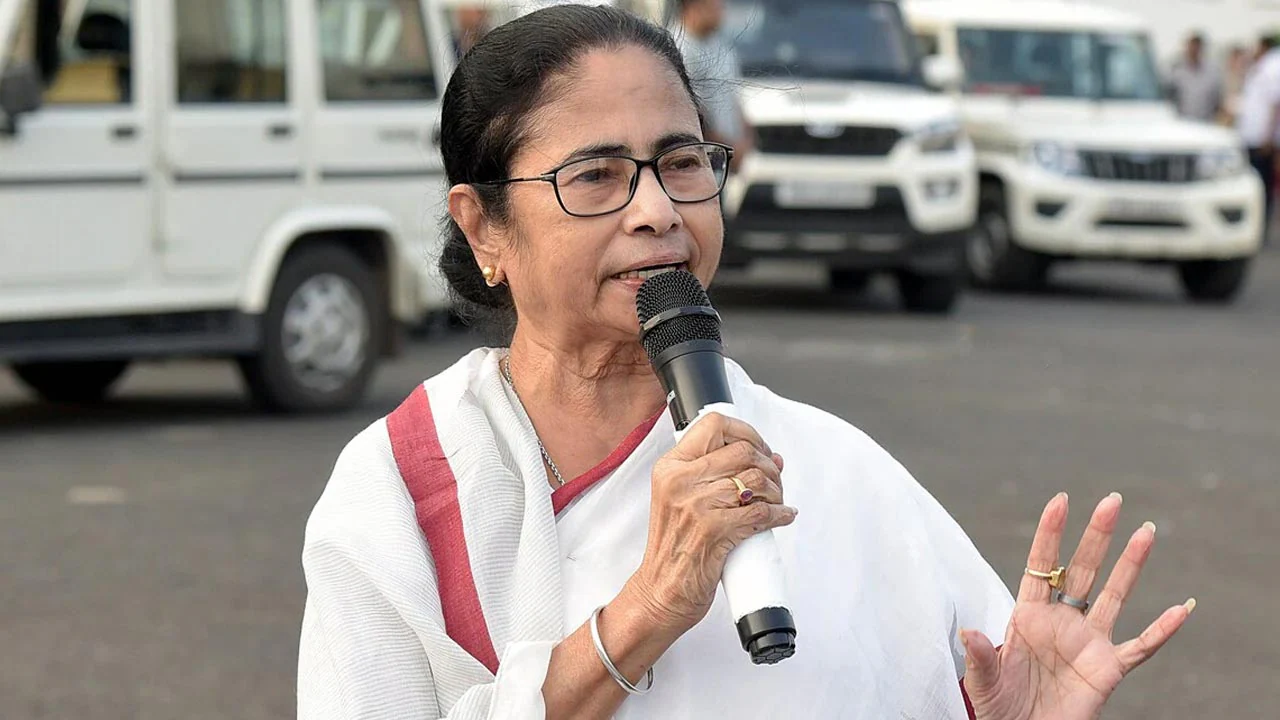
Mamata Banerjee appears increasingly rattled by the BJP, especially following the saffron party’s resounding victory in Bihar. Her recent series of assertive statements on SIR and minority rights in Bengal reflects the pressure she is facing.
Since independence, West Bengal, the land of Rabindranath Tagore, was ruled by the Communists for decades. The Congress remained the primary opposition, while the BJP had little presence. It was Mamata Banerjee’s Trinamool Congress (TMC) that dismantled the Communist stronghold, establishing itself firmly in power ever since.
Over the years, the Congress faded from relevance, and the BJP emerged as the principal opposition party. In the last two elections, the BJP fought hard but failed to wrest Bengal from TMC. While conditions seem favorable for a BJP victory, the party lacks a charismatic leader capable of taking the fight directly to Mamata.
Some may point to BJP victories in states like Delhi, Rajasthan, and Uttar Pradesh without a clear Chief Ministerial candidate. However, these are Hindi heartland states where ideology often outweighs personality. In Bengal, however, Mamata’s deep-rooted grassroots network and personal charisma make it challenging for the BJP to secure a win solely on ideological grounds.
Ultimately, the contest remains Mamata Banerjee versus the BJP. Unless the party can find a leader matching her appeal, it will likely have to rely on ideology, anti-incumbency sentiment, and the influence of Prime Minister Modi to make significant inroads.
Chikiri Chikiri Mania: Ram Charan’s Peddi Song Breaks Records
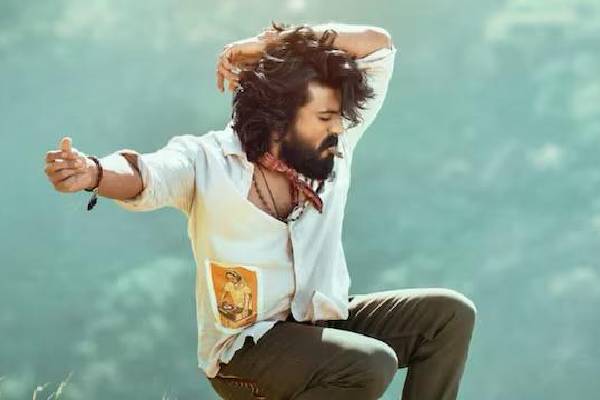
Chikiri Chikiri, the chartbuster from Mega Power Star Ram Charan’s pan-India spectacle Peddi, is taking the world by storm. The vibrant track has set social media on fire across the country and is now earning massive international attention as well.
Recently, the song crossed a staggering 100 million total views across five languages, continuing to break records at lightning speed. As audiences groove to the viral hook step—now a favourite on reels and shorts—the makers have dropped an exciting making-video titled “Behind the Chikiri Madness.”
The video reveals that the team travelled nearly 45 minutes uphill to shoot in a stunning hill-station backdrop. Ram Charan is seen effortlessly performing the now-iconic choreography that has mesmerised fans everywhere.
Adding to the fun, Charan is seen teasing director Buchi Babu Sana, calling him “Thala,” and humorously warning him to take care of his own thala (head) during the trek. Their light-hearted banter highlights the warm camaraderie between the star and the filmmaker.
The making video also showcases the crew tackling a steep, rope-assisted ascent—evidence of their collective dedication, passion, and love for the project.
Backed by producer Venkata Sathish Kilaru, with music by AR Rahman, Peddi is gearing up for a grand worldwide release on March 27, 2026, coinciding with Ram Charan’s birthday.
Blue Yellow Song Creates Buzz
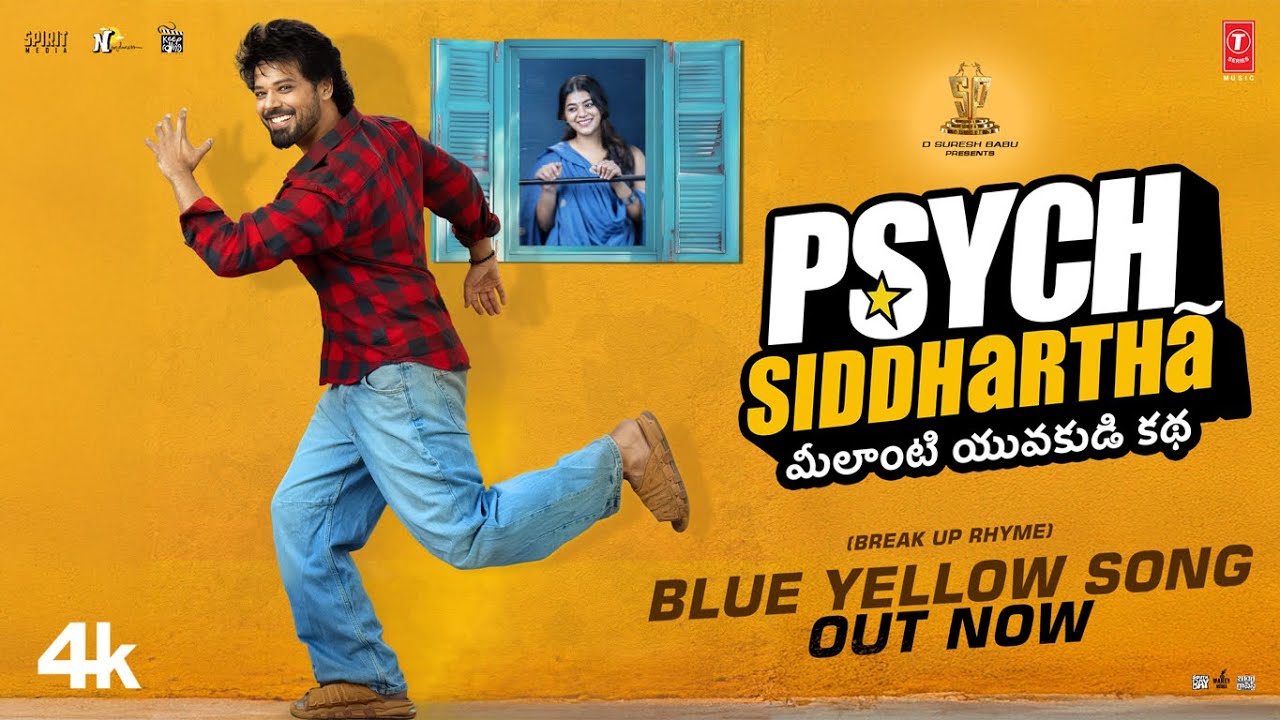
While a senior lyricist is currently facing heavy trolling from fans for delivering outdated and tasteless lyrics in a big-budget, star-driven film, a song from a much smaller project is quietly grabbing attention for all the right reasons. Lyric-writing has been evolving for years, constantly demanding freshness, catchiness, and originality — and this new track seems to tick all the boxes.
The song “Blue Yellow”, penned by Varun Reddy and Rohith M, stands out for its new-age writing style. But what truly makes it special is the contribution of Psych Siddhartha, who crafted an inventive and thought-provoking lyrical concept. The song blends the science of colors with the emotional turmoil of a heartbroken lover, resulting in a refreshing and Gen Z–friendly narrative.
Adding more charm, the song is rendered by Jassie Gift, a long-time favourite known for his unmistakably unique voice. The music by Smaran Sai is soothing, modern, and melodious, making “Blue Yellow” a track that stays with the listener.
The film stars Shree Nandu and Yamini Bhaskar in the lead roles and is directed by Varun Reddy. For Shree Nandu, who is returning after a considerable hiatus, this attention-grabbing song could turn out to be a comeback moment — provided the film’s content matches the intrigue created by its music.
Psych Siddhartha is slated to hit theatres on December 12.
Keerthy Suresh on Female-Centric Films Debate
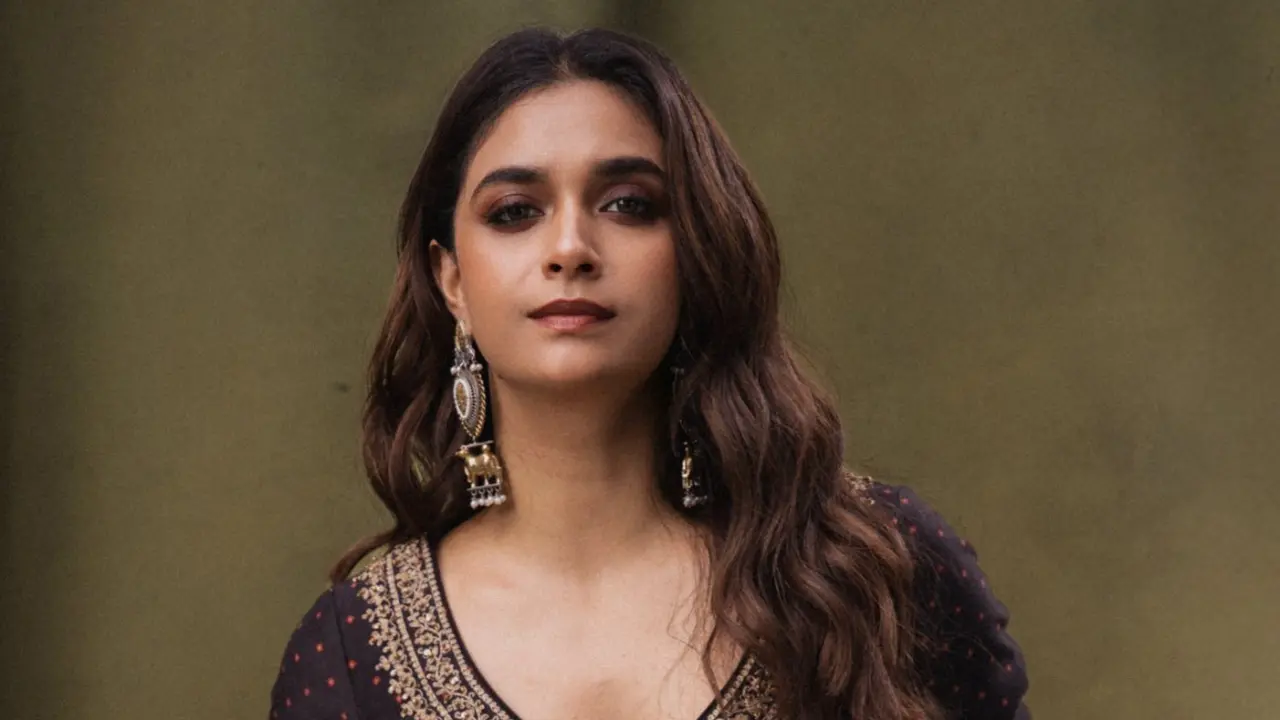
Actress Keerthy Suresh recently made a strong statement about the lack of audience interest in female-oriented films. She pointed out that Indian viewers, conditioned for decades, still prefer watching their favourite hero’s film on the first day, even if a top heroine’s solo film releases on the same date.
Keerthy’s remarks highlight the long-existing truth — Indian cinema continues to be largely male-dominated, where star-hero films enjoy far greater hype, openings, and theatre pull than women-centric projects. While her observation is valid, there have been rare but powerful exceptions where female-led films not only shined but also outperformed big-hero movies at the box office.
One of the earliest examples is Arundhati (2009), which stormed the box office with collections above ₹70 crore — an extraordinary feat at that time, even for many star heroes. More recently, Kalyani Priyadarshan’s Lokah emerged as the highest-grossing Malayalam film ever and performed exceptionally well in Telugu too. These films elevated their leading ladies to new heights of stardom.
Similarly, in Bollywood, Shraddha Kapoor’s Stree 2 turned into a massive blockbuster by collecting around ₹600 crore domestically and nearly ₹880 crore worldwide, becoming one of the biggest modern-day Hindi hits.
Despite these success stories, female-oriented films remain exceptions rather than the norm — which is exactly what Keerthy Suresh was addressing.
Meanwhile, Keerthy is gearing up for the release of her next female-centric film, Revolver Rita, scheduled for a simultaneous Tamil and Telugu release tomorrow (November 28).
Andrea Clarifies Nude Scene Rumours in Pisasu 2

Pisasu, directed by Mysskin, remains one of the standout hits in his career. Naturally, expectations have been high for its sequel, Pisasu 2, starring singer-actress Andrea Jeremiah in the lead. Though the film was completed long ago, its release has been repeatedly delayed due to ongoing legal hurdles.
In a recent interview, Andrea opened up about the much-discussed nude scene rumours and the film’s bold content. Addressing the speculation directly, she clarified:
There is no nude scene in the final version of Pisasu 2
The film does contain several erotic sequences
A nude scene was initially part of the script, but Mysskin removed it during production
Andrea added that she was prepared to perform it because of her confidence in the director.
“I trust Mysskin sir completely. He’s not a first-time director, and if he asks something for a role, I believe there is artistic intent behind it. Yes, a nude scene was written earlier, but he removed it while filming. I don’t know why he changed it, but I trust his vision. There are many erotic scenes in Pisasu 2, but no nudity,” Andrea explained.
While the film is expected to hit theatres soon, the team is yet to officially announce the release date. On the work front, Andrea was recently seen in Mask, co-starring Kavin.
iQOO 15 Review: A True Performance Monster With Few Compromises
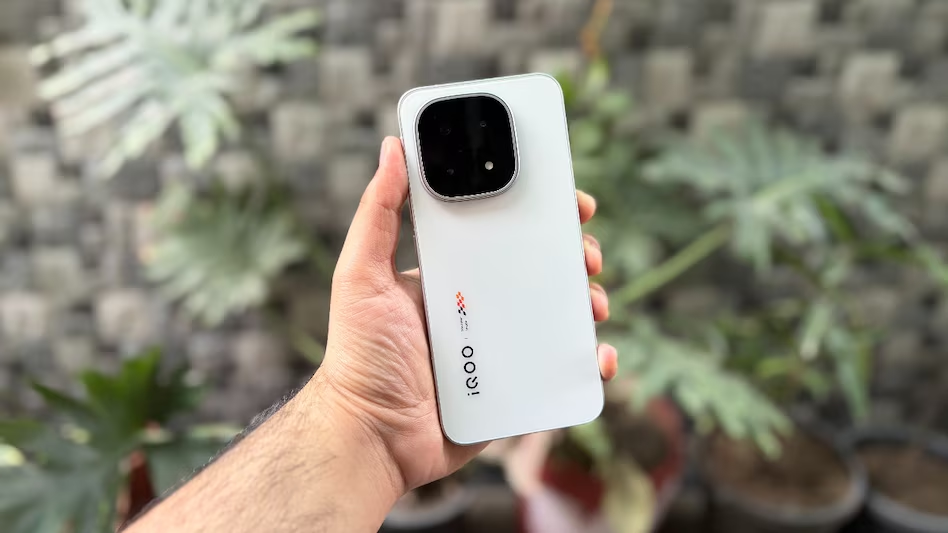
In an era where tech brands are busy bending, folding and slimming down their smartphones—often prioritising form over function—the iQOO 15 arrives as a refreshing exception. With its “monster inside” branding plastered across campaigns (and even etched on one variant), the company promises uncompromised performance powered by the most capable Android chipset available today. After using it as my primary device for two weeks, here’s a closer look at everything the “monster” gets right—and where it holds back—especially at a starting price of ₹72,999.
Design & Build
The iQOO 15 is a confidently understated device that focuses on comfort and durability. Its aluminium frame and satin-finish glass back (Fibre Glass on the Alpha Black variant) offer a premium in-hand feel. The phone is IP68 and IP69 certified, meaning it can handle spills and even high-pressure water jets.
The sizeable camera bump houses the signature “Monster Halo”—an LED ring that lights up for notifications and charging alerts, adding functional flair to a rock-solid design that feels sturdy enough to use without a case.
Performance: Truly Monstrous
At the heart of the iQOO 15 is the Snapdragon 8 Elite Gen 5 chipset, and it delivers exactly what the branding promises. Whether it was multiple high-graphics rounds of Call of Duty Mobile or ray-traced gameplay in Genshin Impact, the phone showed zero stutters or dips.
The dedicated Supercomputing Q3 chip boosts performance when required, while the Q-Chip Zone lets gamers customise resolution and frame rate—even pushing settings to “Extreme”—at the cost of ray tracing. Given this level of control, iQOO 15 stands out as the best Android gaming phone available today.
Thermals are equally impressive with an 8000mm² vapour chamber—the largest in India—keeping the device cool during demanding sessions. On AnTuTu, it pulled in a score of around 3.9 million, validating its top-tier performance claims.
Display: Samsung’s Best on Board
The iQOO 15 features a 6.85-inch 2K Samsung 8T LTPO AMOLED panel with a 144Hz refresh rate. The Samsung M14 LEAD™ OLED display produces rich, crisp visuals with excellent contrast and punchy colours.
With a peak brightness of 6000 nits and 2600 nits HBM, sunlight visibility is effortless. The display also supports adaptive touch sampling and “wet finger control,” ensuring precise inputs during gaming or daily use.
Battery: A New Benchmark
Equipped with a massive 7000mAh battery, the phone comfortably lasts over a day and a half on mixed usage—including gaming, navigation, social media and calls. Standby performance is exceptional, barely dropping percentage points over several hours.
The 100W wired charger in the box and 40W wireless charging support round out an excellent power package.
Camera: High Quality, Familiar DNA
The 50MP triple-camera setup (main, telephoto periscope and ultra-wide) delivers consistently great images across lighting conditions. Backed by vivo’s imaging DNA—though without ZEISS tuning—the iQOO 15 captures detailed portraits, sharp landscapes and impressive night shots.
The main Sony IMX921 sensor includes OIS, while the 3X telephoto IMX882 periscope adds versatility. Video recording goes up to 8K 30fps on the rear and 4K 60fps on the 32MP selfie camera.
Software & AI
Running Origin OS 6 based on Android 16, the UI feels fluid and polished. AI features such as AI Erase, AI Retouch and AI Reflection Removal complement Google Gemini integrations.
Long-term support is strong—5 years of major OS updates and 7 years of security patches.
What Falls Short?
The only real drawback is the speaker performance. While loud, the audio lacks depth, richness and clarity at higher volumes—an area where rivals deliver better results.
Verdict
The iQOO 15 is a powerhouse flagship built for enthusiasts who want uncompromising performance, top-tier display quality, long battery life and reliable cameras. With few compromises and a user-first approach, it stands tall as one of the most well-rounded Android flagships of the year.
Prices start at ₹72,999 for the 12GB/256GB variant and go up to ₹79,999 for the 16GB/512GB model.
Mahindra Unveils XEV 9S: Electric-Origin 7-Seater SUV Launched on INGLO Platform
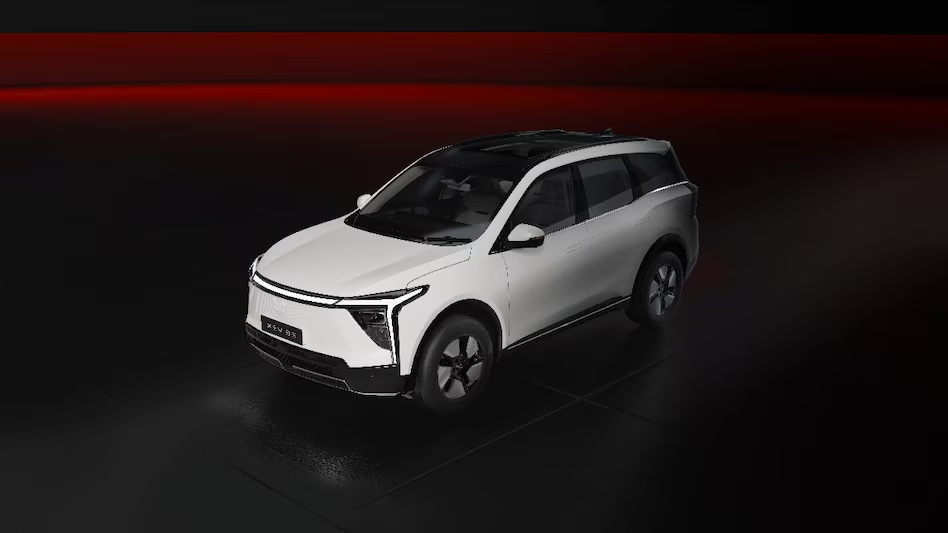
Mahindra has officially unveiled the XEV 9S, its first electric-origin, seven-seater SUV built on the advanced INGLO platform. Showcased in Bengaluru, the XEV 9S is positioned as a spacious, family-centric electric SUV designed to combine comfort, practicality and next-generation technology.
The model will be offered in six variants, with prices starting at ₹19.95 lakh. Buyers can register their preferences from 14 December 2025, with test drives beginning 5 January 2026. Official bookings open on 14 January 2026, and customer deliveries start from 23 January 2026. The top-end Pack Three Above variant with a 79 kWh battery is priced at ₹29.45 lakh (ex-showroom).
Mahindra is marketing the XEV 9S as a category-expanding electric SUV, offering an EV-first three-row layout and what it claims is the largest cabin space in its segment—4076 litres across the first two rows—along with a 527-litre boot and a rare 150-litre frunk.
Inside, the XEV 9S features a premium, quiet cabin with a panoramic skyroof, acoustic laminated glass, and large digital displays. The company’s new MAIA intelligent system powers many of the SUV’s flagship features.
The SUV runs on Mahindra’s INGLO architecture and comes with 70 kWh or 79 kWh LFP battery options, supported by a lifetime battery warranty. It promises a real-world range of up to 500 km, DC fast charging (20–80%) in 20 minutes, up to 210 kW power, 380 Nm torque, and 0–100 km/h in 7 seconds. The model also features intelligent adaptive dampers, i-Link suspensions, and a 5-link rear setup.
The XEV 9S is packed with advanced technology, including over 140 connected features, digital key, user profiles, live security view, and a BYOD entertainment system. Higher variants come equipped with Qualcomm’s 8295 chipset, dual wireless charging, and AutoPark Assist.
Safety is enhanced through up to seven airbags, L2+ ADAS powered by five radars and a camera, driver monitoring, a 360-degree camera, blind spot detection, and a high-stiffness body structure.
Key interior highlights include ventilated seats in first and second rows, powered boss mode, sliding and reclining second row, dual-zone climate control, lounge desk, and Camp, Pet and Keep climate modes.
With its mix of innovation, space and performance, the XEV 9S marks a significant milestone in Mahindra’s EV roadmap and aims to redefine the Indian family EV segment.
India–UAE Boost Talks on Visa Liberalisation and Consular Cooperation
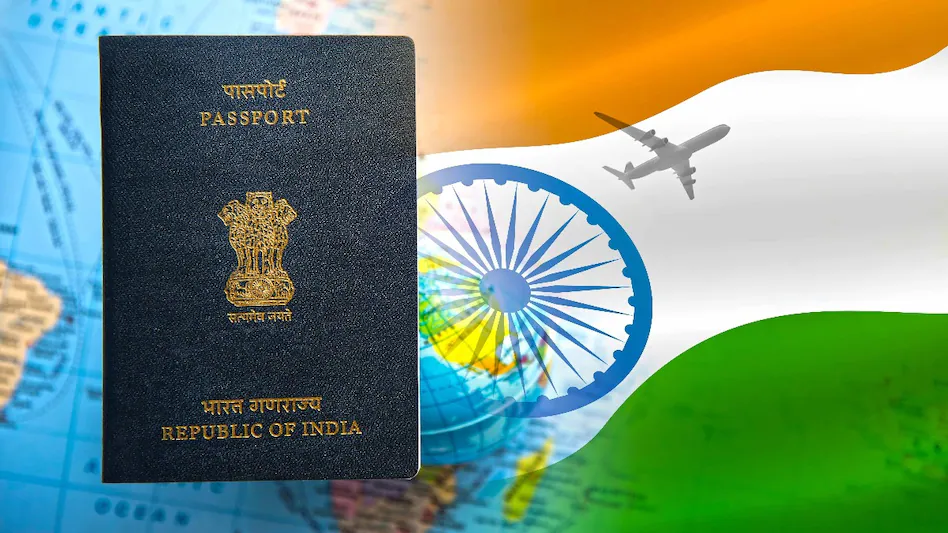
India and the United Arab Emirates have intensified their engagement on mobility and consular cooperation, launching a fresh round of dialogue at the India–UAE Joint Committee on Consular Affairs (JCCA) meeting held in Abu Dhabi on Wednesday. With travel between the two nations surging and economic ties expanding, both sides placed the liberalisation of visa policies at the forefront of their discussions.
According to the Ministry of External Affairs (MEA), the talks also marked progress in three additional areas: strengthening information-sharing mechanisms, enhancing consular access, and accelerating collaboration on mutual legal assistance and extradition matters. The MEA highlighted that the committee advanced work across “four key areas,” reflecting the broad and strategic nature of the partnership.
The meeting was held in an atmosphere of “traditional warmth and cooperation,” underscoring the strong foundations of the India–UAE Comprehensive Strategic Partnership. India expressed gratitude to UAE authorities for their continued support to the large Indian diaspora, which it described as a “vital bridge” in bilateral relations. Both nations reaffirmed their commitment to ensuring the safety, dignity, and overall well-being of their citizens residing in each other’s territories.
Since Prime Minister Narendra Modi’s landmark 2015 visit elevated the relationship to a Comprehensive Strategic Partnership, India and the UAE have witnessed steady growth in trade, investment, and people-to-people ties. This momentum further accelerated following the 2022 Comprehensive Economic Partnership Agreement (CEPA), which deepened bilateral cooperation across multiple sectors.
Canada Lifts Visa Requirement for Qatari Travellers

Canada has officially expanded travel access for Qatari citizens by lifting its long-standing visa requirement, a policy shift that took effect at 5:30 a.m. EST on Thursday. Immigration, Refugees and Citizenship Minister Lena Metlege Diab announced the change, highlighting its role in enhancing business, tourism, and people-to-people connections between the two countries.
The Canadian government stated that visa-free entry for Qatari travellers reflects its commitment to managed migration while safeguarding national security. The move is expected to support growth in trade, tourism, and investment, building on the consistently increasing exchanges between Canada and Qatar.
Qatari citizens who hold a valid temporary resident visa may continue to use it until it expires or until their passport becomes invalid. Those without an existing visa will now be required to obtain an Electronic Travel Authorization (eTA) for air travel to Canada. Eligibility details and applications are available at canada.ca/eTA, with most approvals processed within minutes.
Minister Diab said that lifting visa requirements marks an important milestone in Canada–Qatar relations. The step is expected to strengthen business and investment opportunities, generate economic benefits for both nations, and deepen a diplomatic relationship spanning more than 50 years.
In 2024, bilateral trade between the two countries reached approximately CAN $325 million. Visitor arrivals from Qatar also grew to around 9,000, an 11.5% increase from the previous year. Cooperation continues to advance across key sectors including artificial intelligence, clean energy, agribusiness, and critical minerals.
Air connectivity has further improved following the expansion of the Canada–Qatar Air Transport Agreement in late 2024, facilitating greater mobility and supporting stronger commercial ties.
Anupama Parameswaran’s Lockdown Trailer Released
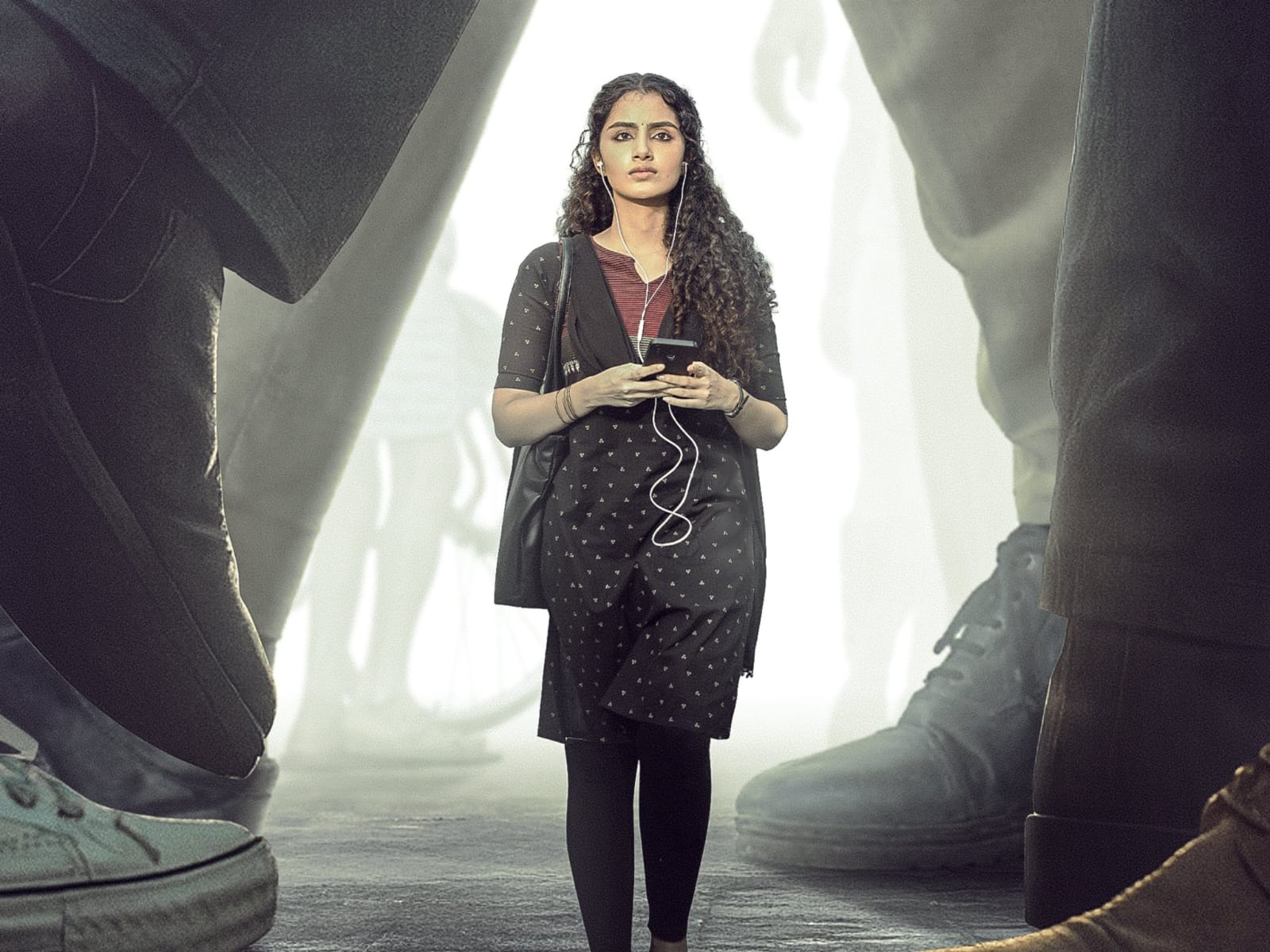
Recently, Anupama Parameswaran has been choosing author-backed roles over typical glamorous characters. After earning praise for her performances in films like Paradha and Bison, she is now set to take on another strong role in Lockdown, whose theatrical trailer was released today.
The trailer hints at an intense drama exploring the emotional and psychological journey of a woman during the COVID-19 lockdown. It opens with Anita (Anupama) saying she doesn’t want to go home, suggesting she is facing a personal problem she cannot confront with her family.
As the story unfolds, viewers see how the lockdown impacts people’s lives. Anita’s life takes a dramatic turn—she faces threats from men, borrows money from friends, and endures physical abuse from her family. These events lead to a central conflict, which the trailer keeps mysterious, enticing audiences to watch the film to uncover the full story.
The trailer is gripping, elevated by Anupama’s strong performance. Music directors NR Raghunanthan and Siddharth Vipin provide an engaging background score that complements the intense mood. Directed by AR Jeeva and produced by Lyca Productions, Lockdown is slated for a worldwide release on December 5, promising a serious drama with a powerhouse performance from Anupama.
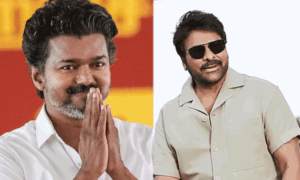
Keerthy Suresh Apologizes Over Chiranjeevi-Vijay Dance Debate
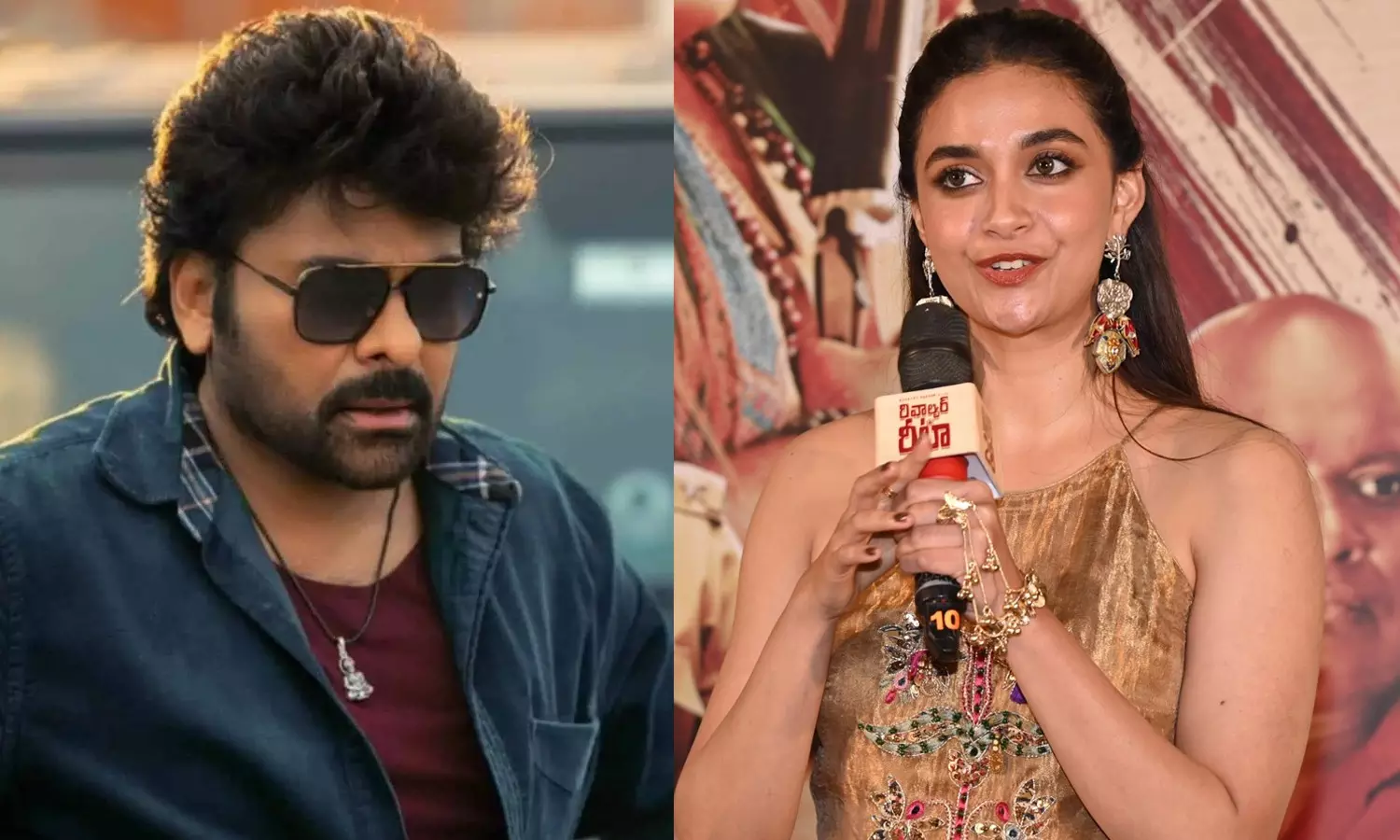
Young actress Keerthy Suresh faced strong backlash nearly a year ago for a comment made during her film promotions. While promoting Raghu Thatha, she was asked who she considered the better dancer between Vijay and Megastar Chiranjeevi. Keerthy instantly replied that Vijay was the better dancer. The clip quickly went viral, triggering heavy trolling from Chiranjeevi’s fans and sparking a fan war between Vijay’s and Chiru’s supporters.
Now, during the Hyderabad promotions of her upcoming film Revolver Rita, Keerthy addressed the controversy. She said, “Chiranjeevi garu knows how big a fan I am. He used to ask me about my favourite actor, dancer, and movie. Even if I didn’t mention his name, he always respected my choices. I am deeply sorry if I hurt his fans—it was never intentional.”
Explaining further, she added, “I have watched Vijay garu more frequently, and since I had to answer immediately, I mentioned his name. No one is lesser than the other; both are legends. If anyone felt offended, I sincerely apologise.”
A producer, speaking anonymously, also weighed in on the debate. “Chiranjeevi is one of the finest dancers in Indian cinema, celebrated for his energetic and graceful movements. He made even the trickiest steps look effortless in films like Rowdy Alludu, Hitler, Indra, and Tagore. Guinness World Records recognized him for 24,000 dance moves across 537 songs in 156 films—an unmatched achievement,” he said.
Acknowledging Vijay’s talent, he added, “Vijay is a skilled dancer with memorable performances in Beast, Leo, and GOAT. However, Telugu superstars like Allu Arjun, Jr NTR, and even Ram Charan continue the legacy of ‘dancing stars’ in Tollywood, often surpassing their Kollywood counterparts with intricate and stylish choreography.”
Sushmita Sen’s Childhood Crush: Salman Khan Posters
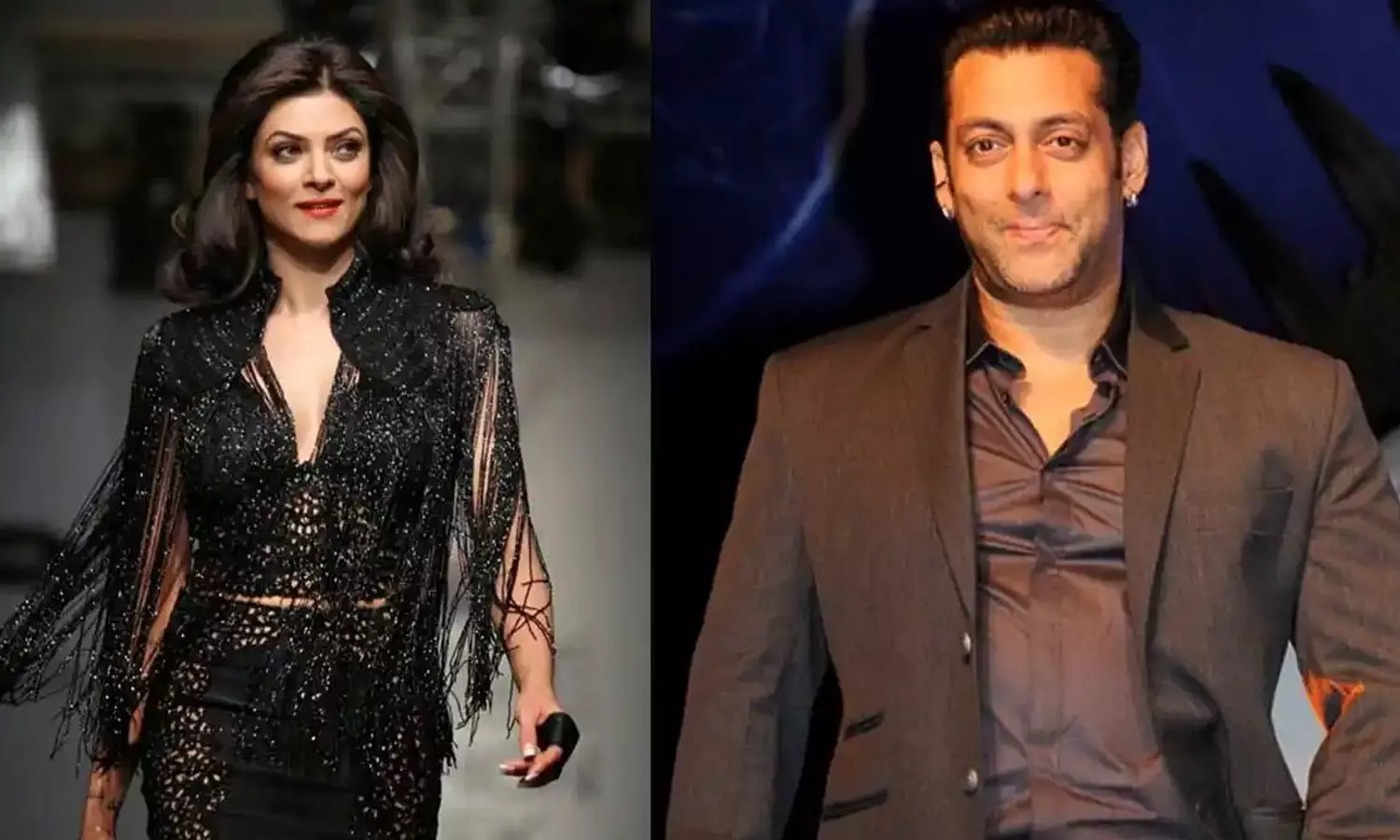
Star heroine Sushmita Sen recently shared a nostalgic memory that thrilled her fans, especially those of Salman Khan. At a public event, she revealed that during her school days, she was a huge admirer of the Bollywood superstar. “I was in school, and whatever pocket money I had, I used to spend it on Salman Khan posters,” she recalled with a smile.
She even mentioned that when Maine Pyar Kiya released, the iconic pigeon poster from the film adorned her bedroom wall.
Her heartfelt confession has gone viral, offering fans a sweet glimpse into a time when even future stars had their own childhood idols. Sushmita, who also made her mark in Telugu cinema, was paired opposite Nagarjuna in the 1997 action-romance Rakshashudu, which resonated strongly with the Telugu audience.

Vidhu Vinod Chopra Slams Social Media Influencers at IFFI
Filmmaker and producer Vidhu Vinod Chopra — known for acclaimed films like 12th Fail, Parinda, and 1942: A Love Story — sparked a major controversy at the International Film Festival of India (IFFI) with his sharp remarks about social media influencers. Speaking during a masterclass session, Chopra openly criticised the growing trend of influencers gaining prominence, calling them “ch****a” and questioning, “What the f**k is going on?”
Chopra expressed frustration over what he sees as a talent-less culture driven solely by follower count. “Today, people get opportunities based on Instagram followers, not on skill. Someone posts meaningful content and gets five likes, while someone else posts rubbish and gets five million. Then suddenly everyone thinks that’s the standard. These people are not artists—they are fools,” he said.
He also slammed brands for choosing influencers purely to boost product visibility. “Brands approach people with followers, not talent. Then the influencer says, ‘Hey, buy this tiffin,’ and suddenly thinks he’s a legend. What the f**k is going on?” he added.
While many actors and netizens agreed with Chopra’s blunt take, influencers and their supporters strongly criticised the filmmaker’s choice of words.
Influencer Shray Rai Tiwari responded sarcastically:
“Kya word hai sir… so elegant, so profound. Truly remarkable. You seem so happy—more power to your nuanced language.”
Another influencer, Divyanshu Agrawal, countered the criticism by highlighting influencer authenticity:
“I’d prefer taking inspiration from a self-made creator doing genuine brand collaborations rather than actors promoting tobacco or gambling and whitewashing their audience with paid PR.”
The debate has since gone viral, reigniting the broader conversation on talent vs. trends, and the evolving status of social media creators in the entertainment industry.