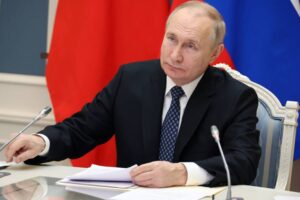
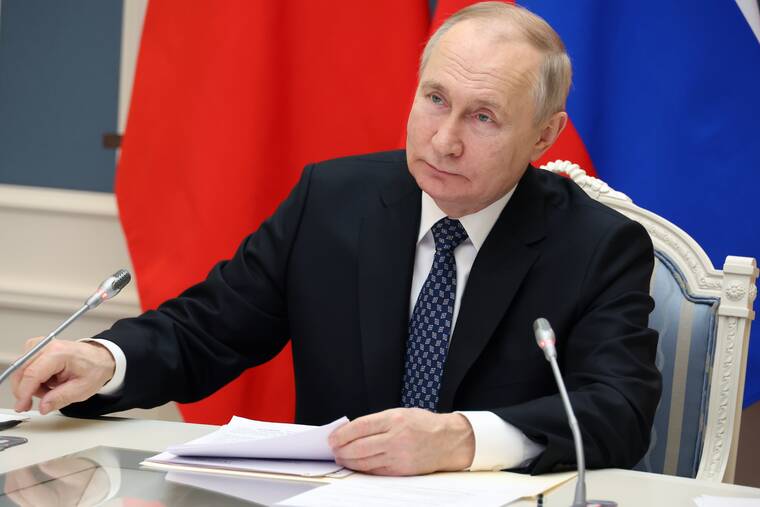
As tensions surrounding the Iran conflict intensify, analysts are questioning whether Russian President Vladimir Putin sees the situation as an opportunity to retaliate against the United States for its support of Ukraine during the ongoing Russia–Ukraine war. Some experts believe Moscow could quietly assist Iran, partly in return for Tehran’s earlier support to Russia.
Geostrategist Brahma Chellaney noted that Iran played a significant role in aiding Russia during the early phase of the Ukraine war by supplying more than 50,000 Shahed drones, which became a key component of Russia’s military operations. According to Chellaney, it is highly unlikely that Russia is not providing some form of assistance to Iran as it confronts what he described as the Trump–Netanyahu war of aggression.
Chellaney argued that Moscow may seek to “prolong the hurt” by forcing the United States to divert military resources and munitions toward West Asia, resources that might otherwise have been directed toward supporting Ukraine in its war against Russia. He also pointed out that the United States has effectively waged a high-stakes proxy conflict against Russia by supporting Ukraine with advanced weapons systems, real-time battlefield intelligence, and targeting data. In such a scenario, Russia might now feel tempted to return the favor indirectly.
However, experts believe that any Russian support to Iran would likely remain discreet rather than overt. Assistance could include sharing reconnaissance data, signals intelligence, and battlefield insights gained from the Ukraine conflict. Chellaney also suggested the possibility of “reverse mentorship,” where Russia could help Iran adopt tactics learned during the Ukraine war. These include coordinating large-scale drone swarms with ballistic missile strikes to overwhelm Western-supplied air defense systems such as Patriot and IRIS-T. Russia has become increasingly adept at such strategies, while Iran is still developing similar capabilities.
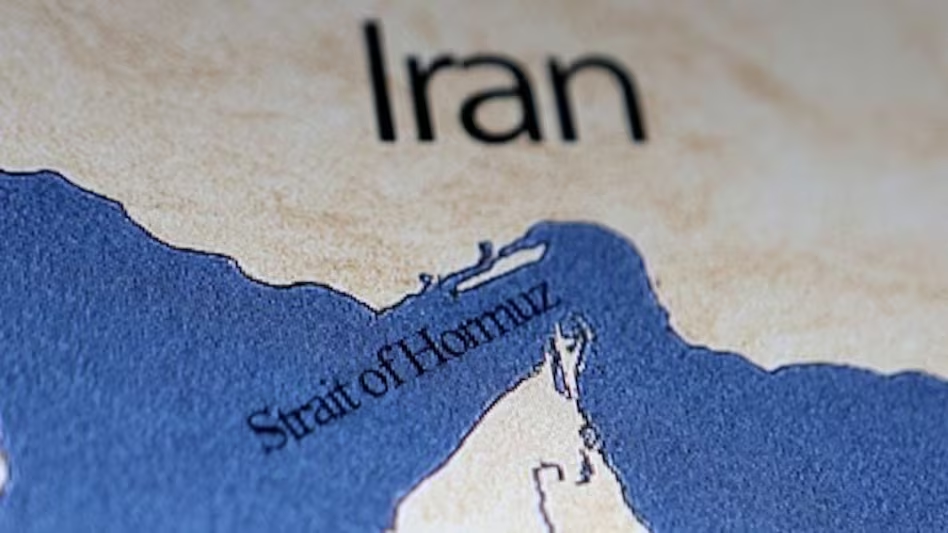
Meanwhile, the United States has issued a 30-day waiver allowing countries to purchase sanctioned Russian oil and petroleum products currently at sea. US Treasury Secretary Scott Bessent said the move is intended to stabilize global energy markets, which have been shaken by the Iran conflict and disruptions to shipping through the Strait of Hormuz.
Responding to the decision, Kremlin spokesperson Dmitry Peskov said Russia views the waiver as an attempt by Washington to steady global energy markets. He noted that, in this context, the interests of both countries appear to align. “We see actions by the United States aimed at stabilizing energy markets. In this respect, our interests coincide,” Peskov said.
The waiver marks the second major rollback of Ukraine war-related sanctions in just over a week, following US and Israeli strikes on Iran that affected shipping through the Strait of Hormuz. Peskov also warned about the potential escalation of a global energy crisis and emphasized the importance of Russian oil supplies in maintaining stability in international energy markets.










Anantha Sriram Reignites Kalki 2898 AD Debate
A fresh discussion has resurfaced around Kalki 2898 AD, the blockbuster film directed by Nag Ashwin and starring Prabhas, after noted Telugu lyricist Anantha Sriram reiterated his earlier criticism regarding the movie’s portrayal of mythological characters. The film, which became one of the biggest box office successes after Baahubali 2, impressed audiences with its grand visuals and futuristic narrative inspired by the Mahabharata. However, some creative choices in the film had sparked debate even during its release.
Anantha Sriram had earlier objected to certain elements in the film, particularly the way the character of Karna was presented. In a recent interview, the lyricist once again defended his remarks and stated that he continues to stand by his earlier criticism. According to him, the film appeared to elevate Karna’s character while comparatively diminishing the stature of Arjuna, which he believes does not align with the traditional narrative of the epic.
He emphasized that epics like the Ramayana and Mahabharata are not merely stories but an important part of India’s cultural and historical heritage. In his view, filmmakers should exercise caution while adapting such revered texts and avoid altering their core narratives purely for cinematic appeal or commercial entertainment. He also expressed concern that portraying controversial or complex characters as heroic figures for dramatic impact could lead to misinterpretations of the original stories.
Sriram further noted that in earlier times there were limited platforms for people to question such portrayals, but today social media and public discourse have made it easier for audiences to voice their opinions. He stated that he would continue to speak out whenever mythological stories are, in his opinion, misrepresented in films.
His comments have once again triggered mixed reactions on social media. While some people support his stand and believe filmmakers should remain faithful to the original epics, others argue that cinema should allow creative freedom and reinterpretations of traditional narratives. As a result, Kalki 2898 AD has once again become a topic of debate among film enthusiasts and audiences online.