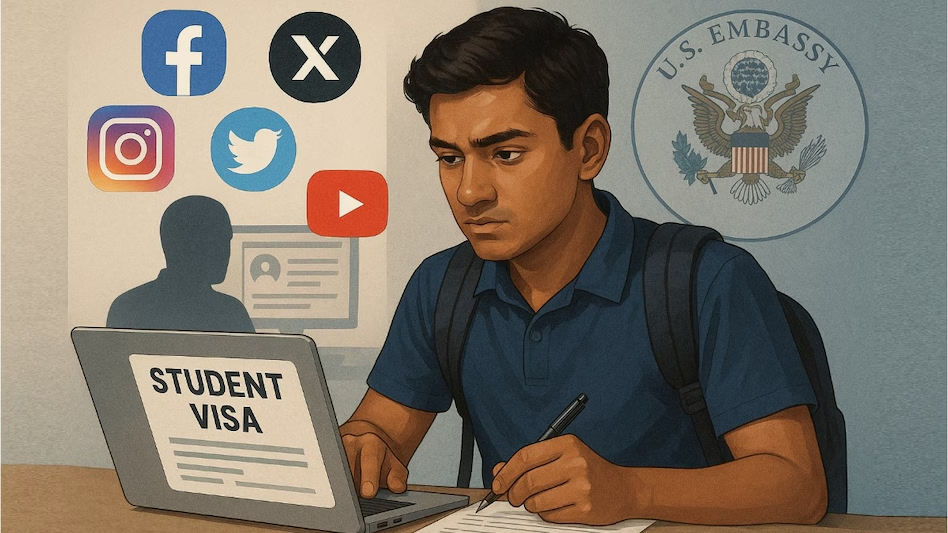
As the United States resumes student visa interviews following a brief pause, there’s a new requirement that all applicants should be aware of—mandatory social media vetting. If you’re an Indian student planning to pursue higher education in the U.S. this fall, here’s what you need to know and how to prepare.
❓ What is Social Media Vetting?
Social media vetting is a background check process where U.S. consular officers review your public social media activity. This includes posts, interactions, and even affiliations on popular platforms. The goal is to identify any content that might suggest security concerns or attitudes contrary to U.S. values.
📱 Which Platforms Are Included?
The U.S. Department of State currently lists around 20 social media platforms on the DS-160 visa application form. Some of the most common platforms include:
Facebook
Instagram
X (formerly Twitter)
LinkedIn
YouTube
Reddit
TikTok
Snapchat
Pinterest
Tumblr
Douban (China)
⚠️ Note: You must provide the usernames or handles for all personal accounts you’ve used in the past five years, including multiple accounts on the same platform (e.g., your main and “finsta” accounts).
🔒 Do I Have to Share My Passwords?
No. Consular officers will not ask for your passwords.
They will only review what’s publicly visible on your profiles.
📢 However, during the review period, it’s strongly advised that you set your accounts to public. Making them private or deleting posts right before your visa interview might be flagged as suspicious.
🕵️ What If My Account Is Inactive, Deleted, or Embarrassing?
Even if:
The account is inactive
You’ve deleted it
It contains embarrassing content
👉 You must still disclose it if you used it in the past five years.
Failure to report can be seen as misrepresentation, which may negatively impact your visa application.
💼 What About Business or Professional Accounts?
You’re not required to list accounts that are strictly used for business or organizational purposes.
Only personal accounts used for social interaction are subject to review.
🚨 What Are Officers Looking For?
U.S. consular officers are instructed to flag:
Hostility toward the U.S. government, culture, institutions, or citizens
Violent or extremist content
Affiliation with banned or dangerous organizations
The State Department says the goal is to “ensure we are properly screening every single person attempting to visit our country.”
👥 Who Does This Apply To?
This requirement applies to all applicants for non-immigrant visas, including:
F-1 Student Visa
M Visa (Vocational students)
J Visa (Exchange visitors)
You’ll see a social media section in the DS-160 visa application, where you’re required to list your account handles.
✅ Should I Clean Up My Profiles?
If your content is clean, respectful, and non-political, you’re likely in the clear.
It’s a good idea to review your public content and delete or archive posts that might raise red flags—but don’t do it right before your interview.
Avoid sarcasm, dark humor, or controversial memes that could be misinterpreted.
🗝️ Transparency is key—be honest, consistent, and avoid hiding information.
✈️ Final Tips for Indian Students
Double-check the public visibility of your social accounts.
Disclose all usernames used in the last 5 years, even for old or inactive accounts.
Maintain a professional and respectful tone online—especially in posts that are publicly visible.
Be honest in your DS-160 application. Consular officers are trained to spot inconsistencies.
Remember: This process isn’t about punishing students—it’s about security screening. If you’re truthful and your digital presence reflects genuine academic and personal interests, you’re on the right track.
Would you like a checklist or mock DS-160 social media section to help with your prep?



















Kajol’s Salman Khan Praise Sparks Fan War with Akshay Supporters
Bollywood actress Kajol’s recent comments have sparked controversy, creating a divide between the fans of Salman Khan and Akshay Kumar. In a recent interview, Kajol made remarks about Salman’s unmatched stardom, calling it “unique and untouchable.” While she clearly intended to praise Salman Khan, her statement unintentionally belittled Akshay Kumar, leading to a heated debate among fan communities.
Kajol also went a step further by claiming that even Akshay Kumar would agree with her opinion — a comment that hasn’t gone down well with Akshay’s loyal followers. Fans of the Khiladi actor have strongly criticized Kajol for undermining Akshay’s achievements, saying that while Salman’s charisma is undeniable, Akshay’s contributions to Indian cinema are equally significant and deserve respect.
Both Salman and Akshay have over 18 films each in the ₹100-crore club, and Akshay Kumar is known for his consistency and massive fan following. His image as a dependable, versatile star is not one that fans take lightly. They argue that Kajol’s suggestion that Akshay would support her view is dismissive and unfair.
Adding to the discontent, some fans pointed out that Kajol didn’t even mention her own husband Ajay Devgn, who has had a strong and consistent career, choosing instead to focus solely on praising Salman. This, they say, reflects a growing trend in Bollywood where star power overshadows other achievements.
While it’s common to admire iconic actors like Salman Khan, fans and observers believe that praising one star shouldn’t come at the cost of others. They’ve urged Kajol to be more mindful in the future to avoid igniting unnecessary fan wars.