






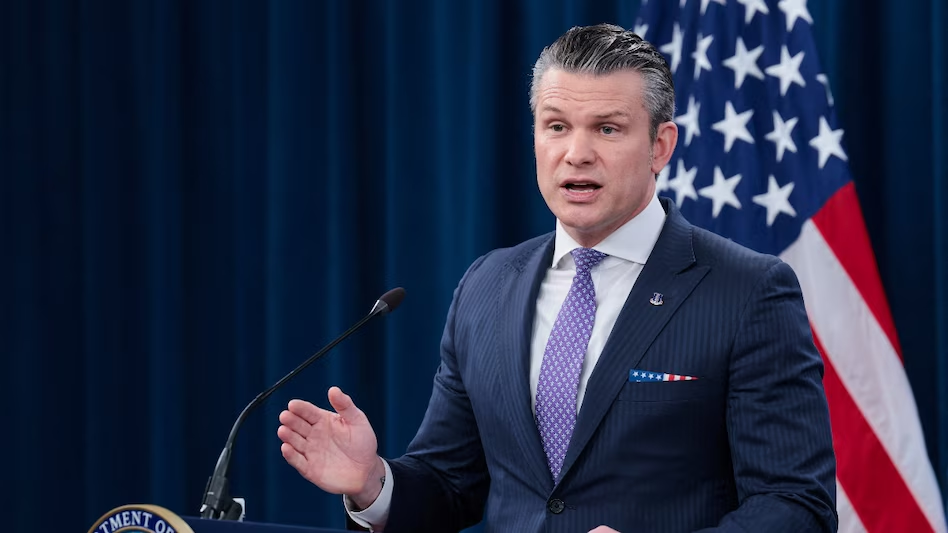
US Defence Secretary Pete Hegseth has once again come under the spotlight after reportedly asking US Army Chief of Staff General Randy George to step down and proceed on immediate retirement, triggering a fresh wave of leadership changes within the Pentagon.
According to reports, Hegseth personally conveyed the decision, stating it was “time for a leadership change in the Army.” While the Pentagon has not officially disclosed detailed reasons, officials suggest the move aligns with efforts to align military leadership more closely with President Donald Trump’s strategic vision for the armed forces.
Hegseth has rapidly emerged as a prominent and closely watched figure in Washington, with a series of bold decisions—including allowing troops to carry personal firearms on military bases and initiating reshuffles in senior Army leadership—keeping him in the national conversation.
Born on June 6, 1980, Hegseth began his career in the U.S. Army National Guard after graduating from Princeton University through the ROTC programme. He served in deployments including Guantanamo Bay, Iraq, and Afghanistan, taking on roles ranging from platoon leadership to civil affairs operations. His service record includes two Bronze Star Medals along with other commendations such as the Combat Infantryman Badge and Expert Infantryman Badge.
After military service, he moved into policy advocacy with organisations like Vets for Freedom and Concerned Veterans for America, where he became known for strong conservative positions on US defence and foreign policy. He also briefly pursued electoral politics, including a Senate run in Minnesota.
Hegseth’s public profile rose significantly after joining Fox News in 2014, where he became a co-host on Fox & Friends Weekend and an influential commentator. During this period, he also served as an informal adviser to Donald Trump.
In November 2024, he was nominated as US Defence Secretary by Trump, a move that drew both support and criticism due to his unconventional background. His confirmation in January 2025 came after a closely contested Senate vote, with Vice President JD Vance casting the tie-breaking vote.
Recently, his tenure has been marked by controversial reforms, including approving personal firearms for troops on bases and restructuring senior military leadership, including the reported removal of Army Chief Randy George. Supporters view these steps as efforts to strengthen the military, while critics see them as signs of a more centralised and assertive leadership style.
Recent Random Post: