






Whenever a Bollywood actor/actress signs a South Indian project, they are definitely going to get the biggest paycheque of her career. This has been the norm for the past few decades. For some reason, Bollywood artists who don’t know the language and couldn’t give apt expressions will get paid more than South actors who can actually perform.
With the ‘Pan-India’ cinema becoming a trend in Tollywood, a lot of star heroes are keen on working with Bollywood stars as they may improve the film’s chances of performing in the North. We have seen Shraddha Kapoor, Deepika Padukone and others working with Prabhas. Kiara Advani and Alia Bhatt too have worked in movies like ‘Bharat Ane Nenu’ and ‘RRR’ respectively. Ajay Devgn did ‘RRR’ and many others. As we know, all of them were paid huge amounts to work in these projects.
Currently, Arjun Rampal is playing the negative role in ‘Bhagavanth Kesari’ while Emraan Hashmi is the villain in ‘OG’. Apart from them, Saif Ali Khan is the antagonist in NTR’s ‘Devara’ while Bollywood beauty Janhvi Kapoor is the heroine in the same film. Kiara is doing ‘Game Changer’ while we know how Mrunal is busy working on Telugu projects like ‘Hi Nanna’ with Nani and Vijay Deverakonda’s film.
As per reports, Saif is getting 14 crores in remuneration which is on par with some of the mid-level heroes in Tollywood. There is news of Janhvi getting 4 crores for ‘Devara’ as well and it is expected to be the highest remuneration for a heroine in the Telugu industry till date. Even Mrunal Thakur is getting more than 3 crores for her Telugu projects each and the latest update claims that Sanjay Dutt is being offered 10 crores for playing the villain in Ram and Puri’s ‘Double Ismart’. Do you think they deserve these huge paycheques?
Recent Random Post:
Om Raut Drops Kalam Biopic, Eyes Film with Ajay Devgn
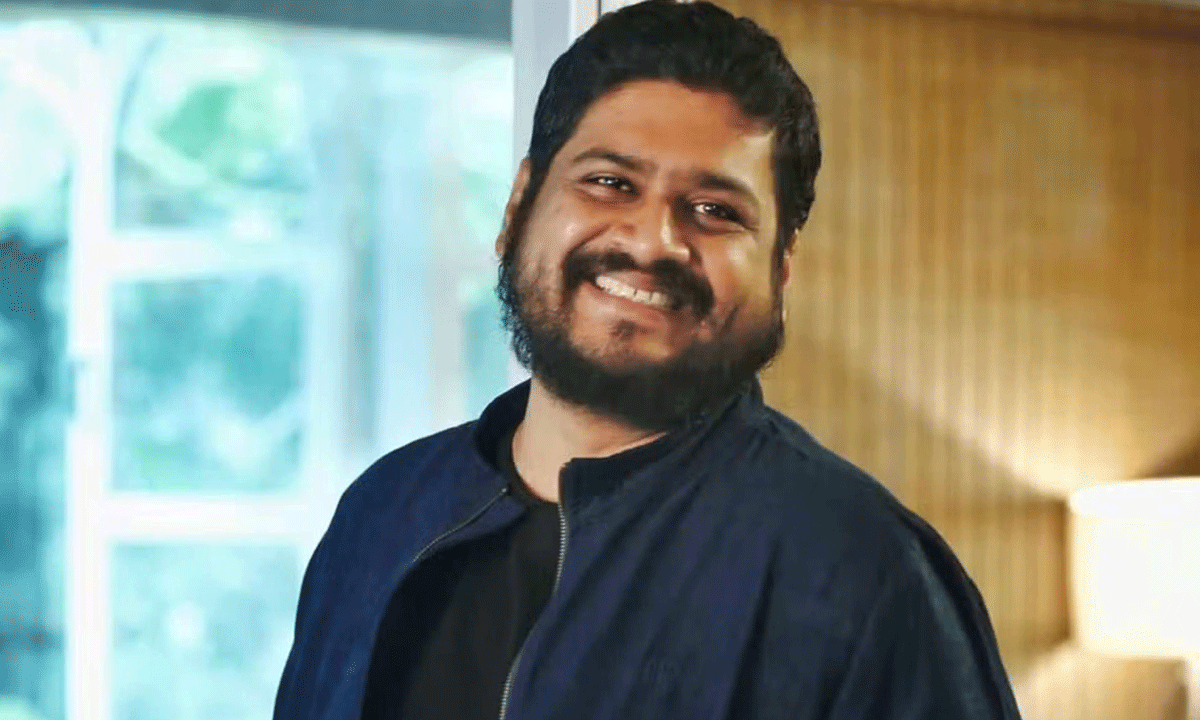
Director Om Raut, who faced heavy criticism from Telugu audiences for portraying Prabhas in Adipurush, continues to remain a controversial figure even years after the film’s release. Despite being made on a massive budget, Adipurush disappointed fans, especially due to its poor visual effects, which drew widespread backlash.
The impact of that failure appears to have significantly slowed down Om Raut’s career. Even after nearly three years, he has not been able to take a new project onto the floors, reflecting the extent of damage the film caused to his reputation. Not just in the South, but even Bollywood audiences have become cautious about his projects.
Earlier, reports suggested that Om Raut was planning a biopic on former President A. P. J. Abdul Kalam, with Dhanush expected to play the lead role. The project was said to be backed by Abhishek Agarwal Arts and T-Series, with plans to begin shooting in 2025 and release in 2026. However, despite the buzz, the film has yet to go on floors, leading to speculation that the project may have been shelved.
Now, fresh reports indicate that Om Raut is shifting focus to a new film with Ajay Devgn. The duo had previously delivered a blockbuster with Tanhaji, which received both commercial success and critical acclaim. This has raised expectations among fans, who are eager to see the hit combination reunite.
It is said that Om Raut has already narrated a story to Ajay Devgn, who has shown strong interest in the project. If things go as planned, the film could go on floors later this year.
Meanwhile, Om Raut had earlier expressed interest in collaborating with Prabhas again after Adipurush. However, with Prabhas currently busy with multiple projects, and given the previous film’s outcome, such a collaboration seems unlikely in the near future.
Overall, the director’s shifting plans—from the Abdul Kalam biopic with Dhanush to a possible film with Ajay Devgn—have created confusion in industry circles. Many are questioning his clarity on upcoming projects, while others believe he is still trying to regain his footing after the setback of Adipurush.