









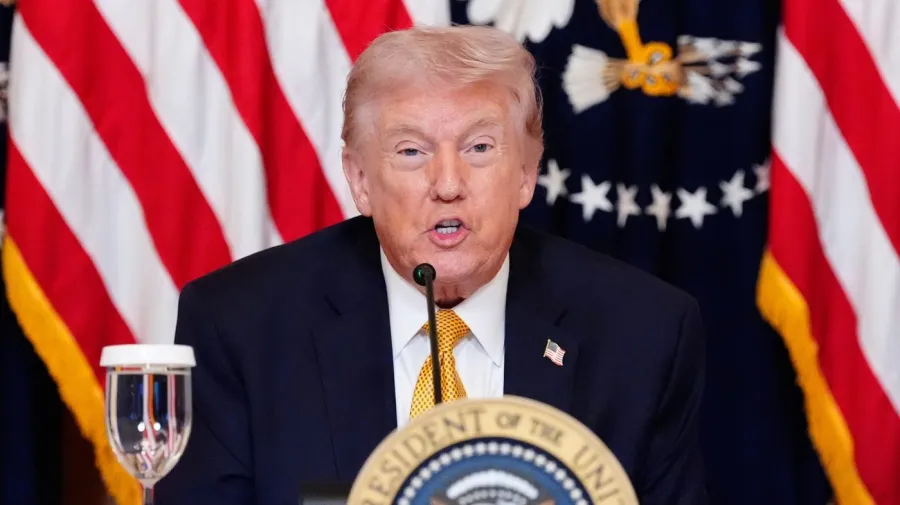
US President Donald Trump expressed frustration with some long-standing allies over their reluctance to assist in securing the Strait of Hormuz. The UK, Japan, Australia, Canada, and Germany reportedly declined to send naval forces to the strategically vital waterway.
Speaking at a White House event in Washington, Trump said, “Some are very enthusiastic about it, and some aren’t. Some are countries that we’ve helped for many, many years. We’ve protected them from horrible outside sources, and they weren’t that enthusiastic. And the level of enthusiasm matters to me.” He had earlier demanded that China, France, Japan, South Korea, Britain, and other nations contribute naval forces to protect the strait, emphasizing that it is critical for their own energy supplies.
Global leaders, however, refused. Canadian Prime Minister Mark Carney stated that Canada would not participate in the “offensive operations” of the US and Israel. German Chancellor Friedrich Merz cited the lack of a UN, EU, or NATO mandate and noted that Germany was not consulted before the conflict. The UK indicated it wanted to keep the strait open but was not ready to deploy Royal Navy destroyers. Australia said it would withstand the economic fallout but would not send ships, and Japan also declined the request.
Meanwhile, Chinese media outlet Global Times argued that sending warships into the Strait of Hormuz was not the solution, questioning whether Washington was attempting to “share responsibility” or merely “share the risk of a war it started and cannot finish.”
The ongoing US-Israel conflict with Iran has now entered its third week, with the Strait of Hormuz—responsible for 20% of the world’s oil and liquefied natural gas—largely closed. The disruption has driven up global energy prices and fueled fears of rising inflation.
Recent Random Post: