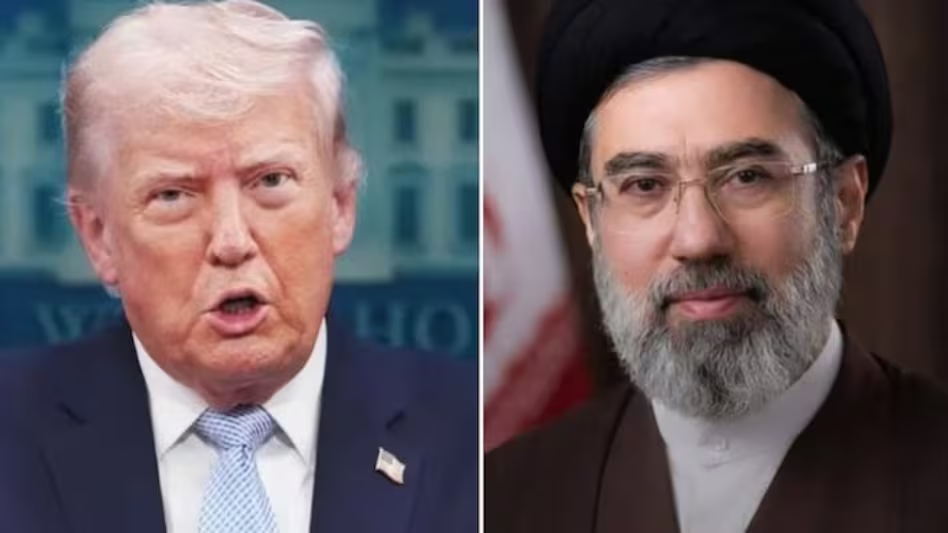
Gulf nations are reportedly growing increasingly concerned over the ongoing United States–Iran peace talks, with fears that the negotiations may not deliver the broader regional de-escalation they consider essential.
According to a Reuters report, analysts expect the upcoming discussions—set to be held in Islamabad—to focus primarily on uranium enrichment limits and Iran’s strategic leverage over the Strait of Hormuz, rather than addressing its missile programme or regional proxy activities. The Strait, a crucial artery for global oil shipments, is now emerging as a central point of tension in the talks, raising unease among Gulf states.
Former Russian President Dmitry Medvedev has added to these concerns, suggesting that the Strait of Hormuz itself represents a form of strategic leverage. His comments have further highlighted fears that reopening or securing the Strait may be the only tangible outcome of the negotiations, rather than a comprehensive settlement.
“At the end of the day, Hormuz will be the red line,” a Gulf source told Reuters, adding that the issue was previously less prominent but has now become a major concern. “The goal posts have moved,” the source noted.
Gulf officials worry that the current diplomatic framework prioritises global energy stability while leaving regional countries exposed to security risks, particularly without their direct involvement in decision-making.
The Strait of Hormuz, through which nearly one-fifth of global oil passes, has become a key bargaining point. Analysts say the increasing focus on enrichment levels and maritime security reflects a shift in priorities that sidelines broader regional threats, including Iran’s missile capabilities and its network of allied groups across the region.
Medvedev also commented on social media, describing the Strait as a powerful geopolitical tool and underscoring its strategic importance in global energy dynamics. Iranian security officials have similarly referred to it as a long-prepared instrument of deterrence.
Meanwhile, Gulf states have urged a cautious approach to any potential sanctions relief, advocating for a phased strategy to assess Iran’s behaviour. They maintain that critical security concerns—particularly missiles and proxy forces—remain unresolved and must be addressed in any comprehensive agreement.