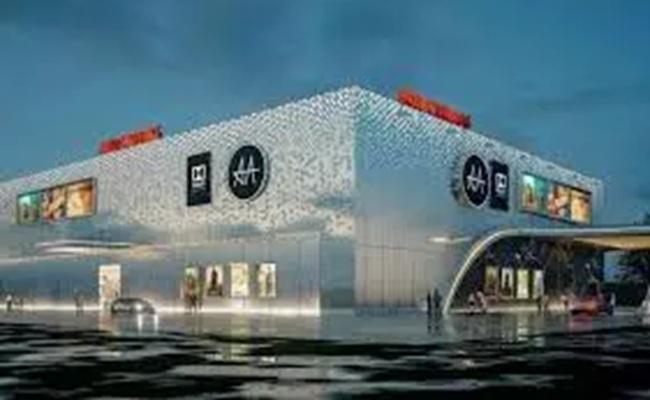
The Telugu film industry is witnessing a quiet yet decisive shift. Leading stars are steadily building income streams beyond acting, particularly in exhibition and allied businesses. Today, stardom is no longer defined only by box-office pull; it is increasingly measured by long-term financial vision and strategic planning.
Actors such as Allu Arjun, Mahesh Babu, and Ravi Teja have leveraged their brand power and capital to invest in theatre ownership. Allu Arjun’s AAA Cinemas at Ameerpet has positioned itself as a premium movie destination, while the upcoming Allu Mall at Kokapet signals a broader ambition to merge entertainment with retail.
Mahesh Babu’s AMB Cinemas at Gachibowli has already redefined the multiplex experience in Hyderabad, with another theatre reportedly planned at the iconic RTC Cross Roads, a hub synonymous with Telugu cinema. Ravi Teja’s ART Cinemas at Vanasthalipuram follows a similar route, focusing on strong local patronage and consistent footfalls.
Beyond theatres, several actors are finding success in the food and hospitality space. Sundeep Kishan is reportedly earning more from his restaurant chain Vivaha Bhojanambu than from his film career. Naga Chaitanya runs Shoyu, a gourmet pan-Asian restaurant, and Scuzi, a newer venture aimed at comfort food such as pizza, pasta, and burgers.
These investments highlight a crucial industry reality: relying solely on acting income is risky in the long run. Producers have long understood this, building distribution networks and, in many cases, becoming exhibitors by leasing or owning theatres.
A notable emerging trend is the growing focus on interval businesses—popcorn, burgers, samosas, and beverages—which generate steady, high-margin revenue regardless of a film’s box-office fate. Sources suggest that distributors are now competing with producers for control over these sales, arguing that their financial exposure to films warrants a share in ancillary revenues.
Interestingly, despite earning hundreds of crores, many top stars have not aggressively entered residential real estate branding. Veterans like Murali Mohan and Sobhan Babu remain classic examples of how real estate can create generational wealth alongside cinema.
As theatrical revenues continue to fluctuate, smart investments that earn even during idle phases are becoming essential. For today’s Telugu stars, success is no longer just about hard work on screen—it is equally about foresight, diversification, and strategic financial planning off it.







Rayalaseema Lift Project Controversy Reignites Political Tensions
The Rayalaseema Lift Irrigation Project has once again come into political focus following recent remarks by Telangana Chief Minister Revanth Reddy in the Assembly. His comments were swiftly amplified by the YSR Congress Party (YSRCP), which accused the ruling TDP-led coalition government in Andhra Pradesh of neglecting Rayalaseema’s irrigation needs.
Rejecting these allegations, the Andhra Pradesh government has termed the criticism politically motivated, stating that the controversy surrounding the project predates the current administration and is rooted in procedural lapses during the previous YSRCP regime.
According to officials from the state government and the irrigation department, the Rayalaseema Lift project was initiated without obtaining mandatory statutory and environmental clearances. As early as 2020, multiple central agencies and regulatory authorities had reportedly directed that no construction work should proceed without prior approvals.
Despite these warnings, the project was announced and work was taken up, eventually leading to legal hurdles. Government sources point out that stop-work orders were issued by institutions such as the National Green Tribunal (NGT) and river management authorities well before the present coalition assumed office. Officials also note that project execution had already slowed and later stalled during the YSRCP tenure due to the absence of clearances.
The current NDA-led coalition argues that the previous government failed to effectively defend the project in legal forums, weakening Rayalaseema’s position. In contrast, the present administration says it has begun filing detailed counters and placing factual submissions before the NGT in an effort to revive the project through lawful and sustainable means.
At the same time, the government has highlighted a renewed focus on Rayalaseema’s irrigation and agricultural development. Officials claim irrigation spending in the region declined significantly over the past five years, while the current government has increased allocations and revived stalled works. Priority is being given to projects such as the Handri Neeva canal expansion, reservoir strengthening, micro-irrigation initiatives, and drip irrigation subsidies to directly benefit farmers.
The government further states that its long-term objective is to transform Rayalaseema into a horticulture- and irrigation-driven region by enhancing water storage, ensuring efficient distribution, and executing projects in compliance with legal and environmental norms.
Maintaining that the Rayalaseema Lift controversy stems from past administrative failures, the AP government has accused the YSRCP of using recent political statements to deflect responsibility. The NDA coalition asserts that it is now focused on correcting those errors while rebuilding trust among farmers in the drought-prone Rayalaseema region.