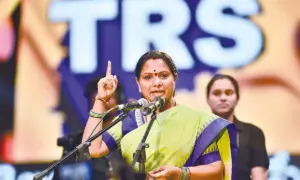








పవన్ కళ్యాణ్ కు ఉడుపి శ్రీకృష్ణ మఠం పండితుల ఆశీర్వాదం Udupi Temple Priests Blessings To Pawan Kalyan
IndiGo Crisis Puts Civil Aviation Minister Ram Mohan Naidu Under Fire
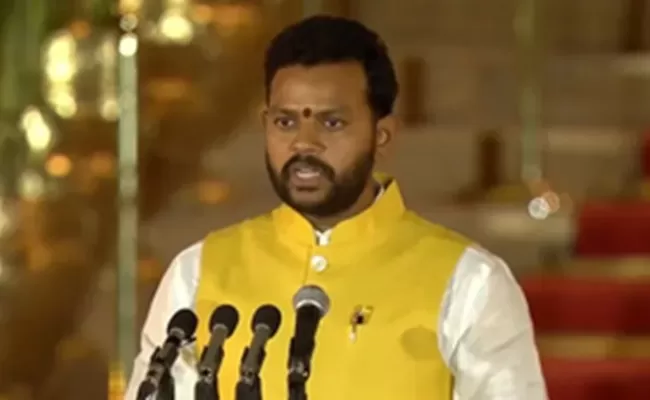
Union Civil Aviation Minister Ram Mohan Naidu is facing intense criticism amid the ongoing IndiGo operational crisis, which has severely disrupted air travel across India. Once regarded as a rising political figure with a clean and approachable image, Naidu is now under sharp scrutiny from national media and the public for his handling of the situation.
The crisis erupted after IndiGo, which operates nearly 60 percent of India’s domestic flights, abruptly suspended several services, triggering widespread chaos at airports nationwide. Thousands of passengers—including business travelers, students, professionals, and families—were left stranded, both for domestic and international journeys.
As pressure mounted, critics accused the Civil Aviation Ministry of failing to anticipate the severity of the disruption and of responding too slowly to manage the fallout. National media outlets have questioned Naidu’s leadership, describing his response as ineffective at a critical moment. The continued disruption has also sparked growing public anger toward the central government, creating negative publicity for the Modi administration.
Political observers note that the civil aviation portfolio, once considered relatively low-profile, has now emerged as one of the most sensitive ministries due to its direct impact on the country’s upper and middle classes. The IndiGo episode has underlined how quickly routine operations can transform into a nationwide crisis.
The fallout has also begun to affect Naidu’s standing in his home region of Uttarandhra, where dissatisfaction is reportedly growing among party cadres who feel that the leadership has failed to deliver despite being in power. Known for his strong communication skills in both Hindi and English and for maintaining good relations across party lines, Naidu is now being tested on crisis management rather than public relations.
Adding to the pressure, Naidu—along with Minister Nara Lokesh and leader Deepak Reddy—has become the target of intense online trolling as public frustration continues to grow.
As the IndiGo crisis remains unresolved, the coming days will be crucial in determining how the Civil Aviation Ministry regains public confidence and restores stability to the country’s aviation sector.
Suriya Begins New Film with Jithu Madhavan and Nazriya Nazim

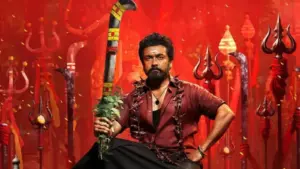
Tamil superstar Suriya has officially begun work on his next film, tentatively titled #Suriya47, marking his first collaboration with renowned Malayalam director Jithu Madhavan, who shot to nationwide fame with the blockbuster Aavesham. The film was formally launched today with a traditional pooja ceremony in Chennai, attended by close family members and prominent figures from the industry.
The event witnessed the presence of Jyotika and Karthi, along with producers from 2D Entertainment and Dream Warrior Pictures, adding significance to the launch. Nazriya Nazim has been roped in as the female lead, reuniting her with big-banner cinema after a brief gap. Popular Malayalam actor Naslen, known for his breakout performance in Premalu, plays a key role, while John Vijay and Anandaraj will be seen in crucial supporting roles.
The film features a strong technical crew with Sushin Shyam composing the music, Vineeth Unni Palode handling cinematography, and Chetan D’Souza choreographing the action sequences. Along with the launch ceremony, the makers have also kickstarted the regular shooting schedule from today, officially setting the project in motion.
Akshaye Khanna Steals the Spotlight in Ranveer’s Dhurandhar
Bollywood actor Ranveer Singh has made a strong comeback at the box office with his latest gangster drama Dhurandhar, which has been performing impressively since its release last Friday. Despite its lengthy runtime and a few narrative shortcomings, the film is reporting solid first-weekend numbers, driven largely by strong audience turnout and mass appeal.
While expectations were high for Ranveer Singh to dominate the film with his power-packed performance, it is Akshaye Khanna who has emerged as the real surprise package. Playing the ruthless gangster Rehman Dakait, Akshaye Khanna has delivered a terrifyingly intense performance that critics and audiences alike are calling “out of the syllabus.” His layered portrayal, menacing screen presence, and controlled aggression have become one of the film’s biggest highlights.
In fact, many trade analysts believe that Akshaye Khanna has nearly overshadowed Ranveer Singh in Dhurandhar, making his performance one of the most talked-about aspects of the film. His transformation into a dreaded criminal has sparked widespread praise across social media and industry circles, placing him firmly in the spotlight once again.
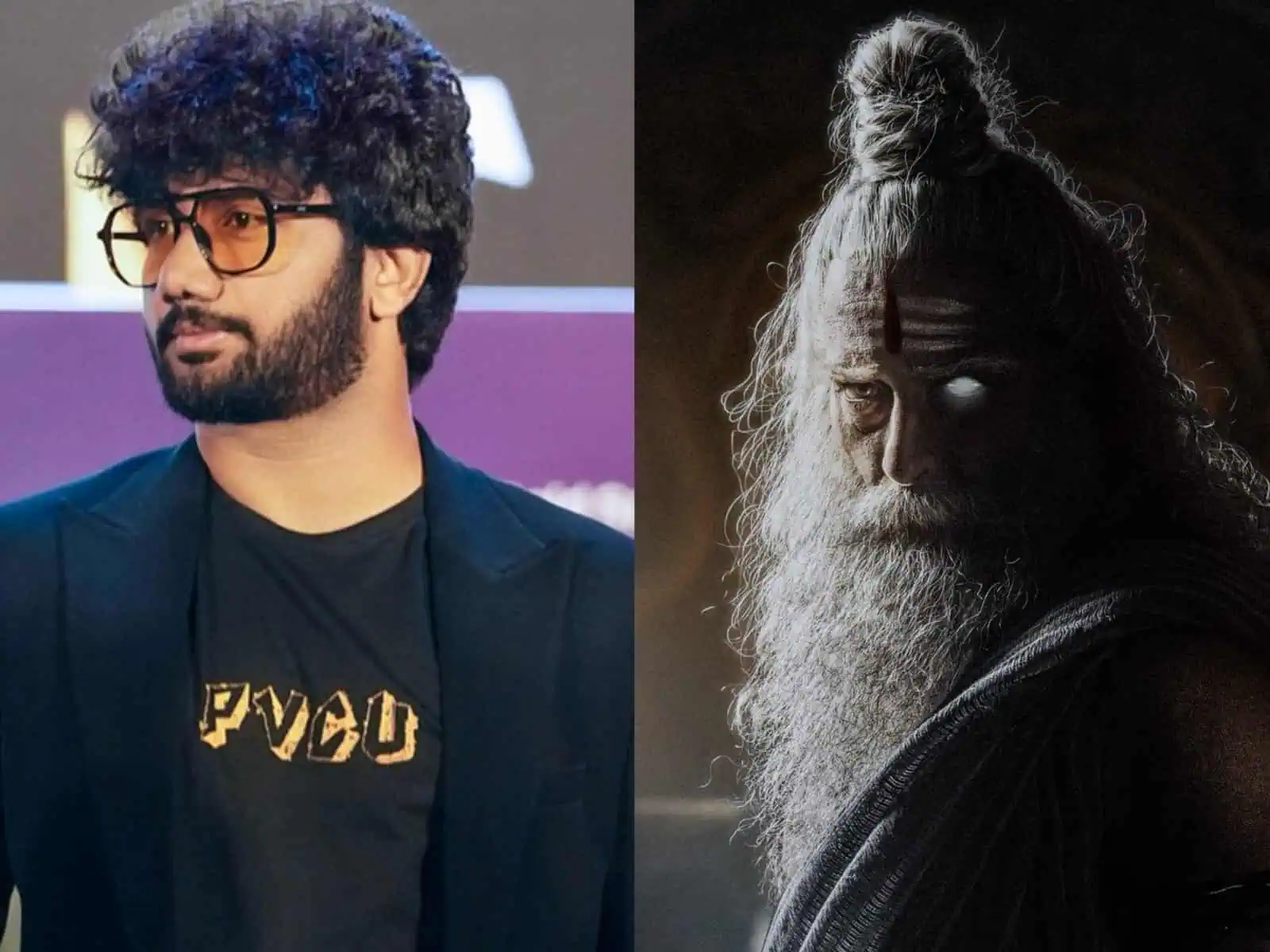
The roaring response to Akshaye Khanna in Dhurandhar is also expected to boost the buzz around his upcoming pan-India mythological film Mahakali, directed by Puja Kolluru and backed by Prasanth Varma’s cinematic universe. After the massive success of Hanu-Man across North India, expectations for the universe’s upcoming projects have surged. Akshaye Khanna’s striking first look as Asuraguru Shukracharya in Mahakali has already generated strong excitement.
With Dhurandhar reigniting his stardom and Mahakali promising a powerful new avatar, Akshaye Khanna is currently riding a career high, with audiences eagerly awaiting his next cinematic transformations.
Telangana to Name Roads After Trump, Ratan Tata, and Global Tech Giants

In a move being described as globally unprecedented, the Telangana government has announced plans to name a stretch of road adjoining the United States Consulate in Hyderabad as ‘Donald Trump Avenue’, in honour of the President of the United States. Officials said the decision is likely the first of its kind anywhere in the world and is expected to draw significant international attention.
The proposal will be formally communicated to the Union Ministry of External Affairs for approval. A statement issued by the Chief Minister’s Office (CMO) on Sunday confirmed that the state cabinet has cleared a series of high-profile road-naming initiatives as part of a broader urban branding strategy aimed at positioning Telangana as a global innovation and investment hub.
As part of the same initiative, the upcoming greenfield radial road connecting the Outer Ring Road (ORR) at Raviryal with the proposed Regional Ring Road (RRR) will be named after industrial legend Ratan Tata. The Raviryala interchange on this corridor has already been officially designated as the “Tata Interchange.”
Chief Minister Revanth Reddy, during his recent address at the US-India Strategic Partnership Forum (USISPF) in New Delhi, had announced the government’s intent to honour global corporations and iconic leaders by naming key city infrastructure after them — a vision that is now being translated into action.
In another major branding move, a prominent stretch of road in Hyderabad’s Financial District will be named ‘Google Street’, acknowledging the tech giant’s expanding footprint in the city. Google is currently constructing its largest campus outside the United States in Hyderabad, and the designated road is expected to serve as a primary access corridor to the facility.
Additional proposals under consideration include ‘Wipro Junction’ and ‘Microsoft Road’, reflecting the government’s effort to underscore Hyderabad’s status as one of the world’s fastest-growing technology destinations.
Officials indicated that more such names may be finalized in the coming weeks under a broader urban identity and branding programme. The initiative seeks to honour visionary leaders, multinational corporations, and global institutions that have played a role in Telangana’s growth, while also strengthening international engagement and projecting the state’s development model built on innovation and global collaboration.
Bhagyashree Borse Stuns in Elegant Green Ensemble

Radiating effortless elegance and contemporary charm, Bhagyashree Borse captivates in a stunning designer green ensemble that seamlessly blends traditional aesthetics with modern finesse. Her loose, flowing hair frames her face with soft grace, while the long, delicate earrings add a subtle sparkle to her serene and confident aura.
Striking cozy yet graceful poses, Bhagyashree’s warm smile lights up every frame, enhancing the refreshing appeal of the soft green hues that perfectly complement her natural beauty. The overall look feels both timeless and vibrant, reflecting her evolving fashion sensibility.
On the professional front, the actress is steadily making her mark, having recently appeared in Andhra King Thaluka alongside Ram Pothineni. With her rising screen presence, refined style, and growing popularity, the ‘Andhra Queen’ continues to impress both cinema lovers and fashion enthusiasts alike.
IBM CEO Says AI Isn’t the Main Cause of Tech Layoffs
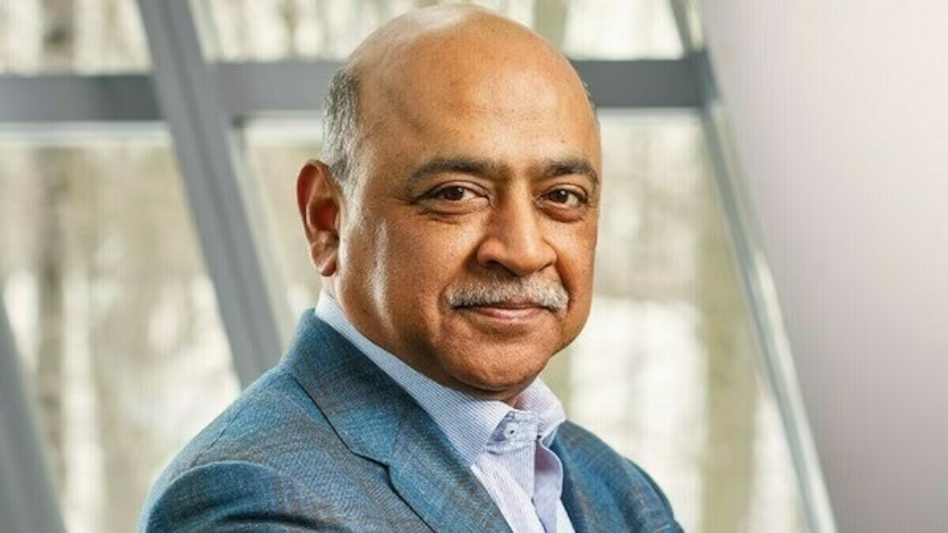
As headlines increasingly link artificial intelligence to sweeping job cuts across Silicon Valley, IBM CEO Aravind Krishna offers a more measured explanation. In a recent interview with The Verge, Krishna argued that today’s wave of layoffs is driven less by AI disruption and more by a long-overdue correction following aggressive pandemic-era hiring.
Between 2020 and 2023, companies across the tech industry scaled their workforces at an unprecedented pace to meet surging digital demand. Krishna described this phase bluntly, saying businesses had “gorged on employment,” with some expanding headcount by 30, 40, 50, and even 100 percent. As global demand normalized and growth projections were recalibrated, many firms found themselves overstaffed.
“This is a natural correction,” Krishna explained, comparing the business cycle to an underdamped engineering system that temporarily overshoots before settling into equilibrium. According to him, current layoffs reflect this adjustment process rather than a mass displacement driven by automation.
AI Will Displace Jobs—But Not at Apocalyptic Levels
While pushing back against sensational narratives, Krishna did acknowledge that AI will impact employment. He estimates that up to 10 percent of the U.S. workforce could face displacement over the next few years due to AI adoption. However, he emphasized that this impact will be concentrated in specific sectors and job categories, particularly routine and narrowly defined roles.
“It’s not 30 or 40 percent,” Krishna said, countering more extreme forecasts. “But it is up to 10 percent of the total U.S. employment pool.”
Productivity, Job Evolution, and New Opportunities
Krishna framed AI primarily as a productivity enhancer rather than a job-destroyer. As automation handles repetitive tasks, companies will increasingly look to hire employees for roles centered on creativity, strategic thinking, oversight, and complex decision-making.
He noted that internal discussions at companies already reflect this shift, with AI agents being considered for entry-level functions. However, he urged business leaders to think beyond cost-cutting and focus on how human talent can be redeployed into higher-value roles.
“As you become more productive, companies will hire more people—but in different places,” Krishna said.
Implications for Workers and Policymakers
Krishna’s perspective points to several critical takeaways:
Layoffs are largely cyclical, driven by post-pandemic market correction rather than pure AI replacement.
Job roles will evolve, especially as routine tasks become automated.
Reskilling and workforce training will be essential to help workers transition into AI-complementary roles.
Targeted policy support, including safety nets and upskilling programs, could ease the social impact of workforce shifts.
A Counter to AI Doom Narratives
Krishna’s comments challenge the growing fear that AI alone is responsible for mass unemployment. Instead, he positions AI as an accelerant of change—not the root cause of current job losses. The real trigger, he argues, was extraordinary pandemic-era overexpansion followed by economic normalization.
While AI will undoubtedly reshape industries and professions, Krishna believes the labor market can ultimately absorb its productivity gains—if businesses, workers, and policymakers adapt intelligently.
India Considers Always-On Satellite Tracking for Smartphones

India’s government is examining a controversial proposal from the country’s top telecom lobby, the Cellular Operators Association of India (COAI), that seeks to mandate always-on satellite-based location tracking on smartphones for enhanced surveillance and law-enforcement capabilities.
The proposal, submitted in June–July 2025, is currently under review by the Ministry of Electronics and Information Technology (MeitY) and the Union Home Ministry. However, it has already triggered strong opposition from Apple, Google and Samsung, citing serious privacy and security risks, according to a Reuters report.
What the COAI Is Proposing
COAI, which represents major telecom operators such as Reliance Jio and Bharti Airtel, has urged the government to mandate continuous activation of Assisted Global Positioning System (A-GPS) at the device level.
Under the proposal:
A-GPS would run 24/7, even without any app requesting location.
Users would not receive location access notifications.
There would be no option to disable satellite-based tracking.
Authorities would be able to track smartphones at meter-level accuracy.
This would mark a dramatic shift from the current system, where location tracking is user-controlled and app-specific.
Meter-Level Tracking for Law Enforcement
At present, law enforcement mainly relies on cell tower triangulation, which typically offers location accuracy within hundreds of meters. In contrast, A-GPS — using both satellite and network assistance — can locate a device with precision of around one meter under ideal conditions.
Internal COAI communications claim such precision would:
Improve criminal investigations
Aid in rescue operations
Help in the recovery of stolen smartphones
Telecom operators argue that India’s massive digital footprint and hundreds of millions of mobile users make stronger geolocation tools essential for public safety.
Strong Pushback from Tech Industry
The proposal has drawn sharp resistance from the India Cellular & Electronics Association (ICEA), which represents Apple and Google. The industry body has reportedly told the government that no other country in the world mandates continuous satellite tracking at the device level.
Samsung has raised similar objections.
Industry leaders warn that:
The proposal would undermine India’s privacy framework
It could enable mass surveillance without consent
It may expose journalists, activists, judges, diplomats and defence personnel to heightened security risks
Continuous tracking could introduce new cybersecurity vulnerabilities, especially in the event of data breaches
Government Yet to Take a Final Call
Officials from MeitY and the Home Ministry have not yet made a final decision. A formal stakeholder consultation involving smartphone manufacturers, telecom companies and civil-society groups is expected soon.
The debate follows recent backlash against the Department of Telecommunications’ Sanchar Saathi app, whose mandatory installation requirement was later withdrawn after widespread public and industry criticism.
If implemented, India — with around 735 million smartphones as of mid-2025, 95% of which run on Android and the rest on iOS, according to Counterpoint Research — would become the largest market globally to enforce such a sweeping surveillance mechanism.
What Is Assisted GPS (A-GPS)?
1. What Is A-GPS?
A-GPS is an enhanced version of traditional GPS that combines:
Satellite signals
Mobile network and internet data
This allows for faster and more accurate location detection, especially in cities and indoor environments.
2. How A-GPS Works
The phone receives signals from GPS satellites.
Mobile networks provide:
Satellite position data
Time correction
Nearby tower locations
The device then fuses both data sources to pinpoint its location with high precision.
3. Current Global Usage
At present, A-GPS activates only when:
A user opens navigation apps
An app requests location
Emergency services (112) are used
High-accuracy mode is enabled by the user
It does not run continuously by default.
4. What Would Change If COAI’s Proposal Is Approved
A-GPS would be always active
Users would lose control over switching off tracking
Location access would be silent and invisible
Authorities could track any smartphone round-the-clock with meter-level accuracy
Why the Proposal Is Controversial
Privacy & Civil Liberties: Enables continuous real-time surveillance of all users
Security Risks: Larger volumes of location data increase breach exposure
No Global Precedent: No country enforces system-level permanent satellite tracking
Targeted Risk: High-risk exposure for journalists, judges, defence staff, and activists
What Happens Next?
The government is expected to initiate a multi-stakeholder consultation process before taking a final call. The decision from MeitY and the Home Ministry will determine whether India moves toward what could become one of the most sweeping smartphone surveillance frameworks in the world.
Metaview AI Founder Shrugs Off $100K H-1B Fee

London-born tech entrepreneur Shahriar Tajbakhsh is sending a message few in the U.S. tech industry are willing to voice publicly amid rising political pressure: world-class talent is worth any price.
The CTO and co-founder of Metaview AI — a startup that builds software to automate job interviews — recently reignited debate over America’s escalating H-1B visa costs after the Trump administration announced a steep $100,000 annual fee for companies sponsoring H-1B workers. Tajbakhsh’s response was blunt and humorous:
“Make it per day. I’ll set up a recurring payment.”
His remarks resurfaced this month after Metaview’s hiring posters in India went viral. The ads, plastered with bold messaging, read:
“Yes, we still sponsor H-1Bs” and “No, AI won’t build itself.”
Hiring in the H-1B Heartland
While the new fee has shaken much of Silicon Valley, prompting several companies to reconsider foreign hiring, Metaview is moving in the opposite direction. The company is actively recruiting in India — the world’s largest source of H-1B talent — and openly dismissing the fear that now grips much of the industry.
“When the fee was announced in September, he called it a ‘rounding error’ compared to what H-1B staff members contribute,” the company said in a statement.
At a time when many U.S. firms are quietly scaling back global recruitment due to cost concerns and political backlash, Metaview is expanding its U.S. footprint and preparing to file additional H-1B petitions in the next visa lottery.
A Founder Who Isn’t on an H-1B Himself
Interestingly, Tajbakhsh himself is not an H-1B holder. Of Iranian origin, he is relocating to the U.S. under the EB-1 visa category, a fast-track immigration route reserved for individuals with “extraordinary ability,” outstanding researchers, and senior multinational executives.
His own immigration journey underscores his broader philosophy: talent is the true engine of innovation.
“The only way to build anything meaningful that changes people’s lives is to have a world-class team — there’s no shortcut around that,” he said. “Trying to save money on talent is the most irresponsible thing a founder could possibly do.”
From London to Silicon Valley
Tajbakhsh studied computer science at University College London before joining Palantir Technologies, the Silicon Valley data-analytics giant. In 2018, he founded Metaview AI in London. The company has since expanded to the U.S., where demand for AI-driven hiring tools is rapidly accelerating.
Earlier this year, he told Business Insider that even executive orders tightening immigration would not alter his conviction that people — not policies — determine a company’s success.
By calling the $100,000 H-1B fee insignificant, Tajbakhsh is taking a rare and unapologetic public stance at a time when many tech leaders are quietly resetting their global hiring strategies. But Metaview’s leadership appears undeterred.
As the CEO put it simply, “$100,000 just doesn’t matter” when weighed against the value created by exceptional engineers and researchers.
For a startup betting on AI to reshape the future of hiring, it is perhaps the most self-consistent position of all.
US Senate Revives Dream Act With Major Relief for Indian Visa Kids

A fresh bipartisan initiative in the United States Senate aims to resolve one of the nation’s most persistent immigration challenges — the lack of a clear, lawful pathway to permanent residency for young immigrants who grew up in America but remain stuck in legal uncertainty. The Dream Act of 2025, reintroduced on December 4 by Democratic Senator Dick Durbin and Republican Senator Lisa Murkowski, significantly broadens earlier proposals by formally including “Documented Dreamers” for the first time.
Documented Dreamers are children who entered the US legally as dependents of temporary visa holders such as H-1B, L-1, E-1, and E-2, but lose their legal status once they turn 21. Until now, this group remained excluded from most immigration relief frameworks despite spending their formative years in America.
What the Bill Proposes
Under the proposed legislation, eligible youth would receive conditional permanent resident status for up to eight years. This status would protect them from deportation, allow them to work legally, and permit international travel. Upon fulfilling required education, military service, or employment conditions, they would be eligible to transition to lawful permanent residency (green card).
Current DACA recipients who continue to meet eligibility requirements would automatically qualify for conditional status. The bill also extends protection to individuals already facing deportation, provided they meet all criteria, and safeguards minors who have not yet reached high school but otherwise qualify.
Indian Families Face the Sharpest Impact
The bill arrives at a critical time for thousands of Indian families grappling with the ageing-out crisis. Due to the massive employment-based green card backlog, many Indian children are forced to leave the US or switch to student visas when they turn 21. Reports indicate that nearly 100,000 Indian children are at risk of ageing out in the coming years.
According to estimates from the Cato Institute, India’s employment-based green card backlog exceeded 1.07 million applications, with over 134,000 children expected to lose dependent status before their families receive permanent residency. This bottleneck is largely driven by the US policy that caps green cards at 7% per country, regardless of demand.
By formally including Documented Dreamers, the Dream Act of 2025 attempts to correct this long-standing imbalance.
Eligibility and Green Card Pathway
To qualify for conditional residency, applicants must:
Have entered the US before turning 18
Lived continuously in the country for at least four years
Clear criminal and medical background checks
Complete high school or show progress toward higher education or military enlistment
Resolve federal tax obligations
Pay application fees
To convert conditional residency into permanent status, eligible individuals must:
Maintain continuous residence
Complete one of three tracks:
Education: Two years of college or a completed degree
Military: Two years of honourable service
Employment: At least three years of authorised work
Demonstrate English proficiency and knowledge of US civics
Pass security background checks
Pay the required fee
Potential Reach and Economic Impact
If enacted, the bill could stabilise the lives of over 2.8 million young immigrants, including:
525,000 DACA recipients
2 million additional Dreamers
250,000 Documented Dreamers
Immigration and education groups have strongly welcomed the bill. The Presidents’ Alliance on Higher Education and Immigration, representing nearly 600 institutions, highlighted that many Documented Dreamers grow up as Americans in every sense — except legally.
The National Immigration Forum also endorsed the proposal, noting that Dreamers contribute approximately $65 billion annually to the US economy and pay nearly $18 billion in taxes. Granting permanent status, the group argues, would ensure long-term workforce stability while aligning with American values.
Political Outlook
With ongoing court challenges threatening the future of DACA, the Dream Act of 2025 seeks to establish Congressional protections that cannot be reversed through judicial rulings. While its passage is far from guaranteed, its broadened scope and bipartisan backing mark one of the most serious immigration reform efforts in years.
For families trapped in decades-long green card wait queues — especially Indian professionals — the bill represents the most promising relief in a generation.
NBK Fans Demand Akhanda 2 Release on December 12

Akhanda 2, the much-anticipated sequel to the blockbuster collaboration between Nandamuri Balakrishna and director Boyapati Sreenu, was initially scheduled for a grand release on December 5, with paid premieres planned a day earlier on December 4. However, the makers later announced a postponement, pushing the film’s release to an unspecified later date.
With no official update on the revised release schedule so far, speculation has been rife across social media. Industry circles and fans alike have been debating potential slots, with Christmas and Sankranthi emerging as the most likely contenders. Amid this uncertainty, Balakrishna’s fan base has now taken a firm stand on what they believe would be the most strategic release date.
On Sunday evening, NBK fans began trending the hashtag #WeWantAkhanda2OnDec12th on X (formerly Twitter), urging the makers to consider a mid-December release instead of waiting for the crowded festive windows. Fans argue that both Christmas and Sankranthi will witness heavy competition from multiple big-ticket releases, which could impact the film’s box-office run.
Supporters also believe that Akhanda 2 is currently riding on strong buzz and that an earlier release on December 12 would help capitalise on the momentum. The fan-driven campaign has seen thousands of posts tagging the production banner, 14 Reels Plus, requesting them to lock the new date at the earliest.
Meanwhile, trade sources suggest that the makers are actively evaluating the Christmas weekend as it promises higher footfalls due to the holiday season. However, with fan pressure mounting and online trends gaining traction, it remains to be seen whether the production house will reconsider its strategy.
For now, all eyes remain on the official announcement as audiences eagerly await clarity on the release date of one of Telugu cinema’s most awaited sequels.
Work Culture Clash in Indian Cinema
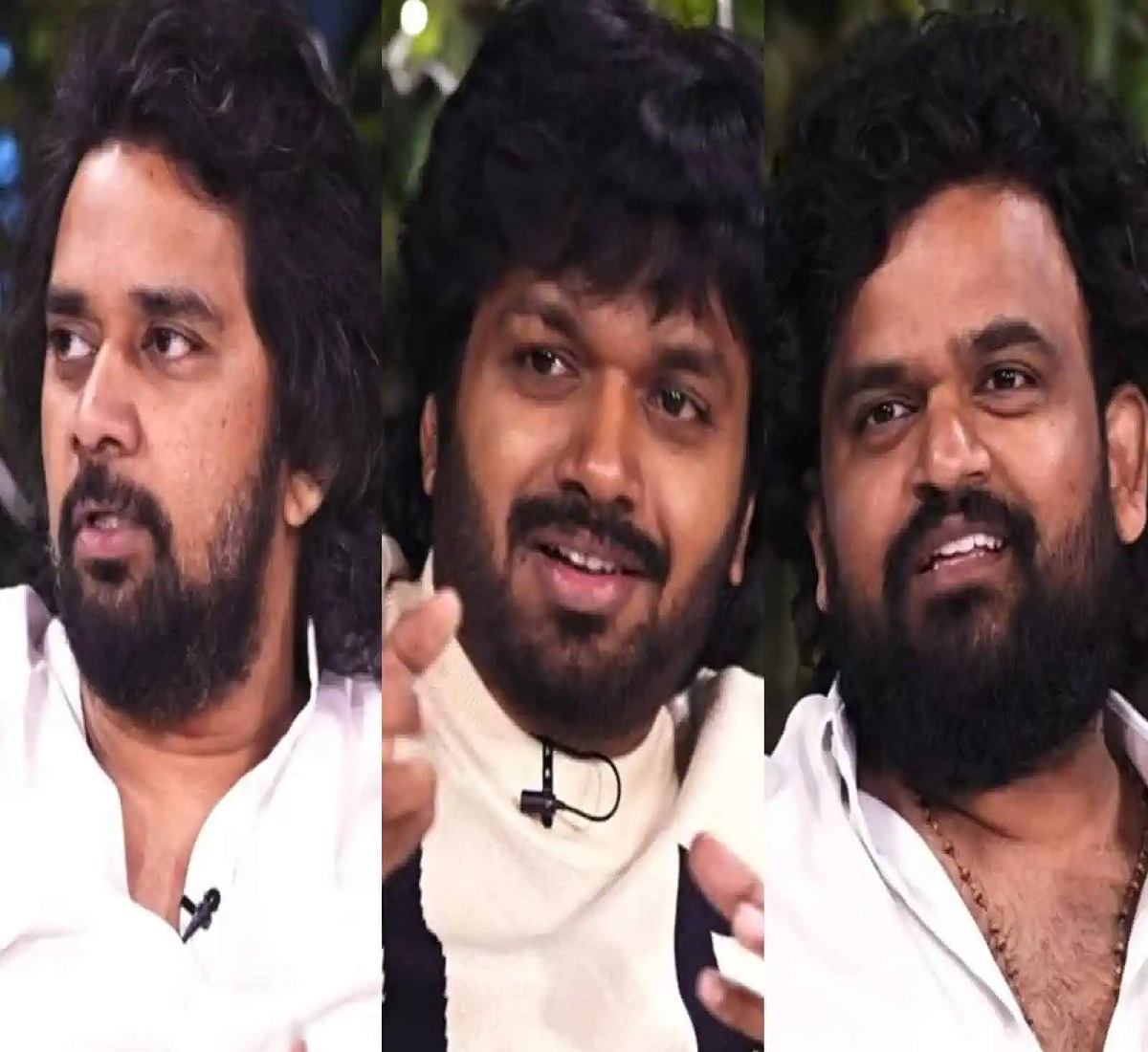
The debate around work culture in the Indian film industry has gained fresh momentum after Bollywood star Deepika Padukone called for the strict enforcement of eight-hour work schedules to ensure better work-life balance for artists. Her remarks sparked widespread discussion across industries, drawing mixed reactions from actors, filmmakers, and technicians alike.
While several artists came out in support of Deepika’s stand, emphasizing the need for regulated working hours and healthier shooting environments, a few prominent Tollywood directors have now offered a contrasting perspective. During a recent roundtable discussion with manatelugu, Telugu directors Chandoo Mondeti, Sailesh Kolanu, and Anil Ravipudi shared their views, stating that the issue need not be overblown.
Chandoo Mondeti pointed out that extended working hours often benefit daily wage crew members, as they are compensated on an hourly basis, unlike actors, directors, and senior technicians who work on fixed remuneration. Anil Ravipudi echoed a similar sentiment, adding that longer working hours can help minimize production costs by ensuring that shooting targets are met within scheduled timelines, thereby avoiding delays and budget overruns.
Sailesh Kolanu highlighted the creative aspect of extended work hours, explaining that when a director and actors are in a strong creative flow, pushing beyond the scheduled time can help complete crucial portions of a scene or sequence without breaking momentum.
The contrasting views clearly reflect the ongoing tension between creative freedom, production economics, and the growing demand for structured work schedules. While actors are increasingly advocating for regulated hours and personal well-being, directors appear more inclined to stretch boundaries in pursuit of efficiency and creative output.
As the industry evolves, this debate is likely to continue, with both sides seeking a middle ground that balances creativity, financial practicality, and humane working conditions.