










Starting April 1, 2026, the U.S. Citizenship and Immigration Services (U.S. Citizenship and Immigration Services) will roll out a revised version of Form I-129, which is a crucial document for non-immigrant worker visa petitions. This update will affect multiple visa categories, including H-1B, L-1, O-1, and others, making it an important change for employers and applicants.
From the implementation date, only the 02/27/27 edition of Form I-129 will be accepted, while the older 01/20/25 version will be rejected if submitted on or after April 1, 2026. However, applications filed on or before March 31 will still be processed using the older form without issues.
The update is part of a broader effort by U.S. Citizenship and Immigration Services to streamline and tighten the visa petition process. One of the key changes involves the H Classification Supplement, which has been revised to align with the upcoming wage-weighted lottery system scheduled for fiscal year 2027.
Under the new requirements, employers will need to provide more detailed information about job roles, including work locations, employment history of the beneficiary, and immigration background details. They will also be required to specify minimum job qualifications, the relevant field of study, and wage levels as determined by the Labour Condition Application (LCA). These changes are expected to increase transparency and improve compliance while also making the petition process more structured and detailed for all stakeholders involved.







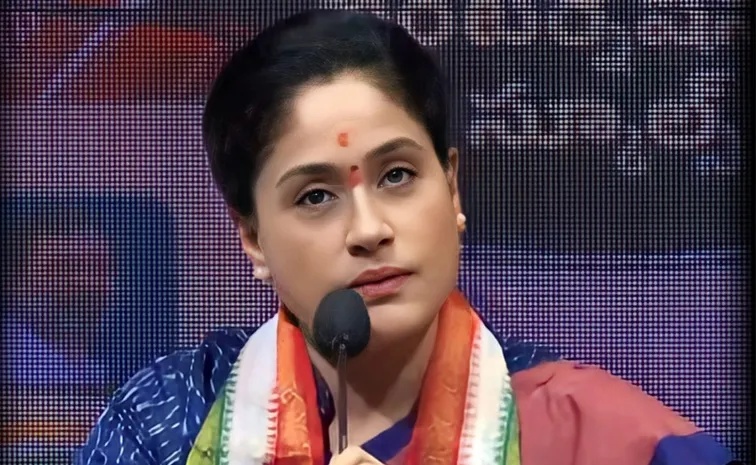






Supriya Yarlagadda: AI Is Just a Tool, Not a Threat to Filmmaking
The filmmaking industry is undergoing a major transformation with the rapid rise of Artificial Intelligence (AI). What once required massive budgets can now be achieved at a significantly lower cost, prompting filmmakers worldwide to explore AI-driven tools to bring their visions to life.
However, opinions within the industry remain divided on whether AI will eventually replace traditional filmmaking techniques. Producer Supriya Yarlagadda offers a balanced perspective on this evolving debate.
As the Executive Director of Annapurna Studios, Supriya has been actively investing in advanced filmmaking infrastructure. The studio recently established a state-of-the-art motion capture (mocap) facility in Hyderabad, where key sequences of S. S. Rajamouli’s upcoming epic Varanasi are being filmed.
During a recent interaction, she was asked whether AI poses a threat to such high-end mocap technology. Responding thoughtfully, Supriya emphasized that technology—whether AI, mocap, or traditional film—is ultimately just a tool in the hands of a filmmaker.
“It all depends on the creative mind behind the film,” she explained. “If someone wants to make a film using AI, they can. If they prefer mocap or even traditional film formats, that’s also possible. All these methods can coexist.”
She further highlighted that filmmaking is a “transaction” between the creator and the audience, driven by ideas rather than the tools used. Drawing comparisons, she said audiences would still watch a film by Christopher Nolan made entirely on film without VFX, just as they would enjoy a visually advanced spectacle like Avatar.
According to Supriya, technology should be seen as an enabler, not a replacement. The true essence of cinema, she believes, will always lie in storytelling and the vision of the filmmaker, regardless of the tools used to bring it to life.