









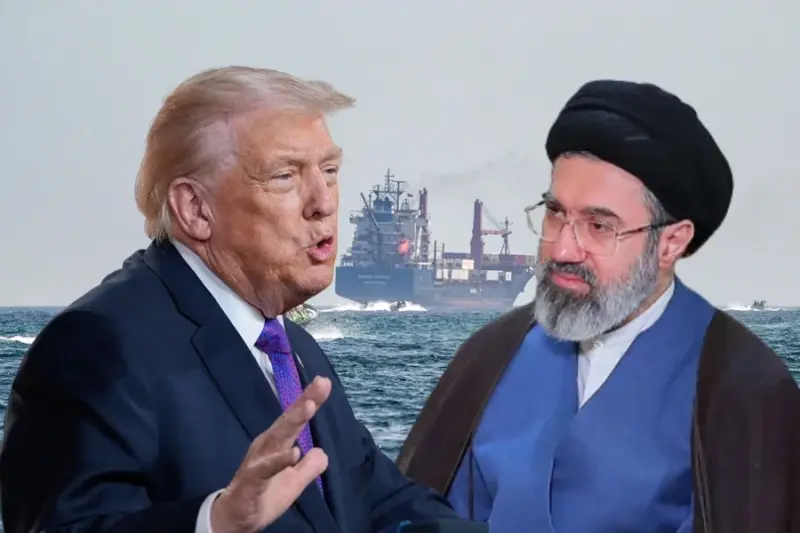
The United States and Iran are set to hold peace talks in Islamabad this week as a two-week ceasefire approaches its end, raising global uncertainty over the next phase of negotiations.
A key question remains whether Washington will extend the ceasefire beyond April 22. According to a Wall Street Journal report, a White House official indicated that an extension is unlikely, with President Trump reportedly not in favour of prolonging the deadline beyond Wednesday.
Confusion continues over Iran’s participation in the talks. Iranian state media has suggested a possible withdrawal, citing what it calls “excessive demands” from Washington. Iran’s chief negotiator has also stated that Tehran will not engage in talks “under the shadow of threats.” While Tehran has not officially confirmed its attendance, regional mediators indicate that an Iranian delegation is expected to arrive for negotiations on Tuesday.
The situation has been further strained by recent maritime incidents, including the seizure of an Iranian-flagged container ship in the Gulf of Oman by US forces, followed by reported attacks by Iran’s Islamic Revolutionary Guard Corps on two commercial vessels.
Despite preparations for a second round of talks, the US position remains firm. President Trump has warned that failure to reach an agreement could lead to strikes on Iranian infrastructure, including critical facilities such as bridges and power plants.
The US delegation in Islamabad is being led by JD Vance, along with Jared Kushner and special envoy Steve Witkoff. Reports suggest the negotiations received last-minute approval from Iran’s supreme leader.
On the strategic issue of the Strait of Hormuz, Trump has reportedly maintained that it will remain closed until a broader agreement is reached, further intensifying geopolitical tensions in the region.
Recent Random Post: