




watch Stuvartpuram Movie Official Trailer || Latest Telugu Trailers 2019
https://www.youtube.com/watch?v=4WjLViap7CY

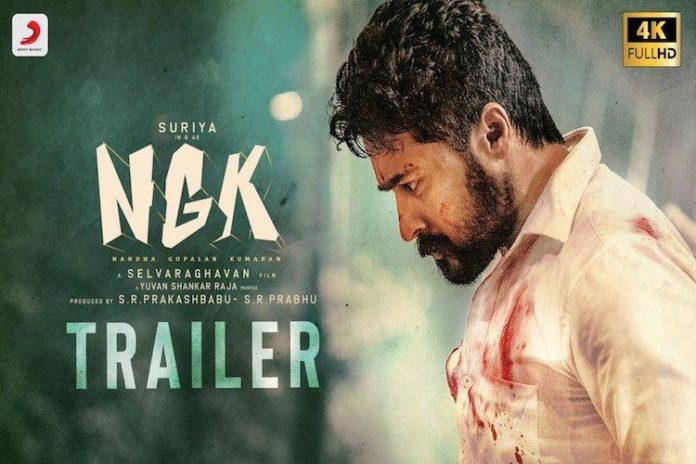
Tamil director Selva Raghavan is known to Telugu audience as Sri Raghava with films like 7/G Brindavan Colony and Aadavari Matalaku Ardhale Verule. He tries his hand at political drama with Surya as the lead. Expectations are rife of NGK with Surya and Sri Raghava teaming up.
What is it about?
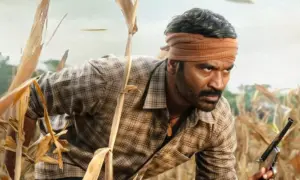
NGK (Surya) quits his software job for becoming an organic farmer. As he gets threats from rival farmers and retail shop owners, NGK takes the help of a local MLA. After realizing the real power of a politician NGK decides to become a political leader. But is it as easy as it appears to be?
Performances:
Surya has done his best in spite of an underdeveloped character. His emotional outburst in a few scenes stands out. Sai Pallavi gets a limited role that is also not written in a convincing way. She performs well, but the character makes her look ridiculous at times. Rakul Preet is good as the corporate politician. Senior actors like Devaraj and Ponvannan are good in their respective roles.
Technicalities:
Sri Raghava hasn’t done a political movie prior to this. It is pretty evident that it is not his forte. He struggles to get a coherent script and keep the audience engaged. It is one of the most clumsily written movie that appears pointless all through. There isn’t one scene that stands out and leaves the mark of the acclaimed director.
Yuvan Shankar Raja’s music is pretty bad. Odd placement make them sound even worse. Editing is so bad that there is no connection between many scenes. Cinematography is the only positive about the film. Cinematographer used dull lighting and darkly lit surroundings to elevate the drama. Production values are top notch.
Thumbs Up:
Surya’s performance in few scenes
Thumbs Down:
Script
Music
Direction
Analysis:
It can be assumed that Sri Raghava’s idea is to tell the story of a person who becomes CM by starting off as a ordinary party worker. In fact, that plot has the makings of a perfect political potboiler. Political dramas usually engage the audience as they have scope for showcasing relatable issues and day to day problems. Also the story of an underdog coming to power is always a winning plot. There is ample scope for Sri Raghava to show the rise of his protagonist from zero to a hero. However, Sri Raghava had other things on mind. He tried to make something different from usual. He clearly tried to make a political drama that is not similar to previous films.
It seems promising as an idea, but Sri Raghava did little to develop the idea. He neither wrote a proper script nor had given meat to the characters. Even the lead character appeared clueless in most of the scenes. Story goes from one point to another without showing key factors that led to the rise of the protagonist. He becomes the talk of the town and the target for politicians for no reason. Characters suddenly behave awkwardly which adds to the confusion in the screenplay. If first half is bad, second half is even worse that it makes the former look like a classic in comparison.
Aimless story and disjointed screenplay makes it a pain to watch. It starts off well with an organic farmer being forced to enter politics. But what follows after is a total mess. There are a few hints that the protagonist on a secret mission, but that is not shown on screen. He just goes from one point to another and is all over the headlines without a single impactful scene or act. The story goes off track after the first fifteen minutes and doesn’t come back on track not even for a moment. NGK is a film that shouldn’t have been made in the first place. It is a film even the team would wish that it was scrapped before showing it to the public.
Verdict: Huge Mess!
 The first childhood lesson in history is that when an empire emerges it climbs to the highest peak and then, inevitably it falls. This is the law of nature; which means the formula of nature. In West Bengal, that is the historical reality of Mamata Banerjee’s kingdom!
During this time in West Bengal, I realised that there was an extra heat in the air. In South 24-Parganas, a middle-aged Bengali woman selling tea told me that just as when the CPI-M went out and the Trinamool Congress came and she was unable to see the change coming, today you cannot understand that the BJP is entering this state and the Trinamool Congress is going out. What a political transformation the woman spoke about.
In fact, many of us, sitting in air-conditioned homes, believe that we are proficient at political prognostication, but at times it appears that we have lost touch with ground reality — and it is left to semi-literate women to tell us about the political situation while serving fish-and-rice at bus stands. Across the districts of West Bengal, Trinamool Congress cadres rent the air with slogans of Didi for Prime Minister. But, everyone is puzzled how Modi returned as Prime Minister.
The question is: Why did this happen to Mamata Banerjee? It is generally said that this was due to the Trinamool Congress party’s policy of excessive Muslim minority appeasement. This could have been the cause of Hindutva polarisation of the BJP. But polarization also happened because of a very strong anti-Mamata Banerjee sentiment.
The socio-economic situation of West Bengal is very worrying. Unemployment is high. There are no big industries in the state. There are no factories, per capita income is low, the Bengali is returning to the national mainstream.
Bengali means leftist; Opposition to the Centre and Delhi. From Chittaranjan Das and Subhash Bose’s ideological battle with Gandhiji. Jawaharlal Nehru’s relationship with Bidhan Roy was not of master and servant, or Guru and disciple. Nehru had even proposed that Roy be made governor.
To be against Delhi is in the DNA of Bengalis. But the people of Bengal are tired of such negative politics – of always having to see leaders saying “aisa nahi chalega nahi chalega”. They have seen how a small state like Tripura has become BJP-ruled. They have seen that Tripura is getting the kind of financial support that Uttar Pradesh is getting from the Centre.
The CPM came to power in 1977 after the Congress was ousted. Since then, the step-motherly treatment of the Centre towards the state has been highlighted. Many say about Mamata Banerjee’s politics, that it is nothing but an improved version of a bad CPI-M. Her politics matured by observing the basic principles of the CPI-M.
So, Mamata Banerjee herself did not practice right-wing politics in West Bengal. After the national degradation of Congress, many political parties have been formed to promote regional self-interest or sub nationalism.
But those political parties were created in other states, not West Bengal. That is regional parties like Telugu Desam Party in Andhra Pradesh, or DMK and AIADMK in Tamil Nadu. But in West Bengal, no political party could come to power on the issue of Bengali nationalism.
Why not? That is because even though the CPI(M) claimed to be a branch of the international communist movement, it was known in West Bengal as a party for Bengalis. Then, Mamata Banerjee’s Trinamool Congress was in every sense a party from within West Bengal. And in these Lok Sabha elections, as it stood in opposition to the BJP on the issue of the demolition of Vidyasagar’s statue, it only reinforced its identity as a Bengali party.
I also think that arresting a BJP worker for saying “Jai Shri Ram”, arresting a woman for criticizing the arrest of a cartoonist on social media works against the ruling party. In these cases, it is a better strategy to be disdainful of such criticism. The way Uttar Pradesh votes on the basis of caste, there is no such vote in West Bengal. However, Mamata Banerjee created a vote bank of her own comprising the Namasudra Madhuya community, OBCs and many lower class people.
But, this time even that has not worked for the Trinamool Congress. The Matua candidate fought as a candidate of the BJP and defeated the candidate of Trinamool Congress. However, the most important factor was Modi because of whom matters of caste became irrelevant.
The manner in which the CPI-M and Congress vote in West Bengal went to the BJP is unimaginable. In Delhi, my cook from South 24 Parganas went back home to vote. She said that she had earlier voted for the CPI-M in her village. But now, faced with the highhandedness of Trinamool Congress, she had voted for the BJP because voting for the CPI-M would meaning wasting the vote.
That’s exactly what I heard from the urban elite and middle class babus in Kolkata. Even students from Jadavpur University said that they would vote for the BJP. One must remember that the Trinamool Congress broke the back of the Left organisations in the universities. The Left parties were unable to oppose this. That is where the BJP came in.
One has to see how the future of West Bengal shapes up after this Trinamool Congress loss. Firstly, there is the possibility of a split in Trinamool Congress. Second, there is no President’s rule but pressure will increase on the state government. The Centre will keep up its efforts to embarrass the state government at every step. However, Mamata Banerjee is politically wise. After being hurt in the elections, she will be ready for a whole new battle.
It should be remembered that the Lok Sabha vote was to answer the question whether Modi should return to power or not. But the Assembly elections will decide whether the people of West Bengal want Mamata Banerjee to stay or not.
An analysis of the Lok Sabha polls shows that about 12 ministers have lost in the Assembly constituencies. The question is whether she will give the party ticket to them. The BJP has been keen to have leaders like Subrata Mukherjee and Shubhendu Adhikari in its ranks. How will she handle these internal problems? But while reviewing the vote statistics, one can see that the Muslim community in the state voted for her. The reason for winning seats like Basirhat, Diamond Harbour and Krishnanagar was communal voting.
There is no doubt that West Bengal has now become an important state in the whole of India.
 It’s exactly a week since the results of Lok Sabha results were announced and TRS chief, Telangana CM KCR’s daughter Kavitha suffered a humiliating defeat at the hands of BJP in Nizamabad Lok Sabha seat.
But the consequences of Kavitha’s defeat continues to haunt KCR’s family.
The grapevine is that Kavitha’s defeat has led to bitter infighting in KCR’s family.
KCR’s house aka Pragathi Bhavan is learnt to be witnessing shocking developments since then.
Kavitha is reportedly angry at his father KCR for sidelining Harish Rao in Lok Sabha polls.
Kavitha feels that if Harish was assigned the responsibility of Nizamabad Lok Sabha seat, she could have won easily.
After Kavitha lost in Nizamabad, she reportedly headed straight to her house in Hitech city area without coming to Pragathi Bhavan to meet her father KCR.
Upon knowing this, KCR reportedly rushed his wife, Kavitha’s mother Shobha to her house to console her.
When Shobha was at Kavitha’s house, Harish also rushed to her house from Siddipet, to console her.
Seeing Harish, Kavitha reportedly wept and told her mom that her defeat was because of KCR ignoring her brother-in-law (Harish) in Nizambad Lok Sabha polls.
She said her father assigned the task to her elder brother KTR, who did not focus on Nizamabad and instead spent most of the time campaigning in Hyderabad and surrounding districts.
She also complained about TRS MLAs in Nizamabad for not cooperating with her during campaigning despite she worked day and night for the victory of TRS candidates during December 2018 Assembly polls and ensured TRS made a clean sweep in Nizamabad district.
Angry Kavitha refused to come to Pragathi Bhavan to meet KCR.
After pacifying for hours, her mother and Harish convinced her and took her to Pragathi Bhavan.
Kavitha reportedly expressed same ire at Pragathi Bhavan after meeting KCR.
KCR reportedly offered to take both Harish and Kavitha into cabinet soon and promised Kavitha to nominate her as MLC.
But this was reportedly strongly opposed by KTR.
KTR is learnt to be against giving importance to Harish again and also opposed Kavitha’s nomination as MLC.
From that day, a family feud is learnt to be brewing in KCR’s house making KCR and his family members restless.
 Hitherto, we had seen Telugu Desam Party president and former Andhra Pradesh chief minister N Chandrababu Naidu and his son Nara Lokesh attending the World Economic Forum summit meetings in Davos, Switzerland.
Of course, they will not get the chance again, at least for the next five years. But there is an offer to Telangana Rashtra Samithi working president K T Rama Rao to attend such a meeting.
However, it is not in Davos, but in New Delhi. On Thursday, KTR got the invitation to the ‘World Economic Forum on India’ event which will take place on October 3rd and 4th, 2019 in New Delhi.
The event, being held in collaboration with the Confederation of Indian Industry (CII), will build on the India Economic Summit’s more than three decades of success.
The meeting will bring together leaders from government, business, civil society, academia, and media under the theme ‘making technology work for all’ to discuss opportunities for India and to make progress in the fourth Industrial Revolution.
Talking about KTR, the invitation from WEF said, “Your leadership has led to the launch of various forward-looking initiatives of Telangana that emphasize leveraging technology and innovation for enhanced growth and competitiveness.”
TRS Working President KTR is expected to share his expertise and insights on ‘leveraging technology and innovation for enhanced growth and competitiveness.
 Superstar Mahesh Babu’s 26th film Sarileru Neekevvaru has been launched officially today with a pooja ceremony at 9.18 AM.
Super talented director Anil Ravipudi will direct this mass entertainer. Legendary director K Raghavendra Rao launched the film with the first clap.
Veteran producer Shyam Prasad Reddy switched on the camera and Anil Ravipudi directed the first shot.
Rashmika Mandanna is the heroine and Vijayashanti, Jagapathi Babu, Rajendra Prasad and Bandla Ganesh will be seen essaying other crucial roles.
Devi Sri Prasad composes the music and Anil Sunkara, Dil Raju are the producers. The makers announced that Sarileru Neekevvaru will release for Sankranthi 2020.
 Prime Minister Narendra Modi has picked his closest aide Amit Shah as Home Minister in the new government.
Rajnath Singh will be Defence Minister and Nitin Gadkari will be Minister of Road Transport and Highways.
Nirmala Sitharaman will be Finance Minister and Minister of Corporate Affairs.
Smriti Irani will be Minister for Women and Child Development.
Ramvilas Paswan will be Minister of Consumer Affairs, Food and Public Distribution.
PM Modi was sworn in for the second time in a glittering ceremony at the Rashtrapati Bhavan on Thursday, with 57 ministers. Twenty-five of the new ministers are of cabinet rank.
BJP president Amit Shah, credited with crafting the party’s magnificent national election victory, was expected to be given a big ticket ministry.
In a tweet last night, PM Modi described his team 2.0 as “a blend of youthful energy and administrative experience”.
 Bharatiya Janata Party MP from Secunderabad in Telangana G Kishan Reddy, who was inducted into the Union council of ministers headed by Prime Minister Narendra Modi, was made a deputy of none other than party president Amit Shah, who is No. 2 in the National Democratic Alliance government.
Kishan Reddy was allocated the portfolio of home affairs and he will be working directly under Amit Shah, who will be holding the ministry of home affairs as cabinet minister. In a way, it is big honour and respect for Kishan Reddy.
The 59-year old Secunderabad MP was sworn in as minister of state in the Modi cabinet in New Delhi on Thursday evening.
In fact, there was a talk that Kishan Reddy would be made the cabinet minister and another MP from Telangana would get the Minister of State post.
But Modi gave only one cabinet berth to Telangana and may be, in future, he would accommodate another MP in the expansion, if any, in future.
One can say lady luck has favoured Kishan Reddy a lot. He lost the assembly elections to the TRS by a small margin from Amberpet and he never expected that he would contest the parliament elections from Secunderabad.
Even after he was given the MP ticket, the chances of his victory were less, as the TRS went all out to win the seat. But, he made it and won the elections with a huge margin of over 66,000 votes.
And now, he came a minister in the central cabinet and got the plum portfolio!
 Senior IPS officer and Andhra Pradesh Director General of Police R P Thakur, who got into headlines for his over-action in coming to conclusions in the attempt on the life of YSR Congress party president Y S Jagan Mohan Reddy, had to pay heavy penalty for the same.
Within hours of taking over as the chief minister of the state, Jagan shunted Thakur from the DGP post and replaced him with Damodar Goutam Sawang, a 1986 batch mate of Thakur.
Sawang was given has been given full additional charge as the new DGP (Head of Police Force) and is eventually expected to take regular charge as the state police chief.
Thakur was shifted to an insignificant post of Commissioner, Printing and Stationery Department. Humiliated at the development, Thakur is understood to have decided to go on leave.
The shunted DGP had been incurring the wrath of the YSR Congress party leaders, who have dubbed him as pro-Telugu Desam Party.
Especially after the attack on the life of Jagan at Visakhapatnam airport on October 25, Thakur jumped the gun even before the investigation started and said it was a small incident.
He sought to project the accused J Srinivasa Rao as a fan of Jagan and a YSRC activist.
Later, too, Thakur had rubbed the YSRC leaders on the wrong shoulders and they have made several appeals to the Election Commission to shift the DGP.
Apart from Thakur, Jagan also got transferred former state intelligence chief and presently Anti-Corruption Bureau DGP A B Venkateswara Rao. He was not given any posting and asked to report to the General Administration Department.
 Jana Sena chief and actor Pawan Kalyan is learnt to be seriously considering to undertake ‘Odarpu Yatra’ in Andhra Pradesh soon.
However, this Odarpu Yatra is not being taken up in the interest of public or on any issue concerning Andhra Pradesh.
But it is reportedly taken up to console the Jana Sena candidates who suffered a humiliating defeat in the recent Assembly polls.
While Jana Sena chief Pawan himself lost the two Assembly seats that he contested and could not become MLA, the lone MLA who won on Jana Sena ticket tendered resignation to party and making serious efforts to join YSRCP.
With this, Jana Sena has been left with a zero in AP Assembly.
The Jana Sena leaders and cadre are left shell shocked and remain utterly confused about their political future.
Some leaders and cadre are already shifting loyalties to YSRCP.
Where there is no scope to join YSRCP, they are eager to join at least TDP, but does not want to remain in Jana Sena.
To retain Jana Sena leaders and cadre and to imbibe confidence among them, Pawan Kalyan wants to meet defeated Jana Sena candidates by touring all the Assembly constituencies soon and assuring them of bright future in 2024 elections.
Pawan wants to convey that he will not close Jana Sena like his elder brother Chiranjeevi did in the case of Praja Rajyam and is ready to fight all the elections starting from sarpanch, ZPTC, MPTC elections to municipalities, municipal corporations in the coming days and strengthen party as a formidable political force by 2024 elections.
It remains to be seen whether his ‘political odarpu yatra’ would save Jana Sena from extinction in AP politics.
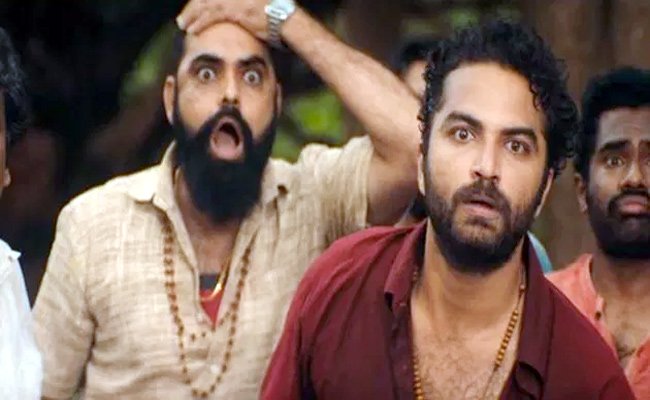
The raw and interesting trailer of ‘Falaknuma Das’ has made everyone sit up and take notice of this movie that is directed by actor Vishwak Sen.
Let’s find out whether the film lives up to the promise.
Story:
Das (Vishwak Sen) idolizes a local rowdy Shankaranna in his area Falaknuma, an area in old city of Hyderabad from his childhood and creates a gang of his own in his teens.
The film narrates incidents of his life in 2005 (his college days and his first love with a German girl) moves to 2009 and the present day.
After breaking up with his first girlfriend he takes up mutton business that leads to gang wars and he also gets incriminated in a case. This police case puts him in huge financial and mental stress and he breaks up with his second girlfriend.
How he comes out of this mess with the help of his gang and his uncle-like friend (Uttej) and also finds another girlfriend Joya (Saloni Sharma) and finally settles in life forms the story.
Artistes’ Performances:
Other than the lead actor Vishwak Sen and Uttej, the film has all newcomers playing most of the roles in the film.
Even Tarun Bhaskar (director of ‘Pelli Choopulu’) gets to play a lengthy role of a cop and he pulls it off.
Vishwak Sen in the lead role steals the show. He gets the body language of gully boy and the lingo perfect.
Uttej has got meaty role and he kills it with his natural acting. Among the three girls, Saloni Sharma looks better.
Technical Excellence:
The film is shot in art movie style and in real locations. Seems to have been shot mostly in the old city. The cinematography is good. Production design is appreciable.
Pace of the movie is not perfect. At 150 minutes, it makes a tiresome watch after a point.
Highlights:
Vishwak Sen
Natural dialogues
Drawback:
Ups and downs in narration
Second half
Unconvincing setup
Weak climax
Analysis
As films with Telangana backdrop and actors speaking Telangana accent have become a new trend in Telugu films, “Falaknuma Das’ on paper looks right story to narrate.
Vishwak Sen, who acted as one of the lead stars in Tarun Bhasckar’s second film “Ee Nagaraniki Emaindi”, has seen potential in remaking Malayalam’s cult hit “Angamaly Dairies” and changed the backdrop to Hyderabad’s old city.
Besides directing, Vishwak Sen also plays the lead role in this movie. The film was made with all newcomers and it won critical acclaim for its depiction of the local culture, gang wars and terrific direction.
Vishwak Sen has tried to be faithful to the original movie but he has erred in mainly two points – getting the gang wars right and transporting the original feel here.
Gang wars in mutton business looks completely unrealistic. We have not heard of or seen such fights in this business in Hyderabad though the huge market for red meat does exist in old city. Vishwak Sen also prolongs many unnecessary scenes with no purpose.
The long fights, the lengthy scenes and unengaging romantic episodes have marred the film’s mood. In the original movie too, all these elements are there but the Malayalam director captured the romantic thread quite well.
There are couple of funny dialogues and the authentic Telangana local accent glues us to the screen in some scenes. The following scenes again kill the mood.
There is no consistency. First and foremost, the story of gang wars for mutton business in no way connects to us as there is no local touch. Vishwak Sen just transported the same scenes from the original to here without caring whether they have any roots here.
The climax sequences are not handled well at all.
Then what works? Well, the director and actor Vishwak Sen begins the movie well and sets up the mood. He is quite relatable in his raging mood. Dialogues like ‘Falaknumala Podduna Lechinama Bara Baja Tinnama..” generate good humor. Uttej’s natural acting and Tarun Bhasckar’s episodes are quite engaging.
Despite some sparks here and there, the film in totality becomes a pale version of the original Malayalam movie and the set-up is completely unfamiliar and looks unrealistic.
After a time, you don’t see anything but people drinking (Mandu) and eating non-veg (Mutton) as if this film all about this activity.
Bottom-line: M and M