






Watch Director Krish ties knot with Dr.Ramya
https://www.youtube.com/watch?v=AXQo3CTR4xc


It is a persistent paradox in American politics — many Hispanic families have an immense personal stake in what happens on Election Day, but despite population numbers that should mean political power, Hispanics often can’t vote, aren’t registered to vote, or simply choose to sit out.Enter Donald Trump, and the question that could make or break this year’s divisive presidential election in key states. By inflaming the anti-immigrant sentiments of white, working-class men, has the Republican nominee jolted awake another group — the now 27.3 million eligible Hispanic voters long labelled the sleeping giant of U.S. elections?
You hear this rap oft
“A lot of times you hear this rap about how politics doesn’t affect their life,” says Yvanna Cancela, political director of Las Vegas’ largely immigrant Culinary Union. “But that changes when it’s personal, and there’s nothing more personal than Donald Trump talking about deporting 11 million immigrants.”“When Mexico sends its people, they’re not sending their best,” Mr. Trump said last summer, minutes into the speech that announced his candidacy. “They’re bringing drugs. They’re bringing crime. They’re rapists.”
A cornerstone of Mr. Trump’s platform is building a wall along the entire Southwest border and forcing Mexico to pay for it. How? By threatening to cut off remittances those living in the U.S. send to relatives down south.
Just 3 years ago …
This is hardly what the Republican National Committee had in mind three years ago when, after Mitt Romney’s loss to Barack Obama, it commissioned a study about how best to bring more Hispanics, blacks, women and young voters into the fold. An entire section called “America Looks Different” urged Republicans to engage with minority voters, “show our sincerity” and “embrace and champion comprehensive immigration reform.”Skip ahead to 2016, and surveys that show most Hispanics plan to vote against the Republican nominee. A Fox News Latino poll conducted in May found 67 per cent back Democratic candidate Hillary Clinton and only 23 per cent support Mr. Trump.
Here is an example
John Herrera (38) is typical. He registered to vote in Las Vegas in June. “I’ve never really voted until now, only because of Trump being against Hispanic people,” he said. “I didn’t think my vote would count before, but now I want to make a difference.”Lionel Sosa, a prominent Mexican-American advertising and marketing executive in San Antonio, was once dubbed one of the top 25 most influential Hispanics in America by Time magazine. He helped devise strategies to attract Latino voters for the likes of Ronald Reagan, George W. Bush and John McCain.That was before Mr. Trump. In a June column in the San Antonio Express-News, Mr. Sosa announced he’d be leaving the party upon Mr. Trump’s formal nomination.
“A thousand points of light has been replaced by a thousand points of anger. In place of compassionate conservatism, our nominee promotes callousness, extremism and racism. And instead of a unifier, the party now cheers the ultimate ‘us against them’ proponent. Divisiveness incarnate,” he wrote.
Republican fears not unfounded
Republican fears of Hispanic backlash are rooted in what happened after their party targeted illegal immigration in California in 1994.Gov. Pete Wilson tied his re-election campaign to a ballot measure, Proposition 187, to deny government benefits and access to public schools to people in the country illegally. The measure was passed, and though it was later struck down as unconstitutional, a growing Hispanic population was infuriated.
In the years since, more Latinos have been elected to office in the state and the GOP has dwindled to a mere footnote; no Republican has won a state-wide election in California since 2006.
Their numbers matter
Proposition 187 wasn’t the only factor in the change — other groups in California, like coastal whites, were shifting to Democratic Party in the mid-1990s, and Hispanics already leaned against the GOP. But the loss of California has become the example of the risk Republicans run alienating a fast-growing ethnic group.“With Trump saying the things he’s saying, we might see this same thing again,” says Jody Agius Vallejo, a University of Southern California sociologist and author of “Barrios to Burbs — The Making of the Mexican American Middle Class.” “Only this time, it would be nationally.”There is reason, though, to be skeptical. Overall, the Hispanic voting record is not good.
And, here is the hitch
One obstacle is some 7.2 million Hispanic adults are here illegally and are ineligible to vote, according to estimates from the Pew Research Center. Another 5 million, while living here legally as temporary or permanent residents, are not citizens.Finally, nearly one-third of all Hispanics in the U.S., some 17.9 million, are under age 18 young people like Edysmar Diaz-Cruz, a high school student from Miami, whose 18th birthday comes one month after the presidential contest. “It’s so disappointing because I’ve been closely following this year’s campaign,” she says.
Only some of the legion can vote
Relatively few of the Hispanics who are eligible to vote actually register and then cast ballots. In the 2012 election, only 48 per cent of eligible Hispanic voters turned out, according to the Pew Research Center. That’s compared to a 66.6 per cent turnout rate among blacks and a 64.1 per cent rate among whites.
In Arizona, a decade of tough-on-immigration policies from Republican officials has triggered no popular uprising by the state’s growing Hispanic population; the GOP still controls all state offices, and activists acknowledge that increasingly conservative white votes there tend to mitigate gains among Hispanics, who now represent about one-fifth of the state’s voters.
Here in Texas
In Texas, where 39 per cent of the population is Hispanic, Democrats have been shut out of state-wide elections for decades. During 2014’s midterm elections, fewer than 2.3 million Texas Hispanics reported being registered to vote, or about 46 per cent of the nearly 4.9 million who were eligible, according to U.S. Census Bureau surveys. Turnout was even worse — that year, 22 per cent of eligible Texas Hispanics reported voting compared to nearly 42 per cent of eligible whites and 35 per cent of eligible blacks.“We’ve been spending our money wrong,” concedes Crystal Zermeno, director of special projects for the Democratic field organization Texas Organizing Project.
“For the past 15 to 20 years, we’ve been focusing on moving swing white voters. If you talk to Hispanic voters, they say, ‘No one has asked me to vote,’” Ms. Zermeno says. “There has not been a focus and real expenditures historically on unlikely voters, and you can’t just expect non-voters to go out in great numbers … without anyone encouraging them.”
Unions, nonprofits and political campaigns have struggled to make the Hispanic electorate grow in numbers, with mixed success.
Take Colorado and Nevada
In Colorado, Democratic groups have invested for years to reach out, and Hispanic registration and turnout have edged higher. In 2013, a state assembly that had been tough on illegal immigration allowed people in the country illegally to pay in-state tuition at public colleges and universities.
Nevada is another battleground state, where some 17 per cent of eligible voters, or 3,28,000 people, are Hispanics. Here, Latinos have clearly demonstrated the power they wield when they either turn out or stay home. In 2008 and 2012, they helped President Barack Obama; they were critical in re-electing Sen. Harry Reid in 2010. In the 2014 midterms, though, Hispanic turnout plummeted, and Republicans swept every state-wide office and won control of both houses of the Legislature for the first time since 1929.
You need resources and they are flowing
“When you have the resources put in, you see turnout that favours the Democrats,” says David Damore, a political science professor at the University of Nevada Las Vegas. “But you need to put resources in the community. It’s not just going to happen.”This year with Mr. Trump priming the pump, and with former state Attorney General Catherine Cortez Masto running to replace the retiring Mr. Reid and become the first Latina senator, resources are flowing. Groups like Mi Familia Vota are sending in staff from around the country and hiring local volunteers to step up registration and turnout efforts.
“Soy Mexicano!”
In June, two days after graduating from high school, Fabiola Vejar stood outside a Latin grocery store on a sweltering afternoon quizzing a parade of customers in Spanish — “Are you registered to vote?” Most shook their heads no. Ms. Vejar followed up, “Are you eligible?” Again, most responded in the negative. One man laughed and bellowed- “Soy Mexicano!” I’m Mexican!Ms. Vejar cannot vote. Now 18, she entered the country illegally from Mexico with her mother when she was 2 years old, after her father died of leukemia.
To vote or not?
So Ms. Vejar volunteers with Mi Familia Vota, encouraging others to be heard at the ballot box.“I don’t have that voice,” she says, “but there’s other people … who feel the way I do. They should vote.”Some, like Jose Martinez, are unconvinced. The 40-year-old security guard voted twice for Mr. Obama but told one of Ms. Vejar’s colleagues he is sitting this election out because he’s disappointed the President did not pass a broad immigration overhaul.“He promised a lot, a lot to Latinos,” Mr. Martinez says. “He did maybe 1 per cent. … We don’t believe in anything now.”
Joe Enriquez Henry remembers the moment he set out to disprove the conventional wisdom that Hispanics just don’t vote. It was 2002, and then-Iowa Gov. Tom Vilsack, a Democrat, signed a bill making English the state’s official language. Mr. Vilsack now says he regrets the decision, but the governor then explained to Mr. Henry that Latinos just were too small a voting constituency to convince him to put down the pen.
We wanted to prove we vote
“The Democratic and Republican parties think we don’t vote, so we wanted to prove that we do,” says Mr. Henry, a vice-president of the League of United Latin American Citizens.There was no magic formula. Mr. Henry scraped together $2,00,000 that paid for a few staffers who made phone calls, distributed fliers and knocked on doors to talk about the importance of voting with people like Mayra de Catalan, an immigrant from El Salvador who works as a bank analyst.The Des Moines resident has been in the U.S. for two decades and became a citizen only five years ago; she says she had not even considered voting.
Importance of voting
“It was the first time anyone had talked to me about the importance of voting,” she says, “how my one vote could make a difference.”That’s the same message that Victor Juarez is spreading in Nevada. He has been a member of Culinary Union Local 226 since 1989, when he started work as a cook at the Circus, Circus casino. The union represents 55,000 casino and hotel workers, half of them Hispanics and many of them immigrants; it has harnessed Las Vegas’ housekeepers, cooks and janitors and turned them into an electoral powerhouse.
Mr. Juarez has been taking paid leaves of absence to work as an organizer for Culinary, travelling around town and knocking on doors of other union members to get them to the polls. He himself only became a citizen, able to vote, after the 2004 election; he was working two jobs to put his children through school and says he didn’t have time.
Illiteracy, language barriers
Often he finds families headed by people with little education who don’t speak English and are wary of participating in the system.“We had to open their eyes,” he says. “There’s a lack of education, language barriers.”With Mr. Trump, he says, he has noticed a change. “People who’ve been living here a long time are getting scared about what he’s saying.”
Trump him
Xiomara Duenas is one of them. She immigrated legally to the United States from Cuba in 1996 to join her father. She worked at a seafood processing plant in New Jersey before moving to Nevada in 2012 after medical issues forced an early retirement. She had always believed that her shaky English prevented her from becoming a citizen. She was resigned to the idea that immigrants didn’t have the same rights as native-born Americans until Mr. Trump’s candidacy.
Ms. Duenas found a Culinary Union citizenship workshop where Spanish speakers guided her through the process. Last November, she became a citizen. This November, she plans to act.“I didn’t want him to become president, but I couldn’t do anything,” says Ms. Duenas. “But now, I can vote.”

At least 25 people were on Monday killed and 35 others injured when a bomb ripped through a hospital in Quetta in Pakistan’s restive south-western Balochistan province followed by gunfire.The loud explosion was heard after president of Balochistan Bar Association (BA) Advocate Bilal Anwar Kasi was shot dead by unidentified assailants in the provincial capital.The bomb exploded as lawyers brought the body of Bilal Kasi, who was gunned down, to the hospital, according to police and rescue officials.
Lawyers, scribes had gathered there
Lawyers and journalists had gathered at the emergency department where the body was brought, when the explosion occurred. Most of the injured are lawyers, eye witnesses were quoted as saying in the local media.At least 25 people were killed and 35 injured in the blast, Geo News reported.Police said unknown men also opened fire after the blast
Emergency declared in hospitals
Panic tore through the hospital after the incident and emergency has been declared at hospitals in Quetta.A heavy contingent of Frontier Corps and police arrived and cordoned off the area.Unidentified armed men opened fire at Advocate Kasi’s car near Quetta’s Mengal Chowk on Manno Jan road, police officials told The Express Tribune. The former president was shifted to Civil Hospital, where he succumbed to injuries.
Target of terror
The provincial capital has been at the receiving end of several such acts of terror. In May, two persons were killed and five injured when an explosion occurre

Each generation worries about how young people make use of their time. Kids are constantly immersed in the digital world these days. In fact, recent research estimated approximately 90 per cent of teens of the age of eighteen and below to spend an average of 7.5 hours a day on digital media of all kinds. When the mobile phone becomes not just an essential item for communication but instead something that takes control of a child’s life, parents have a right to be worried.
Disney Mix – a social messaging app, is one such innovation that aims to stand out as being one of the safest and the most family-friendly app that one can get access to. It is approved for children of the age “4+” on the app store. Disney Mix allows parents to feel comfortable with their children using the app.Messages on Disney Mix can only be exchanged if the user has approved the friend request from that member. Moreover, the issue of bullying and online harassment is especially taken special took into, in order to keep the app “clean” of such misdeeds.
“You can only send messages to someone if you have both accepted a friend request. Disney Mix has filters in place to make chats safer. Inappropriate chat, language, and personal information will be blocked by these filters and you’ll see dashes instead of words when something is blocked,” reads Disney’s description.
rt from exchanging messages and setting up desirable avatars, you are provided with the opportunity to follow official accounts which deliver a periodical update about their respective fields. One can even play interactive games such as Spikes, Elsa’s Winter Waltz and Card of Dooms right inside your chat screen. Disney Mix’s future update may even include the ability to share photos and videos within a well-monitored environment.
This certainly seems like an apt invention on Disney’s side especially given the rising tide of social media crimes. We are interested in knowing what the future holds for an app like Disney Mix and how it is received by both, kids as well as parents. You can currently find the app on both, iOS and Android play store platforms.

As far as testing is concerned, participants in the test in Brazil covering Summer Olympics in Rio de Janeiro will use the app.Days after the social media giant introduced “Stories” format for its photo-sharing app Instagram that clones Snapchat’s popular feature, the social media giant is now testing a Facebook app that opens to a camera, encouraging users to capture and share content.This new version of the app that has Snapchat-like features not only encourages users to capture more photos and videos but also adorn them with filters and stickers, The Verge reported on Saturday.
“People are increasingly sharing via videos and photos- on Facebook and beyond. It’s our job to create experiences that help people create and share in the ways they want,” the company was quoted as saying.The test – which began in Canada and Brazil on Friday – incorporated, for the first time, the technology from Belarusian startup MSQRD – a video effects app that the company acquired earlier this year to “continue enhancing the Facebook video experience”.
As far as testing is concerned, participants in the test in Brazil covering Summer Olympics in Rio de Janeiro will use the app.Facebook product manager Sachin Monga, who will be testing the app in Canada, said that posting photos and videos using the app has been “super cumbersome” in the past.“Something as simple as posting a picture of the Canadian flag has been a multi—step process. The test is designed to get people sharing more with few taps,” he was quoted as saying.
According to the report, the Facebook flagship app opens to the News Feed as usual but in the field that asks “what’s on your mind?”, users will now see an open camera.Tap it to open the camera in full screen mode and from there a user can take a picture or record a short video clip.If users are using the front-facing camera, they can use one of MSQRD’s augmented reality filters to take a more creative selfie, the report explained

Anushka Shetty has missed the wedding of her best friend and director Krish Jagarlamudi held on Sunday night in the outskirts of Hyderabad. Given that Anushka worked with Krish in Vedam and the film brought accolades for both Krish, Anushka and both are good friends, many thought that the Baahubali actress would present to greet the newly-wed couple.
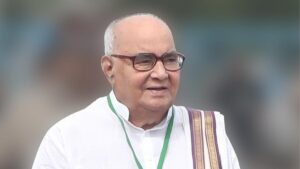
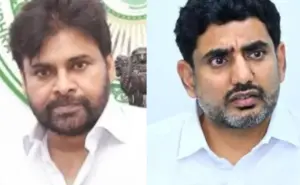
While it’s not just Anushka, many other top stars from the industry made it a miss. The absentees include Mahesh Babu, Pawan Kalyan, Nagarjuna, NTR, Kanche hero Varun Tej, Gamyam actors Allari Naresh, Sharwanand, Vedam actor Manchu Manoj and several others couldn’t make it for the wedding. Yet stars like Chiranjeevi, Balakrishna, Ram Charan, Allu Arjun, Naga Chaitanya, Rajamouli have added glitter to the do.
However, it’s Anushka’s absence that was conspicuous and caught many’s attention. Apparently, reports had it that Krish had approached Anushka for the queen role opposite Balakrishna in the historic epic Gautamiputra Satakarni and she couldn’t take it up and the role went to Shriya Saran.
Even as he was busy with wedding preparations, Krish make sure that the works of his ongoing film Gautamiputra Satakarni won’t affect. Parallely the graphic works and vfx works have been going on.

Political equations will always not the same. To the amazement of all, CM KCR son and IT minister KT Rama Rao and daughter Kavitha have maintained low profile during Prime minister Narendra Modi visit to Telangana.
KTR and Kavitha were seen sitting in VIP gallery set up beside the main dais in the public meeting. Kavitha arrived venue very early and sat in the first row. After the ministers came, she shifted to last row. KTR sat beside his cabinet colleague J Krishna Rao in first row till the end of the program.
While irrigation minister and KCR nephew Harish Rao has taken active role of escorting PM and union ministers at the launch of mission Bhageeeratha programme. Harish also accompanied KCR who was seen in stress a little bit. Harish also managed the conduct of the public meeting after Modi laid foundation stones for several development programs at komatibanda village in KCR native district Medak.

Several reports in south media are spread claiming superstar Rajinikanth’s latest film ‘Kabali’ has collected Rs 600 Cr worldwide. However, Bollywood media is skeptical about this and is scrutinizing with the help of reliable sources.
‘Kabali’ had its worldwide release on July 22 amidst sky high expectations. As expected, the film has created unbeatable records with premiers and opening day collections. But, the mixed reviews dented the pace and kept the film minting money at snail pace. All of a sudden, few media houses and fans are now claiming that Kabali has minted 600 cr worldwide.
Film’s producer Kalaipuli S Thanu has made no official statement regarding film’s 600 cr business. Hence, the mystery of whether the collections are genuine or not continue. Meanwhile, Kabali still is playing in considerable number of screens across the world.

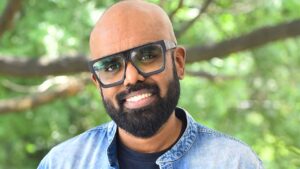
Acclaimed Telugu film director Krish has yesterday night tied the knot at a glittering ceremony in Golconda Resorts, Hyderabad.
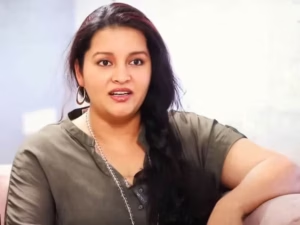
Many from film and political fields graced the event to congratulate and bless the newly-wed couple. Krish married a Hyderabad-based lady, Ramya Sai, who works as a doctor at Apollo Hospital. It was an arranged marriage. Earlier, Krish sent a wholehearted wedding invitation to all the dignitaries requesting them to attend his wedding to bless him.
On the work front, after a short gap, Krish will resume the shooting of Balakrishna Nandamuri’s 100th film ‘Gauthamiputra Sathakarni’. The film has already completed schedules in Morocco and Georgia. A huge set has been erected in Hyderabad in which a new schedule will begin shortly.

Chiranjeevi, Balakrishna & Celebs attend Director Krish Marriage