






Watch Yakub Memon’s body handed over to his family
Click Here
Recent Random Post:
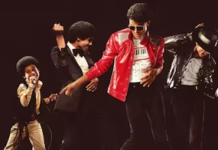
Michael Jackson Biopic Feels Incomplete Yet Engaging
Do we really need an introduction to Michael Jackson? For generations of music lovers, his iconic songs and electrifying dance moves have been an inseparable part of pop culture. While his life has been explored through books and documentaries, a full-fledged feature film on his journey was long overdue. With Michael (2026), that wait finally ends. But does the film truly capture the legacy of the ‘King of Pop’? Let’s take a closer look.
Analysis:
Over the years, projects like The Jacksons: An American Dream, Man in the Mirror: The Michael Jackson Story, and Michael Jackson: Searching for Neverland have attempted to portray different phases of Michael Jackson’s life. However, Michael (2026) marks the first major feature film dedicated to his story, backed by producer Graham King.
Interestingly, instead of covering his entire life span (1958–2009), the film focuses only on the years between 1966 and 1988, ending with the note “His Story Continues.” This limited scope leaves viewers wondering if a sequel is on the cards, though there’s no official confirmation yet. As a result, the film feels more like a partial glimpse rather than a complete biographical journey.
At its core, the narrative revolves around Michael’s strained relationship with his father, Joseph Jackson. The story begins with the formation of the The Jackson 5, showcasing their early performances and eventual rise under the Motown banner. As Joseph recognizes Michael’s exceptional talent, tensions grow between his desire to keep Michael within the group and Michael’s ambition to pursue a solo career.
While this father-son conflict forms the backbone of the film, the storytelling often feels one-dimensional, lacking emotional depth. It gives the impression that certain aspects of Michael’s life were intentionally left unexplored.
One of the film’s most touching elements is its portrayal of Michael’s bond with his animals—ranging from a chimpanzee to a giraffe. These sequences highlight his longing for genuine companionship in a world where fame often isolates him. A particularly moving moment comes when he explains that children his age see him as a celebrity, not a friend, making his connection with animals feel more real and comforting.
The film also delivers some powerful scenes, including one where a tearful Michael hides his emotions behind sunglasses, and another addressing racial discrimination when MTV initially refuses to air his music. These moments offer glimpses into the challenges he faced despite his global stardom.
Dialogues are another strong point, with several lines effectively capturing Michael’s passion, confidence, and the immense admiration he commanded. They reinforce his belief in letting his work speak louder than any publicity.
Performance-wise, Jaafar Jackson shines in his debut, convincingly embodying his uncle’s persona without slipping into mere imitation. Juliano Krue Valdi delivers a compelling performance as the controlling father, while Nia Long adds emotional depth as Michael’s supportive yet helpless mother.
Verdict:
Michael (2026) has its moments, especially in its music, performances, and select emotional scenes that truly resonate on the big screen. However, its narrow focus and deliberate avoidance of controversial aspects make it feel like an incomplete tribute rather than a definitive biopic.
Bottom Line: An Impressive Yet Incomplete Tribute