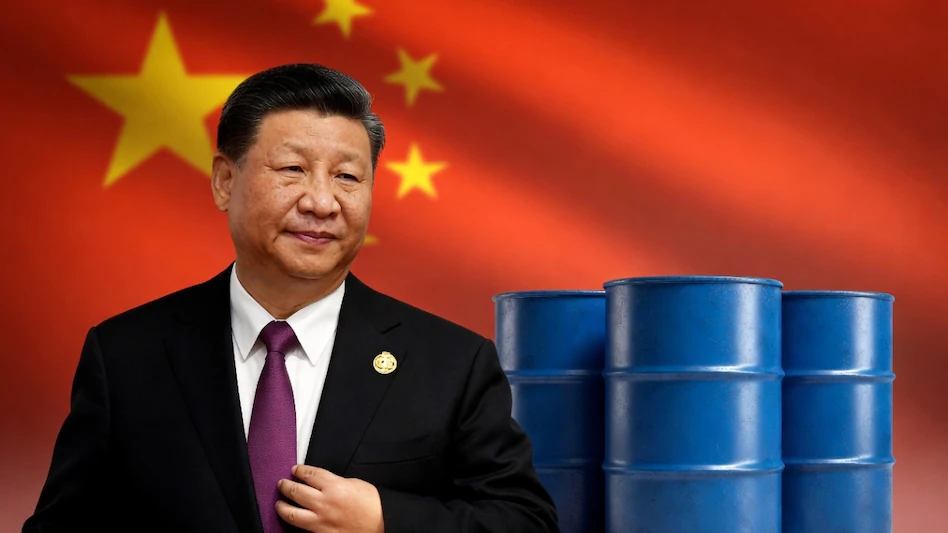
China had significantly increased its crude oil stockpiles ahead of the Iran conflict, building reserves at a scale far larger than any other country, according to recent US government data released by the Energy Information Administration (EIA). The buildup, which accelerated through 2025, has now emerged as a key strategic advantage amid global energy disruptions triggered by tensions and the partial blockade of the Strait of Hormuz.
EIA estimates show that China added an average of 1.1 million barrels per day to its oil inventories in 2025, taking total stocks to nearly 1.4 billion barrels by December. The agency also noted that inventory accumulation continued into 2026 before the Iran conflict escalated in late February.
This massive reserve position has given China a strong buffer during the ongoing energy crisis, while other economies face supply pressures and price volatility.
In addition to oil reserves, China also holds dominant positions in global clean energy supply chains, controlling over 70% of solar, wind, battery, and electric vehicle manufacturing capacity—further strengthening its long-term energy security outlook.
A recent Oxford Institute for Energy Studies report attributed China’s stockpiling surge to multiple factors, including relatively low oil prices, rising geopolitical risks linked to sanctions on major producers like Russia, Venezuela, and Iran, and a domestic energy law requiring higher reserve holdings.
Since China does not officially disclose its inventory data, the EIA relies on import-export flows, refining activity, and third-party intelligence to estimate stock levels. The agency also treats both government and commercial inventories as part of China’s strategic reserves, citing policy directions for state oil companies to maintain emergency stocks within commercial storage systems.
Using this methodology, government-held reserves in China are estimated at around 360 million barrels, while total strategic inventories—public and commercial combined—are far higher. For comparison, the US Strategic Petroleum Reserve stood at about 413 million barrels during the same period, highlighting China’s growing energy buffer.
Meanwhile, the International Energy Agency coordinated a record emergency release of up to 400 million barrels in March to stabilize global markets, an action China did not participate in as it is not an IEA member.
The US Strategic Petroleum Reserve, which has a capacity of 714 million barrels, currently holds just over 400 million barrels after a major drawdown in 2022 and gradual replenishment efforts.
Overall, the data underscores how China’s long-term energy strategy has positioned it with a significant advantage during the current global oil supply disruptions.