
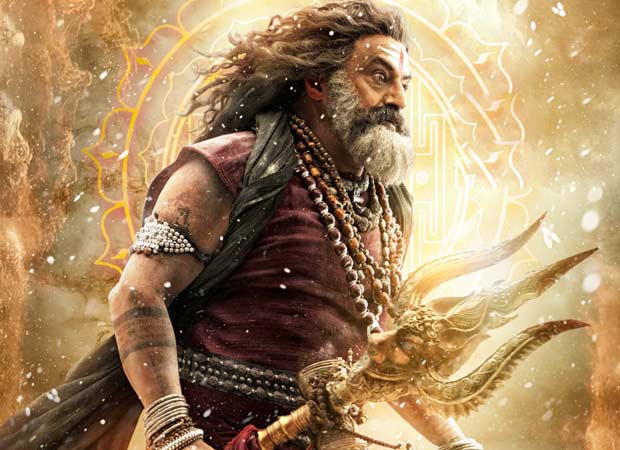
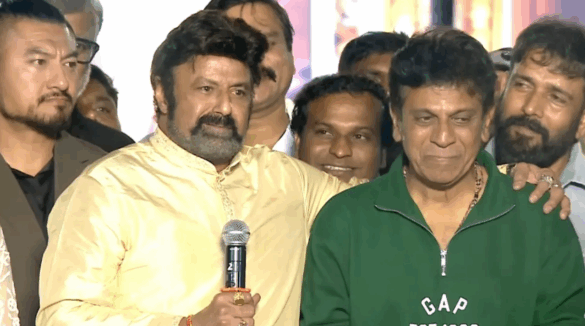
Nata Simham Nandamuri Balakrishna and the Akhanda 2 team are leaving no stone unturned in their Pan-India promotions. The grand trailer launch took place today in Karnataka, where Karunada Chakravarthy Shiva Rajkumar graced the event as the chief guest.
Director Boyapati Srinu expressed his gratitude to Shiva Rajkumar for unveiling the trailer.
“This is a film deeply rooted in the spirit and philosophy of Shiva. Having Shivanna launch the trailer is a matter of immense pride for us. Despite the heavy rain, both Balayya and Shivanna didn’t want to disappoint fans. They insisted on meeting you all and offering their greetings in person.
If you’re wondering what kind of film you are about to witness, let me put it simply: If anyone attempts to bring dishonor to this nation, Dharma itself rises, wielding the trident of justice. Akhanda 2 is built on that very idea.”
Shiva Rajkumar spoke warmly about his long-standing bond with Balakrishna’s family.
“We are like one family — like brothers. Whether it’s fights, dance, or anything else, Balakrishna always goes one step ahead. Get ready to celebrate Akhanda 2 in theatres on December 5th.”
Balakrishna, too, addressed the gathering with emotion, saying nature had blessed the film with showers of good fortune.
“Akhanda 2 is not just a Telugu or Kannada film — it is a Pan-Indian film. The essence of Sanathana Dharma runs through it. My films always carry a message for the youth, guiding them toward the right path. Akhanda 2 reflects the roots of our country, teaching why we must uphold Dharma and never bow before Adharma.”
Balakrishna also made an interesting revelation about his admiration for Shiva Rajkumar.
“I have no hesitation in saying that I took inspiration for my look in Veera Simha Reddy from Shivanna’s appearance in Mufti,” he shared, earning cheers from the audience.
With powerful dialogues, emotional bonding, and spiritual depth, the event set the perfect tone for the film’s grand release on December 5.

















RGV Slams Piracy, Calls for Punishing Viewers Too
Filmmaker Ram Gopal Varma has once again stirred debate, this time by addressing the widespread problem of film piracy through a hard-hitting social media post.
The Sarkar director called out not only the suppliers of pirated content but also the people who actively consume and support it. Taking to X (formerly Twitter), RGV wrote:
“ROBIN HOOD RAVI… Piracy will never stop. Not because technology is too advanced or policing too weak, but because as long as there are a large number of people to watch a pirated film, there will always be Ravis to serve them. The funniest thing is Ravi supporters proudly comparing him to Robin Hood as if they discovered some Nobel Prize–winning logic.”
He went on to argue that glorifying piracy by comparing it to Robin Hood–style heroism is deeply flawed.
RGV added, “Robin Hood is not a hero. By today’s definition, he is the world’s first recorded terrorist. He loots and kills the haves to give to the have-nots, and the only ‘crime’ of the rich is that they are rich. It is depraved to think financial success is a crime punishable by theft and murder. Romanticizing a criminal as a saint because the recipients get stolen goods for free shows extreme ignorance.”
The filmmaker further mocked the justification that movie tickets are too expensive. He argued that by the same logic, people should also support robbing luxury car showrooms and distributing BMWs for free.
RGV warned that such thinking would only lead to social breakdown and anarchy. According to him, people don’t watch pirated content due to moral principles—they do it simply because “it’s convenient.”
However, he didn’t stop at criticism and proposed a controversial solution to stop piracy.
RGV suggested that authorities should criminalise viewers in addition to suppliers.
“Catching the pirate is difficult because he hides behind secret digital ghettos. But catching the viewer is easy. Arrest 100 random people watching pirated content and publicise their names,” he wrote.
With this bold stance, Ram Gopal Varma has reignited conversation about India’s ongoing battle with piracy and the mindset that enables it.